Addiction in India: 5.7 Crore Need Help for Alcohol Alone
AIIMS found 16 crore Indians drink and more than 5.7 crore need help for alcohol. What the survey shows, where treatment falls short, and what works.

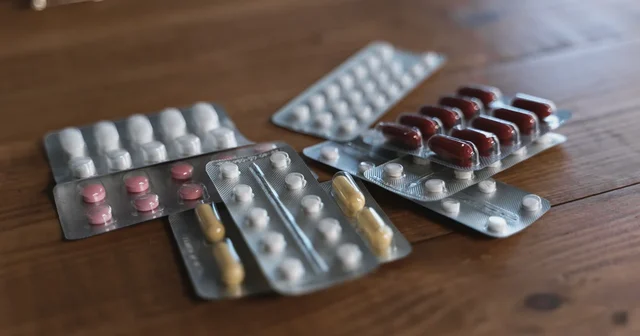
Photo by Tima Miroshnichenko on Pexels
In this story
How big is addiction in India?
Addiction in India is larger than most families admit and smaller than panicked headlines suggest. The only national count we have comes from a survey by the National Drug Dependence Treatment Centre (NDDTC) at AIIMS, New Delhi, for the Union social justice ministry. Fieldwork ran in 2018, and the report, “Magnitude of Substance Use in India”, was submitted in February 2019. Its main finding is that alcohol, not any illegal drug, is the substance that harms the most Indians.
The survey visited 2,00,111 households in 186 districts and interviewed 4,73,569 people aged 10 to 75 across all 36 states and union territories. A second survey in 123 districts reached 70,293 people dependent on illicit drugs, because household surveys undercount illegal use. The Press Information Bureau (PIB) release on the report is the source for the numbers below, and you can read it on the archived PIB text.
Substance (ages 10 to 75, survey 2018) | Current users | Estimated to need help |
|---|---|---|
Alcohol | 14.6% (about 16 crore people) | 5.2% (more than 5.7 crore) with harmful or dependent use |
Cannabis (bhang, ganja, charas) | 2.8% in the past year (3.1 crore) | 0.66% (about 72 lakh) |
Opioids (heroin, opium, pharmaceutical opioids) | 2.06% | 0.55% (about 60 lakh with harmful or dependent use) |
Sedatives (non-medical use) | 1.08% (about 1.18 crore) | Not given in the release |
Inhalants | 1.17% of children and adolescents, 0.58% of adults | 4.6 lakh children and 18 lakh adults |
Two more numbers matter. The survey estimated about 8.5 lakh people who inject drugs. And it found that cocaine (0.10%), amphetamine-type stimulants (0.18%) and hallucinogens (0.12%) are rare in the general population, which is a useful check on stories about “party drugs” taking over.
Why is alcohol the biggest problem?
Because it is legal, cheap, and used by so many people. About 14.6 per cent of Indians aged 10 to 75 drink, and the survey judged that every third drinker needs help for alcohol-related problems. Country liquor and spirits (Indian-made foreign liquor) each account for about 30 per cent of what people drink. Use is about 17 times higher among men than women. The states with the highest use were Chhattisgarh, Tripura, Punjab, Arunachal Pradesh and Goa, and those with more than 10 per cent alcohol use disorders were Tripura, Andhra Pradesh, Punjab, Chhattisgarh and Arunachal Pradesh.
The figure that should worry a family is not the 16 crore. It is the 5.7 crore. Harmful drinking drives road injuries, liver disease, debt and violence at home. That is why a national plan that talks only about “drugs” misses the biggest piece.
Are the numbers still current?
Not quite. The survey is now several years old, and a second national round has not been published. Later government summaries also quote slightly different counts. A May 2025 PIB factsheet on the Nasha Mukt Bharat Abhiyaan says about 25 lakh people have severe cannabis dependence and about 77 lakh need help for opioids, while the 2019 release gave 72 lakh and 60 lakh for “need help” categories. The groups are defined differently, so quote the original release and say which group you mean. If someone gives you a figure for “drug addicts in India” without a year or a definition, treat it with caution.
Who is most at risk of addiction in India?
The survey shows a few clear patterns, and each one points to a different response.
- Men. They outnumber women across every substance the survey studied, and alcohol use is 17 times higher among men.
- Children and adolescents using inhalants. Inhalants (glue, solvents, correction fluids) are the only category in which children use more than adults. Street-connected and poor children are exposed first, because inhalants are cheap and sold openly.
- The north and north-east. By share of the population, opioid problems were highest in Mizoram, Nagaland, Arunachal Pradesh, Sikkim and Manipur, along with Punjab, Haryana and Delhi. By absolute numbers, more than half of people with opioid use disorders were in Uttar Pradesh, Punjab, Haryana, Delhi, Maharashtra, Rajasthan, Andhra Pradesh and Gujarat. Our Punjab story covers one state in depth, including its own survey figures and the debate over the “every second household” claim. This article looks at the national picture and starts from alcohol.
- People who inject. They face HIV, hepatitis C and overdose. High numbers were estimated in Uttar Pradesh, Punjab, Delhi, Andhra Pradesh, Telangana, Haryana, Karnataka, Maharashtra, Manipur and Nagaland. The release notes that a substantial share report risky injecting practices.
- Anyone under chronic stress. Debt, unemployment, trauma and untreated mental illness all raise the risk. Our piece on India’s mental health care gap explains why a person with both problems often finds neither service.
Why does a person become dependent?
No single cause explains it. The PIB factsheet on the Nasha Mukt Bharat Abhiyaan lists genetic susceptibility, mental health conditions and dysfunctional family settings, including child abuse or neglect, as factors that raise a person’s vulnerability. Add easy access, peer pressure and cheap supply, and you see why the same neighbourhood can produce many cases at once. Stress is a common thread: a young man with no job, a woman in an abusive marriage or a farmer in debt may all reach for a bottle or a pill to get through the night. Treating the substance without treating the stress behind it is a common reason people relapse.
Early use matters too. The survey’s finding that inhalant use is higher among children than adults suggests that a share of problems start before the age of 15. School-based programmes that teach life skills and refusal skills, and that identify children in trouble early, are cheaper than treating an adult with a long history.
Why do so few people with addiction in India get treatment?
There is no neat national figure for the treatment gap, but every available number points the same way. Set the survey’s 5.7 crore people with harmful or dependent alcohol use beside the 27.76 lakh people the Nasha Mukt Bharat Abhiyaan says it has treated since 2020 (as of 4 May 2025), and the scale of the gap is plain even allowing for the different years and definitions. For opioids, the best-documented harm reduction service, opioid substitution therapy, reached 44,553 people in NACO’s 2023 report, against about 8.5 lakh estimated to inject drugs, according to a 2024 review in the Indian Journal of Psychiatry. NACO itself puts that at 23 per cent of the active injecting population, while the review’s authors calculate coverage at about 3 per 100 injectors, which the World Health Organization would call low. The two figures use different bases, and neither is high.
Secondary summaries of the original report, such as this one from Movendi, say only about one in 38 people with alcohol dependence reported any treatment. We have not been able to check that line against the full report, so treat it as an indication and not a fact.
What stops people from seeking help?
- Stigma and the idea of a moral failing. Families hide it, and many believe the person “just needs willpower”.
- Few services near home. The Ministry of Health’s Drug De-Addiction Programme listed 122 centres (43 in the north-east) and 27 drug treatment clinics as of 2019, per the same Indian Journal of Psychiatry review. The social justice ministry’s addiction treatment facilities were 25 functional in February 2023.
- Fear of the police. A person who comes forward for help may fear arrest, though the Narcotic Drugs and Psychotropic Substances (NDPS) Act, 1985 has a provision (section 64A) that gives immunity from prosecution to some addicts who volunteer for treatment. Few people know of it.
- Cost and lost wages. Time in a centre means weeks without income, and a private bed adds a bill on top, which is hard for a daily wage family to carry.
- Unregulated “rehab” centres. Where public services are missing, private ones fill the gap, and quality varies a great deal.
What does recovery look like?
Detoxification, the first few days or weeks of stopping safely, is the easy part to describe and the shortest part of recovery. What follows decides the outcome: counselling, treatment of any mental illness, medicine where it helps, a regular routine, family involvement, and a way back into work and community. The ministry’s own list of services includes aftercare and reintegration into the community, but how many centres deliver them is not published. Relapse is common in all countries and should be planned for, not treated as a betrayal. A person who relapses and returns to care within days is doing the right thing.
The family needs help too. Spouses and parents carry debt, fear and shame, and often the daily work of keeping the person safe. Counselling for families, peer groups and a simple plan for what to do in a crisis make a household steadier.
What is the government doing about drug addiction nationally?
The main policy is the National Action Plan for Drug Demand Reduction (NAPDDR), launched in 2018 with a roadmap to 2025, and its campaign arm, the Nasha Mukt Bharat Abhiyaan (NMBA). The Constitution’s Article 47 gives the state a duty to curb intoxicants injurious to health. NMBA was launched on 15 August 2020 and began in 272 high-risk districts, picked using the national survey and Narcotics Control Bureau inputs. It now covers all districts.
The PIB factsheet of 6 May 2025 reports the following, as of 4 May 2025:
- More than 15.58 crore people reached by awareness work, including 5.20 crore youth and 3.30 crore women.
- More than 27.76 lakh people treated.
- More than 730 free centres and over 10,000 Master Volunteers trained.
- A national toll-free helpline, 14446, for first counselling and referral.
The approach has three arms: supply control by the Narcotics Control Bureau, demand reduction and awareness by the social justice ministry, and treatment by the health ministry. At district level, Nasha Mukt committees under the collector make local plans. The ministry also funds Integrated Rehabilitation Centres for Addicts (inpatient counselling and treatment), community peer-led interventions with youth volunteers, and outreach and drop-in centres. All of this is described in the PIB factsheet.
These are counts of activity, not of results. A person reached by a pledge or a talk is not a person who stopped drinking. The 27.76 lakh treated is a more meaningful number, but it does not say how many stayed well after a year. A fair reading is that the system has built reach and has not yet shown outcomes. India needs a published follow-up measure, such as the share of patients in treatment after six and twelve months.
What works to reduce addiction in India?
The strongest evidence internationally is for treating dependence as a health condition, keeping people in care, and reducing the harm of substances people cannot yet give up. India has examples of each, and they are small compared with the need.
Does community de-addiction work?
Community-based care means counselling, screening and follow-up near where a person lives, with inpatient beds kept for those who need them. The design appeals because it costs less and keeps the person with family and work. India’s version includes the peer-led community interventions and outreach centres funded under NAPDDR, and state programmes such as Kerala’s Vimukthi, run by the excise department, which has a de-addiction centre in each district with 15 to 20 beds, and Vimukthi clubs in schools and colleges, announced in 2021.
The Kerala example is a good lesson in honest evaluation. A 2018 report in Deccan Chronicle said the programme had spent over Rs 4.66 crore across 14 districts but the excise department did not know how many people had been identified or de-addicted. The lesson is not that community work fails. It is that a programme with no count of outcomes cannot be improved, and any new programme should record who attends, who completes and who is still well a year later.
What is harm reduction, and does India do it?
Harm reduction means reducing the damage from drug use without first demanding that the person stop. For people who inject, that means clean needles and syringes, and opioid substitution therapy (OST), in which a doctor prescribes a regulated medicine such as buprenorphine in place of street heroin. The 2024 review by Parmar, Chakraborty and Balhara in the Indian Journal of Psychiatry sets out where India stands.
- Services began in the early 1990s in response to HIV among people who inject, and the National AIDS Control Programme formally included needle-syringe exchange and OST from 2007 to 2012.
- NACO’s 2023 report counts about 393 OST centres (200 public, 46 NGO and 147 satellite) serving 44,553 people.
- About 39 million needles and 28 million syringes were distributed in 2021-22, which the review says averages 34 per injector per year, below the WHO’s benchmark of 100.
- The 2012 national policy permits needle-syringe programmes and oral substitution but not OST in prisons.
- Services such as supervised consumption rooms and drug checking do not exist in India.
Punjab has moved furthest on OST in the public system. Our Punjab story describes its outpatient clinics. The wider point is that the evidence on OST is strong. It keeps people in treatment, lowers HIV and overdose risk, and reduces crime, and the review’s authors call for scaling it, especially in the northern and north-eastern states.
What does Tele-MANAS add?
Tele-MANAS is the government’s free tele-mental-health service, reached on 14416. In October 2024 the Press Information Bureau reported that it had handled over 14.7 lakh calls in two years, through 52 Tele-MANAS cells in 20 Indian languages, in a second-anniversary note. The note lists substance misuse among the problems callers raise, but we could not find a breakdown of calls about alcohol or drugs, so we do not claim one. Its value is as a first door. A person who calls at midnight, ashamed and afraid, can talk to a counsellor in their own language and be referred. Tele-MANAS and the NMBA helpline (14446) should be able to hand over to each other and to a local centre, with the follow-up tracked.
What about alcohol policy?
The World Health Organization’s SAFER package lists five measures with good evidence: limit availability, enforce drink-driving laws, offer screening and brief advice and treatment, ban advertising, and raise prices through taxes. Indian states differ widely on all five, from licensing and opening hours to prohibition in a few states. Whether a state chooses prohibition or regulation, the evidence-based rule is the same: pair it with treatment, because people with dependence do not stop because the shop is shut. Illicit liquor also kills. Any alcohol policy that pushes people to unregulated supply needs a plan for that risk.
What can schools and workplaces do?
Schools can teach children how to say no and who to tell, train teachers to spot warning signs, and put a trained counsellor on call. They should also respond to a child’s use of inhalants or alcohol with care and not expulsion, which pushes the child out of the one place where an adult is watching. Employers, especially in transport, construction and factories, can add a route to a counsellor and make clear that asking for help will not cost anyone a job. Drink-driving is one more link to road safety, a subject we cover in our article on road deaths in India.
What should policy do next?
- Run a second national survey and publish state and district figures with the same definitions as 2018, so that trends are visible.
- Put alcohol at the centre. The largest group needing help is people with harmful drinking, and most services are designed for drug users.
- Measure outcomes, not events. Report retention in treatment at 6 and 12 months for every funded centre.
- Scale OST and needle-syringe programmes in the high-burden states, including in prisons.
- Bring treatment into primary care, with trained doctors and counsellors at Ayushman Arogya Mandirs able to screen and start treatment for alcohol and opioids.
- Regulate private rehab centres with minimum standards and inspection, and a public list of those meeting them.
- Tell people about section 64A and similar protections so that fear of arrest does not stop someone from asking for help.
- Pay attention to children. Inhalant use is higher among children than adults, and it needs child-friendly outreach in schools, shelters and on the street.
What can you do?
- Learn the signs. Changes in sleep, money, friends and mood, missing items at home, red eyes, weight changes, or hiding the substance. One sign proves nothing. A pattern is worth a conversation.
- Talk privately and calmly. Start with “I am worried about you”, not an accusation. Choose a time when the person is sober.
- Call a helpline together. The Nasha Mukt Bharat Abhiyaan helpline is 14446 and Tele-MANAS is 14416. Both are free.
- Ask a government hospital first. District hospitals and medical colleges often have a de-addiction clinic or psychiatrist. Ask about the cost and the follow-up plan before admitting anyone anywhere.
- Check a private centre before you pay. Ask for registration, the names of the doctors, the treatment plan and how families can visit. Walk away if they offer a guaranteed cure or refuse visits.
- Do not use force or shame. Locking someone up or punishing them rarely helps, and relapse is common in recovery. A relapse is a reason to return to treatment, not a reason to give up.
- Protect children. Keep solvents, cough syrups and medicines out of reach, and talk to school staff about inhalants.
- Back a local effort. Volunteer with a peer-led group, join the district Nasha Mukt committee’s awareness work or ask your resident welfare association to host a screening camp.
- Look after yourself. Living with someone’s addiction is exhausting. Family support groups such as Al-Anon exist in many cities. Gambling is another compulsion that harms families, and our piece on online betting and gaming apps covers where families can get help.
This article is general information and not medical advice. Withdrawal from alcohol and some other drugs can be dangerous, so a doctor should supervise it.
Frequently asked questions
How many people in India use alcohol and drugs?
The 2018 AIIMS and Social Justice Ministry survey found about 14.6 per cent of people aged 10 to 75 (about 16 crore) use alcohol, 2.8 per cent (3.1 crore) used cannabis in the past year, and 2.06 per cent use opioids.
How many need treatment?
The survey estimated more than 5.7 crore people with harmful or dependent alcohol use, about 72 lakh for cannabis and about 60 lakh for opioids. Government summaries since then have used other definitions, so check which group a figure covers.
What is the Nasha Mukt Bharat Abhiyaan?
A campaign launched on 15 August 2020 by the Union social justice ministry under the national action plan for drug demand reduction. By 4 May 2025 it reported reaching 15.58 crore people, treating more than 27.76 lakh and running 730-plus free centres.
Which helpline should I call?
You can call 14446 (Nasha Mukt Bharat Abhiyaan) or 14416 (Tele-MANAS), both free. Neither replaces emergency care for overdose or severe withdrawal, for which you should go to a hospital.
Is addiction a disease or a choice?
Starting use is often a choice, but dependence changes the brain’s reward and control systems, and doctors treat it as a health condition. That is why treatment works better than punishment.
Does harm reduction mean allowing drug use?
No. It aims to keep people alive and healthy, and in contact with services, until they can stop. Clean needles and substitution medicines lower HIV and overdose risk. India’s national policy already allows needle-syringe programmes and oral substitution.
Is this the same as the Punjab drug crisis?
Punjab is one of the worst-affected states for opioids and alcohol, and our Punjab story looks at it. The national survey shows that the problem is spread across many states and that alcohol affects more people than any other substance.
The bottom line
India has about 16 crore people who drink, and a survey estimate that more than 5.7 crore of them drink in a way that harms them or others. Add about 72 lakh with cannabis problems, about 60 lakh with opioid problems and a group of children using inhalants, and the number who need help runs into several crores. The state has built an outreach campaign that has reached a great many people and a treatment system that reaches few. The strongest fixes are not mysterious: treat alcohol as the main problem, put screening and treatment in primary care, scale substitution therapy and clean needles where injecting is common, regulate private rehab, and measure whether patients are still well a year later. For a family, the first step is smaller. A calm conversation and a call to 14446 or 14416 can start it.
Sources: National Drug Dependence Treatment Centre, AIIMS, “Magnitude of Substance Use in India” (survey 2018, report February 2019, via Press Information Bureau); PIB factsheet on Nasha Mukt Bharat Abhiyaan (6 May 2025); Parmar, Chakraborty and Balhara, “Harm reduction in India”, Indian Journal of Psychiatry (2024); Union Health Ministry reply on Tele-MANAS in the Lok Sabha (August 2025, as reported by UNI); World Health Organization, SAFER initiative.
What you can do
- Share the evidenceSend this to one person who should know about health.Share on WhatsApp
- Give an afternoonTeach, mentor, clean up, or lend your professional skills.Ways to volunteer
- Tell us what's missingKnow a story, a fact we got wrong, or a solution worth spotlighting?Suggest a story
Politically neutral. Every claim sourced. Report a correction.
No comments yet