Housing Shortage in India: 6.5 Crore in Slums and What Works
India counted 6.5 crore slum dwellers in 2011 and a 1.88 crore urban housing gap in 2012. What PMAY has built and what Odisha's Jaga Mission shows.
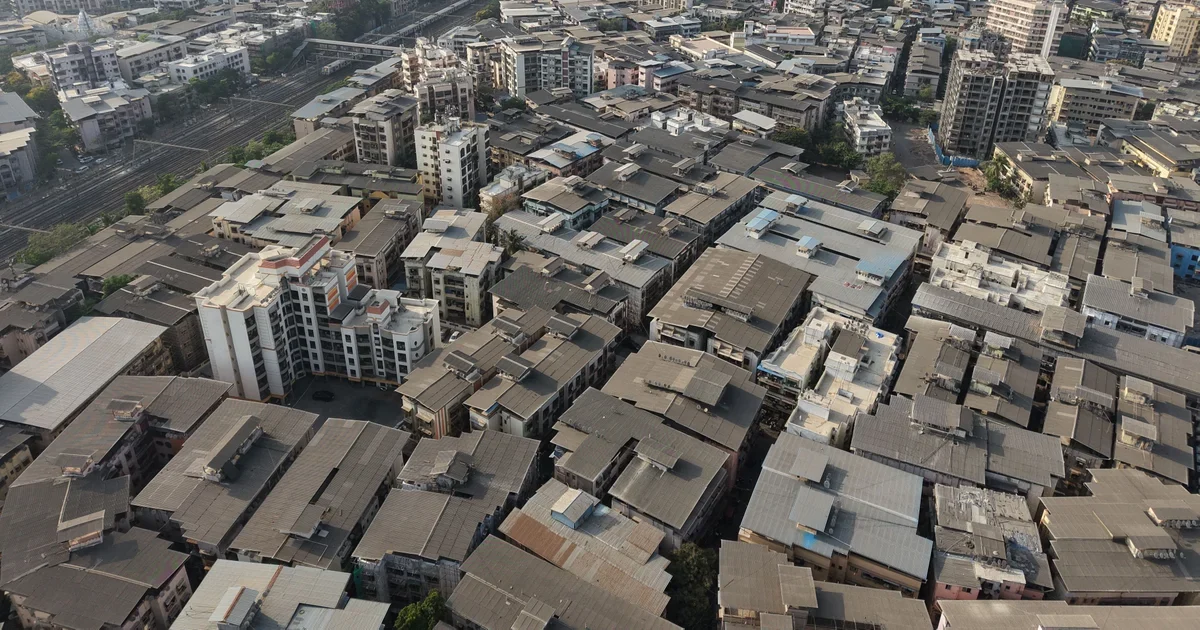
Photo by Rajkumarrr comics on Pexels
In this story
How big is the housing shortage in India?
The housing shortage in India is large, but the best national estimate is more than a decade old. The most cited number comes from a Technical Group set up by the housing ministry, which put the urban shortage at 18.78 million homes as of March 2012. A report on that estimate in ISignal (formerly IndiaSpend) broke it down into four kinds of need:
Type of shortage (urban India, March 2012) | Homes short |
|---|---|
Congested houses (too many people for the space) | 14.99 million |
Obsolescent houses (worn out beyond repair) | 2.27 million |
Non-serviceable katcha houses | 0.99 million |
Homeless families | 0.53 million |
Total | 18.78 million |
Two features stand out. First, most of the shortage is not about people with no roof. It is about families squeezed into homes that are too small: congestion makes up about four-fifths of the total. Second, the gap is concentrated among the poor. The same report says 56.2 per cent of the shortage (10.55 million homes) was among economically weaker sections and 39.5 per cent (7.41 million) among the lower income group, so only about 4 per cent was among middle-income households and above.
The figure is a snapshot from 2012 and was built from the 2011 Census. India’s cities have grown a great deal since. We found no newer official national estimate that we could verify, so every shortage figure in circulation today is either this one or a private estimate built on it. The Standing Committee on Housing and Urban Affairs, in a March 2023 report summarised by PRS Legislative Research, noted that the urban housing scheme began with an estimate of two crore houses and found actual demand of 1.23 crore. Surveys of “demand” and estimates of “shortage” are not the same thing, which is one reason the numbers differ.
Is the shortage only an urban problem?
No. Rural India has its own gap, which the Pradhan Mantri Awaas Yojana (Gramin) is meant to close, and we cover it below. But the combination of high land prices, slow approvals and low incomes makes the city version harder. A rural family can build a basic house on its own plot with a grant. A city family without land, a job contract or a bank account cannot.
How many Indians live in slums?
The last full count is Census 2011. A Lok Sabha annexure cited the slum population at 65.49 million, living in 13.92 million households across 2,613 towns in 31 states and union territories (Lok Sabha document). That is about 6.5 crore people. An analysis by the National Health Systems Resource Centre (NHSRC) of the Census slum abstract found that slum dwellers were 5.4 per cent of India’s population and that the slum population grew by 25.1 per cent between 2001 and 2011.
Three cautions apply to these numbers.
- The Census definition is narrow. It counts “notified” slums, “recognised” slums and “identified” slums, and only in towns that reported slums. Many informal settlements, pavement dwellers and migrant camps are not in these tables.
- The count is 15 years old. Settlements have grown, and some have been cleared or upgraded.
- It does not measure the quality of homes. A family can be outside a slum and still live in a crowded one-room rental, which is the congestion figure above.
Our ground report on life in Dharavi shows what the Census numbers look like in one place, in Mumbai. This article looks at the national picture: how much housing the country needs, what the government is building and which approaches deliver for the poorest.
Why do poor families not get homes through the market?
Because the numbers do not add up. A house under the urban housing scheme costs the family a lot more than it can pay. The Standing Committee found that the average cost of an economically weaker section house was about Rs 6.5 lakh and the average beneficiary contribution was about 60 per cent, which is a sum that a household with irregular income can rarely save or borrow. Banks, it said, were reluctant to lend because beneficiaries lacked sustained income or proof of income. For a daily-wage worker with no payslip, the formal housing market is closed.
Other barriers add up. Land in cities is costly and often tied up in disputes (our piece on land records and property disputes explains why). Municipal finances are weak, which limits water, sewers and roads for new areas, a theme in Your City Is Broke. Workers who move for jobs arrive in cities with no housing arranged, as we reported in India’s Internal Migrants. When there is no formal option, people build their own, and the result is a slum: homes that people built for themselves because no one else would, usually on land they have no legal right to.
What has the government built? PMAY-Urban and PMAY-Gramin
The two flagship schemes are the Pradhan Mantri Awas Yojana, urban and rural. Both are demand-driven schemes that give subsidies and assistance to families, and both have been extended several times.
What does PMAY-Urban show?
PMAY-Urban began in 2015 with four routes: beneficiary-led construction (BLC) on the family’s own land, affordable housing in partnership (AHP) with developers, credit-linked interest subsidy, and in-situ slum redevelopment (ISSR). A second phase, PMAY-U 2.0, was launched in September 2024 to support another one crore households and added affordable rental housing.
The ministry’s newsletter of 30 June 2026 (PMAY-U newsletter, 94th issue) gives the combined progress of PMAY-U and PMAY-U 2.0 as 127.62 lakh houses sanctioned, 120.31 lakh grounded (construction started) and 98.65 lakh completed. Of the 16.13 lakh houses sanctioned under PMAY-U 2.0, 12.99 lakh were BLC, 1.81 lakh AHP, 1.20 lakh interest subsidy and 12,846 affordable rental housing. The newsletter says over 90 per cent of PMAY-U houses are allotted to women. That is real delivery: nearly one crore homes.
Read against the 2012 estimate of 1.88 crore, nearly one crore completed homes is a substantial dent. It is not an equal comparison, because the 2012 estimate counted crowded homes that the scheme does not always address, and cities have grown since. Other press figures for the total differ from the ministry’s: some reports in 2026 quote 1.64 crore sanctioned. We use the ministry’s own newsletter figure and suggest checking the PMAY-U dashboard for the latest.
Where does PMAY-Urban fall short?
The Standing Committee report of March 2023 found several problems that still matter.
- The poorest are underserved. The slum redevelopment route, which is the one meant for people without land, had a demand of 14.35 lakh houses but only 4.33 lakh were sanctioned. By December 2022, 99,000 had been delivered and 1.08 lakh houses were non-starters.
- Most houses went through one route. About 60 per cent of sanctioned houses were BLC, which suits families that already own a plot, and 61 per cent of curtailed houses were in this route.
- Houses built but not delivered. 5.6 lakh houses were not delivered as of December 2022 because basic services such as water and electricity were lacking.
- Affordability. The average beneficiary contribution of about 60 per cent excludes the poorest.
- State shares. Nagaland, Manipur, Meghalaya and Rajasthan were not providing their share of funds.
The committee recommended an impact assessment and then either an extended scheme with changes or a new one for the urban poor. PMAY-U 2.0 followed, and the newsletter shows rental housing and other routes growing, though the BLC route still dominates.
What does PMAY-Gramin show?
In rural areas, PMAY-G has run since 1 April 2016 and gives each eligible family help to build a pucca house of at least 25 square metres, with a place for hygienic cooking. A Press Information Bureau note of 31 March 2026 (PIB, PMAY-G) says that as of 26 March 2026, 4.15 crore houses had been allocated under phases I and II, 3.90 crore sanctioned and 2.99 crore completed, with a cumulative target of 4.95 crore rural houses by 2029. It lists Rs 4,03,886.12 crore transferred to beneficiaries, direct benefit transfer to bank accounts, geo-tagging of houses at each stage and an annual social audit by each gram panchayat. A later press report put completions at 3.12 crore by 3 August 2026 (NBM&CW).
The rural scheme has two advantages over the urban one: the family builds on its own land, so land is not the bottleneck, and the subsidy goes directly to the bank account. The scheme tries to protect quality with geo-tagged photos and inspections. We have not seen an independent national evaluation of construction quality or of how promptly instalments reach families, so we do not claim one.
What works for slum dwellers? The Odisha example
The programme that has drawn the most attention for slums is Odisha’s Jaga Mission, formally the Odisha Liveable Habitat Mission. Its core idea is simple and unusual: give slum dwellers the legal right to the land they already live on, and then upgrade the settlement where it stands, instead of clearing it.
What did the Jaga Mission do?
According to the state’s own mission document, Odisha passed the Odisha Land Rights to Slum Dwellers Act in August 2017, granting slum dwellers land rights for up to 30 square metres. The title is heritable (it passes to heirs) and non-transferable (it cannot be sold), and married couples hold it jointly. The land rights certificate can be used as proof of address. The mission used drones to map settlements and set up Slum Development Associations, community bodies that sign agreements with the municipality and decide on upgrades. The state document says 2,919 associations signed agreements with urban local bodies and 43,785 community leaders were trained.
The state reports that, by 2022-23, 173,000 slum families had land rights or land entitlement certificates, and 725 slums had been turned into “Biju Adarsh Colonies” with nine basic amenities each, including paved roads, drains, street lights, and individual water, electricity and toilet connections. A survey it cites found 3,96,028 households in 2,919 slums, of which 67,031 had no toilet of their own, which led to a toilet programme. Two towns, Hinjilikut and Digapahandi, were declared slum-free in 2022-23. Families living in hazardous places, such as flood paths, were offered new “liveable habitats” nearby, with 16 construction projects in progress at the time of the document. The mission’s own plan ahead was to extend rights to 1,00,000 households in five municipal corporations. These are the state’s figures, and we have not seen an independent audit.
Why does land rights matter so much?
A slum dweller without a legal right to land lives with the daily risk of eviction. That risk shapes everything: families do not invest in the house, banks will not lend, officials will not lay a pipe, and any new road can mean a bulldozer. A recorded right, even a limited one, changes the bargain. It is cheaper than building new homes, and it keeps the family in a place near work, school and community. For more on how Odisha runs public programmes, see our story on its cyclone evacuation system.
Does the Jaga model have limits?
Yes. A 2022 working paper by Mugdha Mohapatra at the Centre for Policy Research found that the land rights under the 2017 Act are not sufficiently integrated within the existing legal framework, leave several ambiguities, cannot be used as an economic resource and offer only a limited increase in tenure security. It called them “beneficial yet insufficient” for access to municipal services and subsidies. The right is also capped at 30 square metres, and it is non-transferable, so it cannot be mortgaged.
The model has travelled. The CPR paper notes that Punjab’s BASERA scheme adopted the policy and Himachal Pradesh was considering it. That is a good sign: other states can copy a working design, as long as they also fix the limits.
What about in-situ redevelopment elsewhere?
In-situ slum redevelopment means rebuilding on the same land so families are not moved to the outskirts. The central scheme’s ISSR route uses the land under a slum as a resource: a private developer is invited by tender to rebuild the slum as a planned colony, and the Centre pays a grant of Rs 1 lakh per house, as described in the PMAY-U evaluation. In practice, the Standing Committee found that ISSR delivery was low and an audit by the Comptroller and Auditor General found that slum beneficiaries lost out when projects were curtailed and homes went to people from outside the slum. One explainer blames legal and tenure complexity in big cities such as Mumbai, Delhi and Bengaluru. Dharavi’s long redevelopment story, in our Dharavi report, shows the same tension on a large scale.
The lesson from comparing Odisha and ISSR is that tenure comes first. Where the family’s right to stay is secured, upgrading becomes cheaper and quicker. Where the right to stay is open, redevelopment turns into a negotiation with a developer.
What about families who are still evicted?
Not every slum can stay where it is. Some sit on flood paths, railway land or the banks of drains. Even then, the way families are moved decides whether they recover. A family sent to a far-off colony loses its nearby work, its children’s school and its neighbours, and often drifts back to a new informal settlement. Odisha’s mission handled this by building “liveable habitats” for families in hazardous places and by letting those families use available housing schemes, rather than clearing first. The principle is worth copying everywhere: notice, consultation, a home within reach of work, and services in place before the move. Eviction without these steps does not reduce the shortage. It moves it.
What would close the housing gap?
- Publish a new national shortage estimate with the same method as 2012, so that policy is aimed at a current number.
- Give slum dwellers tenure. Adopt the best of the Jaga model across states, and remove its limits by making the title usable as proof for loans and services.
- Prioritise in-situ upgrading over relocation, and measure it by the number of families still in their original place after five years.
- Fund the poorest properly. A beneficiary contribution of about 60 per cent excludes the poorest, so grants should vary with household income and local building costs, as the committee suggested.
- Make rental housing a real choice. Most new migrants rent. PMAY-U 2.0 includes affordable rental housing, but it was only 12,846 of 16.13 lakh houses in the June 2026 newsletter.
- Connect services before handover. The 5.6 lakh houses stuck for lack of water and power show why a house is not a home without them.
- Fix urban land records and finance. Municipalities need money and clear land records to plan housing.
- Publish data on sanctioned, grounded, completed and occupied houses by vertical and state, and on who they went to, every quarter.
What can you do?
- Check eligibility for the scheme that fits your situation. Urban families can look up PMAY-U on the official portal, and rural families can ask the gram panchayat about PMAY-G. Keep your Aadhaar, bank details and income proof ready.
- Never pay an agent for a sanction. The subsidy goes to the bank account and there is no legal fee for being listed. Report any demand for money to the local authority.
- Help a neighbour apply. Many eligible families, especially elders, widows and migrants, do not know the scheme or have trouble with forms.
- Ask for the land record. If you live in a settlement, ask your municipal office what its legal status is and whether a land rights programme exists in your state.
- Join or form a residents’ association. Odisha’s Slum Development Associations show how a community voice makes upgrades happen. Meet the ward councillor with a short list of needs: water, drains, a toilet, a streetlight.
- Use the right to information to ask your urban local body how many PMAY houses were sanctioned, built and allotted in your ward.
- Treat workers’ housing as your concern. If you employ construction workers or domestic workers, ask where they live and whether they have safe, ventilated housing and toilets.
- Support groups that work on housing rights, tenure and slum upgrading, with time or money, and oppose evictions without notice and rehabilitation.
- Vote and ask local candidates what they will do on housing, water and tenure in your ward.
Frequently asked questions
How many houses does urban India lack?
A Technical Group of the housing ministry estimated a shortage of 18.78 million urban homes in March 2012, mostly congested households. We found no newer official estimate to verify.
How many people live in slums in India?
Census 2011 counted 65.49 million people in 13.92 million households, about 5.4 per cent of the population. A newer national count is not available.
How many houses has PMAY-Urban built?
The ministry’s June 2026 newsletter reports 127.62 lakh houses sanctioned, 120.31 lakh grounded and 98.65 lakh completed under PMAY-U and PMAY-U 2.0 together.
What about PMAY-Gramin?
As of 26 March 2026, 2.99 crore houses were completed against 3.90 crore sanctioned and a cumulative target of 4.95 crore by 2029, according to a PIB note.
What is the Jaga Mission?
Odisha’s slum programme that gives land rights up to 30 square metres under a 2017 law and upgrades the settlement in place. The state reports 173,000 families with land rights or entitlement certificates by 2022-23.
Can a slum dweller sell the land under the Odisha scheme?
No. The title is heritable but non-transferable, and married couples hold it jointly.
How is this different from the Dharavi story?
Our Dharavi report is a ground account of one Mumbai settlement. This article covers national numbers, central schemes and the Odisha model.
The bottom line
India has about 6.5 crore people in slums by the last Census and an urban housing shortage that was put at 18.78 million homes in 2012. Since then the government has sanctioned over a crore urban homes and completed about 99 lakh, and nearly 3 crore rural homes, which is a large effort. But the poorest still fall through. The slum redevelopment route has delivered a fraction of the demand, the typical family contribution is about 60 per cent of the cost, and the shortage data is stale. Odisha’s Jaga Mission shows a cheaper path: give people the right to stay, and upgrade the neighbourhood around them. It is not perfect, since the right is limited and the figures are the state’s own. A country that wants everyone housed will need current data, secure tenure and homes that the poorest can afford. A household can begin with something small: find out whether it qualifies, and refuse to pay anyone for what is a right.
Sources: Technical Group on Urban Housing Shortage (2012), as reported by ISignal; Census 2011 slum abstract (as cited in a Lok Sabha document and by NHSRC); Standing Committee on Housing and Urban Affairs, report on PMAY-Urban (March 2023, via PRS); Ministry of Housing and Urban Affairs, PMAY-U newsletter (30 June 2026); Press Information Bureau, PMAY-G note (31 March 2026); Government of Odisha, JAGA Mission document; Centre for Policy Research working paper (2022).
What you can do
- Share the evidenceSend this to one person who should know about governance.Share on WhatsApp
- Give an afternoonTeach, mentor, clean up, or lend your professional skills.Ways to volunteer
- Tell us what's missingKnow a story, a fact we got wrong, or a solution worth spotlighting?Suggest a story
Politically neutral. Every claim sourced. Report a correction.

No comments yet