Life in Dharavi: Inside India's Largest Slum
Ground report from Dharavi, Mumbai — 1 million people in 2.4 sq km. Inside the daily struggles with water, sanitation, and housing amid urban slums in India, where living conditions reveal a billion-dollar informal economy and the fight for dignity.
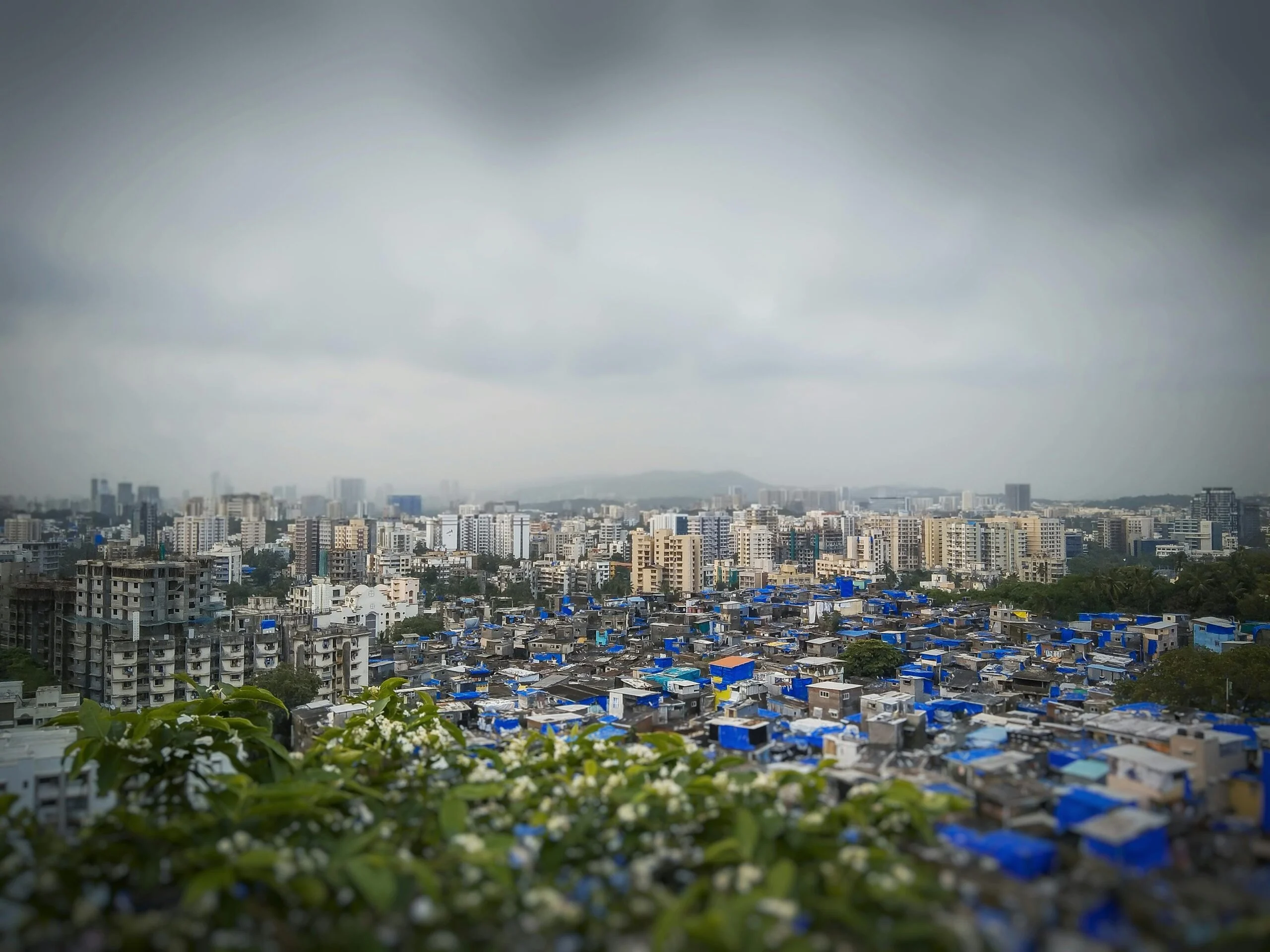
Ground report from Dharavi, Mumbai - 1 million people in 2.4 sq km, a billion-dollar informal economy, and the daily fight for dignity in India’s largest urban slum.
The Morning Rush in a City Within a City
At 4:30 in the morning, before Mumbai’s skyline catches the first orange of dawn, Dharavi is already awake. The narrow lanes - some barely wide enough for two people to pass - echo with the clatter of aluminium buckets, the hiss of kerosene stoves, and the murmur of families beginning another day in the most densely populated neighbourhood in Asia. The air is thick with the smell of fresh chapatis layered over the sharper scent of open drains. Somewhere, a radio crackles with the morning news. Somewhere else, a child coughs in the half-dark of a room where seven other people slept shoulder to shoulder through the night.
Dharavi sprawls across 2.4 square kilometres in the geographic heart of Mumbai, wedged between two of the city’s major railway lines - Western and Central. It is home to an estimated one million people, though the real number could be higher, since many residents have no formal address, no voter ID, and no place in any government register. It is, by most measures, India’s largest slum - and one of the largest in the world. But calling it merely a “slum” flattens the reality of a place that is, in truth, a self-contained city: a vast, humming organism of labour, commerce, faith, community, and stubborn, daily survival.
This ground report is drawn from weeks spent walking Dharavi’s lanes, sitting in its workshops, visiting its schools, and listening to the people who call it home. Their stories are not abstractions. They are the lived texture of urban poverty in India - a poverty that exists not in some remote village, but in the shadow of some of the most expensive real estate on the planet.
The fundamental unit of life in Dharavi is the room - typically 10 feet by 10 feet, sometimes a little less. Inside this hundred square feet, families of eight, nine, or ten people eat, sleep, study, argue, pray, and store everything they own. Possessions are stacked vertically: rolled-up bedding on shelves near the ceiling, cooking utensils hung from hooks on the wall, school bags dangling from nails. The floor serves as dining table, workspace, and bed, depending on the hour. Privacy is a concept that has been quietly surrendered to necessity.
Fatima Sheikh, 38, lives in one such room in the Kumbharwada area with her husband, their four children, and her elderly mother-in-law. “We have a system,” she says, folding a thin cotton mattress into a tight roll as her youngest daughter eats breakfast on the floor beside her. “The children sleep in a row along one wall. My mother-in-law has the corner. My husband and I sleep near the door. In the monsoon, water comes inside, so we put bricks under the bedding and sleep on top of the bricks.”
When asked how she manages, Fatima pauses, then answers with a question of her own: “Where else will we go? This room costs us four thousand rupees a month. Find me another room in Mumbai for four thousand.” She is right. Dharavi’s rents, while steep for what they offer, are a fraction of what even the city’s most basic formal housing costs. For millions of Mumbai’s working poor - the drivers, cleaners, garment workers, cooks, and construction labourers who keep the city running - Dharavi is not a last resort. It is the only option.
Water: Two Hours for One Million People
If housing is the first crisis, water is the second - and arguably the more punishing one. Municipal water supply to Dharavi is limited to roughly two hours each morning, typically between 5:30 and 7:30 AM. During this narrow window, one million people must collect, store, and ration every drop they will need for the next twenty-two hours: drinking, cooking, bathing, washing clothes, cleaning dishes. The maths alone is staggering. Dharavi’s water crisis is a microcosm of India’s larger water emergency, where 600 million people face extreme water stress.
Communal taps are the primary source. Long before the water arrives, queues form - mostly women and girls, balancing brass and plastic vessels of every size. Disputes over queue-jumping are common and sometimes fierce. The pressure in the pipes is often low, reducing the flow to a thin, maddening trickle. On days when the municipal supply fails entirely - which happens more often than officials acknowledge - families must buy water from private tankers at rates that can consume a significant share of their daily income.
“Water decides everything,” says Rukmini Kamble, 52, who has lived in Dharavi’s Transit Camp area for over two decades. “If the water comes late, the children are late for school. If it doesn’t come at all, I can’t cook. I can’t wash. I can’t send my husband to work in clean clothes. Everything falls apart because of water.” She stores water in four large drums that take up nearly a quarter of her room’s floor space. “Those drums are more important than furniture,” she says. “You can sleep on the floor. You cannot live without water.”
Sanitation: One Toilet for 1,440 People
The sanitation numbers in Dharavi are among the most frequently cited - and the most difficult to fully absorb. According to data from municipal surveys and NGO assessments, Dharavi has roughly one toilet for every 1,440 residents. The community toilet blocks that do exist are often poorly maintained, with broken doors, absent lighting, flooded floors, and no running water. Many charge a fee of two to five rupees per use - a small amount that adds up quickly for a family that may use the facility dozens of times a day. While India’s Swachh Bharat Mission has built over 110 million toilets, the gap between construction and usability in dense urban settlements like Dharavi remains stark.
For women and girls, the toilet crisis is also a safety crisis. Using a communal toilet after dark means walking through unlit lanes, past groups of men, to a facility where the door may not lock. Many women restrict their water intake in the evening to avoid needing to use the toilet at night. Urinary tract infections, kidney problems, and menstrual hygiene complications are widespread - and largely undocumented.
“I wake up at 4 AM specifically to use the toilet before the queue gets long,” says Priya Sawant, 24, a garment worker. “If I miss that window, I might have to wait forty-five minutes. I have seen old women faint in the queue during summer. I have seen pregnant women cry because they couldn’t hold it any longer. This is not a life anyone chooses. This is a life that is imposed on you.”
Open defecation, while reduced by toilet-building initiatives, has not been eliminated. The Mithi River, which runs along one edge of Dharavi, remains a de facto open sewer, carrying human waste, industrial effluent, and solid garbage toward the Arabian Sea. During monsoon season, the river swells and backs up into Dharavi’s lower-lying sections, flooding homes with contaminated water and creating conditions ripe for waterborne disease.
Here is the paradox at the heart of Dharavi: the same place that lacks basic water and sanitation generates an estimated one billion dollars or more in annual economic output. This is not a misprint. Dharavi is one of the most productive informal economies in the world - a vast network of micro-enterprises crammed into workshops the size of garden sheds, turning out goods that end up in markets across India and, in some cases, across the globe.
The industries are diverse and deeply specialised. In Kumbharwada, the potters’ colony, artisans from Saurashtra in Gujarat have been making clay pots, diyas, and decorative items for generations. Their kilns burn through the night before Diwali, producing millions of clay lamps that are sold across Maharashtra. In the leather district of Dharavi, workers cut, stitch, and finish wallets, belts, bags, and jackets - much of it for export. The recycling district, one of Dharavi’s largest economic zones, processes an estimated 80 percent of Mumbai’s recyclable waste: plastic, metal, glass, cardboard, electronic components, and fabric scraps are sorted, cleaned, shredded, melted, and reshaped into raw materials that feed back into the formal manufacturing chain.
“I have been working leather for forty years,” says Mohammad Iqbal, 62, sitting cross-legged on the floor of his workshop in the 13th Compound area, a knife in one hand and a half-finished wallet in the other. His fingers are thick with calluses and stained permanently dark. “My father brought me here from Uttar Pradesh when I was a boy. He taught me this craft. I taught my sons. We make goods that sell in Crawford Market, in Colaba, sometimes even abroad. But look around you - this is where we work.” He gestures at the cramped, low-ceilinged room where six men sit in a circle, each performing a different step in the production chain. The air smells of tanned hide and adhesive. A single fluorescent tube provides the only light.
“People call this a slum,” Iqbal continues. “But this slum feeds the city. Without Dharavi, half of Mumbai would not have the goods it uses every day. We are not beggars. We are workers. The only thing we lack is space and respect.”
The Garment and Food Industries
Beyond leather and recycling, Dharavi’s garment workshops produce everything from school uniforms to embroidered kurtas. Small-scale food production units - making papads, pickles, farsan, and sweets - supply restaurants and retail shops across Mumbai. Bakeries operate out of rooms barely large enough to hold their ovens. Tailoring units run through the night to meet orders. The combined output is staggering, representing a level of entrepreneurial energy and productivity that formal economic indicators entirely fail to capture.
Yet almost none of this economic activity is formally recognised. Workers have no contracts, no insurance, no pension, no sick leave. Injuries are common - burns from recycling furnaces, cuts from leather knives, respiratory illness from plastic fumes - and are treated, if at all, at small private clinics that charge fees most workers can barely afford. The billion-dollar economy of Dharavi runs on unprotected, unregulated, and largely invisible labour.
Education in Dharavi exists in a landscape of overcrowded municipal schools, under-resourced classrooms, and a growing network of community-run learning centres that attempt to fill the gaps the state has left. Municipal schools in the area often have student-to-teacher ratios exceeding 60:1. Infrastructure is poor. Textbooks arrive late. Many teachers, demoralised by working conditions, are frequently absent. The challenges mirror India’s broader education crisis, where learning outcomes remain alarmingly low despite rising enrolment.
Into this gap have stepped dozens of NGOs, community organisations, and individual volunteers who run informal schools, tuition centres, libraries, and after-school programmes. These efforts are often heroic - and often precarious, dependent on donations and volunteer energy that can dry up without warning.
Meena Yadav, 27, runs a small community library in a room she rents in the Social Nagar section of Dharavi. The shelves - improvised from wooden crates - hold roughly 800 books in Hindi, Marathi, English, and Urdu. On a weekday afternoon, a dozen children sit on the floor reading, while Meena moves between them, helping with homework, explaining a sentence in English, or simply listening to a child read aloud.
“I grew up here,” Meena says. “I studied in the municipal school. I was lucky - I had one teacher who believed in me, who pushed me to finish my degree. Most of my classmates dropped out by Class 8. The girls got married. The boys went to work. I kept going because one person told me I could.” She pauses. “That is what I am trying to be for these children. That one person.”
The library operates on a monthly budget of roughly eight thousand rupees - most of it from Meena’s own earnings as a part-time data entry operator. “I cannot pay for this forever,” she admits. “But every month I see a child pick up a book who never held one before, and I think - one more month. Always one more month.”
A Health Worker’s Daily Walk
Sunita Waghmare, 45, is a community health worker - an ASHA (Accredited Social Health Activist) - assigned to a section of Dharavi that includes roughly 3,000 households. Every morning, she sets out with a bag containing basic medicines, a register, a blood pressure cuff, and a mobile phone loaded with a government health app that frequently crashes. Her job is to track pregnancies, monitor infant nutrition, promote vaccination, identify cases of tuberculosis, and counsel families on hygiene practices - all in lanes so narrow that her shoulders sometimes brush both walls as she walks.
“The biggest problem is not disease,” Sunita says, pausing outside a home where she has come to check on a newborn. “The biggest problem is that people wait too long before they seek help. A woman will have a fever for five days before she tells anyone. A child will have diarrhoea for a week before the mother brings him to me. They are afraid of the cost. Even at the government hospital, there are charges - for medicines, for tests, for the auto-rickshaw to get there. So they wait. And sometimes, by the time they come to me, it is very late.” The child malnutrition crisis is especially severe in settlements like Dharavi, where overcrowding and poor sanitation compound nutritional deficiencies.
Tuberculosis remains a persistent threat. The cramped, poorly ventilated rooms of Dharavi are ideal breeding grounds for the bacteria. Sunita has seen cases where an entire family - parents and children - tested positive because they shared a single room with an infected member. “I tell them to keep the windows open, to let in sunlight and air. But many rooms don’t have windows. What do I say then?”
COVID-19, when it arrived in 2020, tore through Dharavi with a ferocity that surprised no one who knew the area. Physical distancing was a cruel joke in a place where ten people shared a room and a hundred shared a toilet. Yet Dharavi also became, unexpectedly, a model of community-driven epidemic response. Local health workers, community leaders, and NGOs organised aggressive testing, contact tracing, and isolation in ways that outpaced many wealthier neighbourhoods. The crisis revealed both the extreme vulnerability of slum populations and their extraordinary capacity for collective action when given even minimal support.
Dharavi is not an anomaly. It is, in many ways, a concentrated expression of an urban crisis that spans the entire country. According to Census 2011 - the most recent data available - approximately 65 million Indians lived in urban slums, accounting for about 17 percent of the total urban population. Independent researchers and housing rights organisations estimate that the true figure today is likely well over 100 million, driven by continued rural-to-urban migration, rising housing costs, and the near-total failure of affordable housing programmes to keep pace with demand.
India’s urban slums are not confined to Mumbai. Delhi has its vast settlements in Seemapuri and Sanjay Colony. Kolkata has its bustees. Chennai, Hyderabad, Bengaluru, Ahmedabad, Pune - every major city has its shadow population living in informal settlements, often on land that is technically government-owned, with tenure that could be revoked at any moment. The residents of these settlements build India’s infrastructure, clean its offices, cook its restaurant meals, stitch its clothes, and drive its taxis - yet remain largely invisible in policy discussions about urban development. The connection between urban poverty and youth unemployment creates a cycle that traps generation after generation.
The Dharavi Redevelopment Controversy
For over two decades, Dharavi has been the subject of ambitious redevelopment plans. The basic idea has remained constant: clear the existing settlement, build modern high-rise buildings, relocate residents into small flats, and open up the remaining - and enormously valuable - land for commercial development. The latest iteration of this plan, awarded to the Adani Group in 2022, envisions a massive transformation of the area into a mixed-use development. Eligible residents would receive free 350-square-foot flats.
The plan has generated fierce controversy. Residents and housing rights activists have raised a series of pointed questions. Who counts as “eligible”? The cut-off date for eligibility - requiring proof of residence before the year 2000 - would exclude hundreds of thousands of people who have lived and worked in Dharavi for decades but lack the documentation to prove it. What happens to the workshops, the kilns, the recycling units, the leather factories? A 350-square-foot flat on the twelfth floor of a high-rise does not accommodate a pottery kiln. The informal economy that sustains a million people cannot simply be moved upward into apartment buildings.
“They want to give us flats,” says Iqbal, the leather worker. “But where will I work? My workshop is where I live. My customers know this lane. My suppliers come to this door. If you put me in a flat on the tenth floor, I am not a leather worker anymore. I am just an old man in a small room with no income.”
The redevelopment debate raises a fundamental question about who cities are for. When the value of land beneath a settlement rises to billions of dollars, the pressure to displace existing residents becomes immense. Across India, slum redevelopment projects have a troubling track record: residents are moved to distant “rehabilitation” colonies on the urban periphery, far from their workplaces, cut off from their social networks, and provided with flats that often develop structural problems within years. Many, unable to afford the commute to their old jobs or the maintenance charges of their new flats, simply sell their allotments and return to informal settlements elsewhere. The cycle repeats.
Smart Cities Mission vs Ground Reality
India’s Smart Cities Mission, launched in 2015 with an initial target of transforming 100 cities, promised a new urban future: technology-driven governance, efficient infrastructure, sustainable development. A decade on, the results are mixed at best. Many of the mission’s showcase projects - surveillance systems, command-and-control centres, smart street lighting - have been concentrated in already-developed areas, bypassing the slums and informal settlements where the need for basic infrastructure is most acute.
“You can put sensors on a road that already works,” says Anita Patil, a housing rights researcher based in Mumbai. “But what about the lanes in Dharavi that don’t have drainage? What about the settlements in Pune where there is no piped water? The Smart Cities Mission was designed for a version of India that most Indians don’t live in. If you want to make cities smart, start with the basics: water, toilets, solid waste management, affordable housing. There is nothing smart about a city where a million people share a few hundred toilets.” India’s waste management crisis is especially visible in urban slums, where municipal collection systems often fail to reach residents.
The people of Dharavi are not asking to be rescued. They are asking to be seen - and to be provided with the basic services that every Indian citizen is entitled to but that millions have never received. The solutions are not mysterious. They have been articulated by urban planners, housing rights organisations, and community leaders for decades. What has been missing is the political will to implement them.
In-Situ Rehabilitation Over Displacement
The most effective approach to slum improvement, documented extensively by researchers and validated by successful projects in countries like Thailand and Brazil, is in-situ rehabilitation: upgrading existing settlements rather than demolishing them and relocating residents. This means improving the physical infrastructure - drainage, water supply, sanitation, electricity, roads - while preserving the social and economic fabric that residents have built over generations. It means recognising that a settlement like Dharavi is not a problem to be erased but a community to be supported.
Basic Services as a Right, Not a Favour
Water, sanitation, and waste management must be treated as non-negotiable entitlements for every urban resident, regardless of the legal status of their settlement. The argument that services cannot be provided to “illegal” or “unauthorised” settlements is both morally bankrupt and practically self-defeating - denying services to dense settlements creates public health crises that affect the entire city. Every rupee spent on clean water and functional toilets in Dharavi is a rupee saved on hospital bills, lost workdays, and epidemic response.
Land Rights and Tenure Security
The single most transformative intervention for slum residents is security of tenure - the legal assurance that they will not be evicted from their homes without due process and fair compensation. When residents know they will not be displaced, they invest in their own homes, their businesses, and their communities. They improve structures, build additional floors, upgrade wiring and plumbing. Tenure security unleashes private investment at a scale that no government programme can match.
Formalising the Informal Economy
Dharavi’s billion-dollar economy operates entirely outside the formal regulatory framework. Bringing it within that framework - through simplified registration, access to credit, worker protections, and occupational health standards - would benefit both the workers and the wider economy. This does not mean imposing heavy-handed regulation on micro-enterprises that can barely survive as it is. It means creating pathways: access to bank accounts, small business loans, health insurance, and vocational training that allow informal workers to grow their enterprises without losing the flexibility that makes them viable. Microfinance programmes have already demonstrated how access to small loans can transform livelihoods in communities like Dharavi.
Investing in Community-Led Solutions
The most effective interventions in Dharavi - and in slums across India - have consistently been those designed and driven by the communities themselves. Community toilet blocks managed by local committees, women’s savings groups, neighbourhood health volunteer programmes, and community-run schools have all demonstrated results that top-down government programmes have failed to achieve. What these initiatives need is not direction from above but funding, technical support, and institutional recognition from below.
In the late afternoon light, Dharavi’s rooftops form an uneven horizon of corrugated metal, blue tarpaulin, and concrete slabs bristling with rebar - always rebar, always pointing upward, as if the buildings themselves are reaching for something just out of grasp. Below, the lanes are dense with people returning from work, children playing cricket with a tennis ball, women gathering at a communal tap for the evening’s water collection. A loudspeaker from a nearby mosque delivers the call to prayer. A temple bell rings in answer. The smell of frying onions drifts from a dozen open doorways.
There is life here - enormous, complicated, resilient life. There is industry, faith, laughter, ambition, and a fierce attachment to community. There is also suffering: the suffering of inadequate water, of absent sanitation, of cramped rooms and polluted air and the constant, grinding insecurity of knowing that your home could be demolished by a government order you never saw and cannot challenge.
India made a promise to its citizens at Independence - a promise of dignity, equality, and justice. For the people of Dharavi, and for the hundred million Indians living in urban slums across the country, that promise remains radically, painfully unfinished. The question is not whether we have the resources to fulfil it. The question is whether we have the will.
The morning water queue will form again tomorrow at 4:30 AM. Fatima will fold her bedding. Iqbal will pick up his knife. Meena will open her library. Sunita will walk the lanes. The city within the city will carry on - waiting, working, and refusing to disappear.
What you can do
- Share the evidenceSend this to one person who should know about poverty.Share on WhatsApp
- Give an afternoonTeach, mentor, clean up, or lend your professional skills.Ways to volunteer
- Tell us what's missingKnow a story, a fact we got wrong, or a solution worth spotlighting?Suggest a story
Politically neutral. Every claim sourced. Report a correction.
No comments yet