Forest Rights Act: 18 Lakh Claims Rejected, 25 Lakh Titled
Of 51 lakh claims under the Forest Rights Act, about half have titles and over a third were rejected. Where community forest rights work, and why.
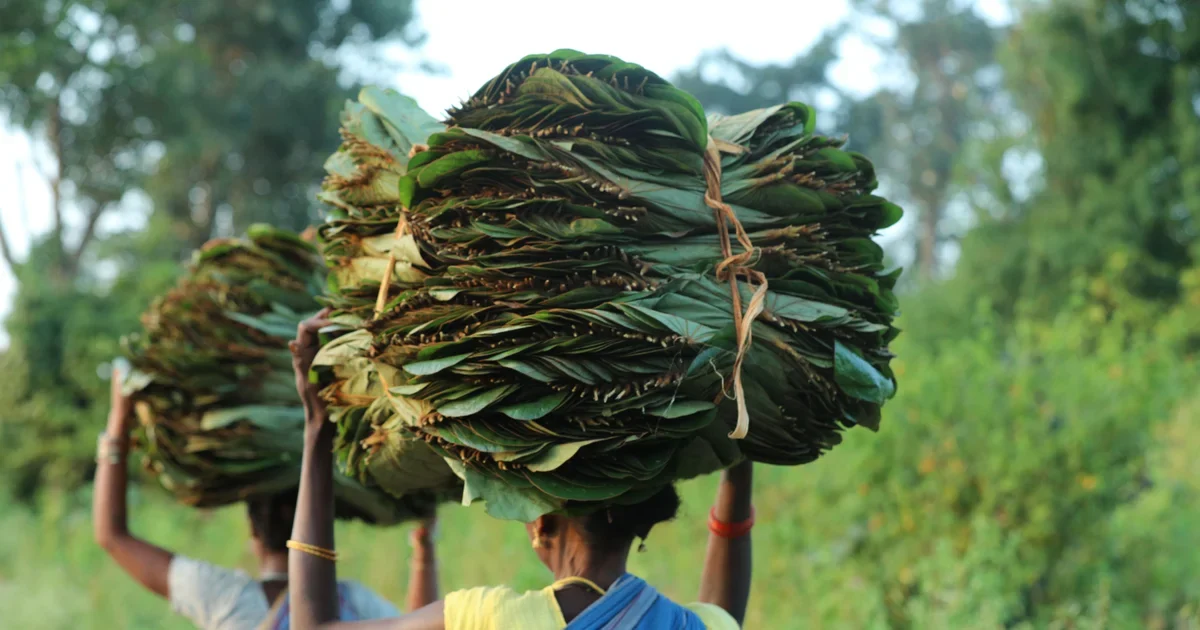
Photo by Beyond India by Shubham Thakur on Pexels
In this story
What does the Forest Rights Act promise?
The Forest Rights Act (formally the Scheduled Tribes and Other Traditional Forest Dwellers (Recognition of Forest Rights) Act, 2006) says that people who have lived in and off India’s forests for generations hold rights that the state never wrote down. The law set out to correct what Parliament called a “historical injustice”: when colonial and then independent India drew the boundaries of reserved and protected forests, millions of Adivasi and other forest-dwelling families became, on paper, encroachers on land they had farmed and used for centuries.
The Act recognises three broad kinds of rights.
- Individual forest rights (IFR), which are rights to live in and cultivate forest land that a family occupied before December 2005, up to four hectares.
- Community rights (CR), such as grazing, fishing, access to water bodies and the use of minor forest produce like tendu leaves, bamboo, mahua and honey.
- Community forest resource rights (CFR), the right to protect, regenerate, conserve and manage a forest that a village has traditionally looked after. This is the part of the law that gives a gram sabha, the village assembly, a say in how its forest is run.
The Act also recognises the habitat rights of Particularly Vulnerable Tribal Groups (PVTGs) and gives the gram sabha the first job: it receives claims, verifies them and passes them up to a sub-divisional committee and then a district committee. It is a rare law that starts with the village and not with the forest department. That design is also why its record is so uneven.
How many Forest Rights Act claims have been filed, titled and rejected?
The Ministry of Tribal Affairs (MoTA) publishes a monthly progress report, and Parliament gets periodic state-wise answers. The most recent official count we could verify is a Lok Sabha reply on 12 February 2026 (Unstarred Question 2072), with data to 31 December 2025. It reports 51,92,219 claims received, made up of 49,77,166 individual and 2,15,053 community claims, and 25,43,580 claims approved. That is about 49 per cent.
The split between titles, rejections and pending claims comes from an earlier snapshot. As of 1 June 2025, a report in Swarajya based on MoTA data said that of 51.23 lakh claims, 25.11 lakh (49.02 per cent) had titles, 18.62 lakh (36.35 per cent) had been rejected and 7.49 lakh (about 15 per cent) were pending.
Outcome (MoTA data as of 1 June 2025) | Claims | Share |
|---|---|---|
Titles distributed | 25.11 lakh | 49.02% |
Rejected | 18.62 lakh | 36.35% |
Pending | 7.49 lakh | about 15% |
Total received | 51.23 lakh | 100% |
Read the table the way a family would. For every two claims filed, roughly one ended with a title, a little over one in three was turned down, and a little under one in six was still waiting. The figures cover claims, not families or acres, and the numbers move every month. Different outlets also quote slightly different cut-off dates, so always note the date when you quote one.
Which states have the longest queues?
Swarajya’s report lists the states with the most pending claims at 1 June 2025: Telangana (3.29 lakh), Odisha (1.2 lakh), Assam (96,000), Gujarat (84,000) and Maharashtra (28,000). It also names Karnataka and Jharkhand among the states with large backlogs. By share of claims still pending, Goa (87 per cent) and Himachal Pradesh (84.5 per cent) were highest.
At the other end, Chhattisgarh and Odisha have handled huge volumes. MoTA’s data to 30 June 2022, as reported by Sabrang, showed Chhattisgarh with 9,22,346 claims, the highest in the country, and 4,91,805 titles. Odisha had 6,43,375 claims and about 4.6 lakh titles. A high count of titles does not tell you whether the rights are secure or whether the land is recorded in revenue records, which is a separate question.
Why are so many claims rejected?
The monthly reports give the number and rarely the reason. In December 2022, Sabrang noted that the government had given no details on why claims were rejected. What activists and officials have said over the years falls into a few patterns:
- Proof of occupation. The law accepts a wide range of evidence, including elders’ statements, but local officials sometimes insist on documents that Adivasi families never had.
- Remote sensing. Satellite images are used to check claims, and critics say that a claimant farming under tree cover or in a shifting pattern may not show up on them.
- Rejection without notice. Families often learn of a rejection late, or never, and miss the window to appeal, which the Act sets at 60 days from the decision.
- Protected area conflict. Where a claim falls in a tiger reserve or national park, the forest department may resist it.
We have not found a single national audit that sorts rejections by reason, which is itself a finding. The states differ so much that an all-India number hides more than it shows.
What happened with the 2019 eviction order?
The stakes became clear in February 2019. On 13 February the Supreme Court, hearing a petition by wildlife groups, ordered states to evict people whose claims had been finally rejected. About 11.8 lakh families in 17 states were affected, according to The Leaflet. After the Centre and Gujarat asked for a stay, the court stayed the order on 28 February 2019 and told states to file affidavits explaining how claims had been decided. The episode showed why a rejection is not a paper matter. If the process that produces it is flawed, a rejected family can be treated as an encroacher.
What is a community forest resource right, and why does it matter?
An individual title gives a family a plot. A community forest resource (CFR) title gives a whole village the legal right to protect, manage and use a forest that surrounds it, including the minor forest produce, and to keep out outsiders who want to cut or divert it. That includes a say over felling, grazing and, in practice, the question of whether a mine or plantation can come. For the wider fight over land in a mineral-rich state, see our story on Jharkhand’s mineral wealth and Adivasi land rights.
The figures show a gap. Community claims are only about 4 per cent of all claims (2,15,053 of 51,92,219 at 31 December 2025). Yet by area, community titles do much of the work. MoTA’s data to 30 June 2022 showed 1,02,585 community titles covering 1,14,82,521 acres, against 21,33,260 individual titles covering 45,48,119 acres. Put plainly, community titles were under 5 per cent of titles and about 72 per cent of the area recognised. A village that holds a CFR title controls a large forest, which is why the right matters and why it is contested.
CFR titles were once a rarity. In 2011, Down To Earth reported that only 3,628 community rights titles had been distributed nationwide, about 0.3 per cent of all titles at the time, and that in Gadchiroli only two villages had won the right to protect and manage the forest. That has changed, but the Ministry’s own push in 2025 and 2026 shows that CFR recognition remains behind. At a first regional review in Bengaluru in September 2026, MoTA asked five southern states to recognise community forest resource rights and PVTG habitat rights, put recognised rights into land and revenue records, and link their records to a national FRA portal, as summarised by Drishti IAS. The Centre also asked states in 2025 to set up FRA cells, map forest areas for community rights and help gram sabhas prepare community forest resource management plans under the Dharti Aaba Janjatiya Gram Utkarsh Abhiyan.
Where does the Forest Rights Act work?
The pattern across the best cases is the same. A village gets the title, the gram sabha organises, and it earns from the forest in a way that makes protecting it pay.
What did Mendha Lekha in Gadchiroli do?
Mendha Lekha, in Maharashtra’s Gadchiroli district, is the best-known example. It was among the first villages in India to win community forest rights under the Act, in 2009, together with neighbouring Marda. As Down To Earth reported, the rights gave Mendha Lekha management of 1,832 hectares and Marda 517 hectares.
The title did not end the fight. The forest department refused to issue transit passes, the papers needed to move bamboo out of a forest, and argued that harvesting and marketing bamboo was not part of a gram sabha’s rights. In February 2011 villagers held a public bamboo sale in protest, and on 27 April 2011 the department handed over a transit pass book to the village. The gram sabha then began felling bamboo at about 90,000 poles a day and gave the buying contract to a local contractor.
The money showed what the right can mean. According to Down To Earth, each pole sold for Rs 23. Rs 9 went to workers for felling and cleaning and Rs 14 to the gram sabha. The village expected about Rs 20.7 lakh in a single season, with Rs 12.6 lakh going to the gram sabha and Rs 8.1 lakh in wages, and workers who felled and cleaned 50 to 80 poles a day earned Rs 450 to Rs 720. These figures are from 2011 and the market has changed, but the structure holds: the village earns, the work goes to local hands and the forest is protected by the people who profit from it.
How have other Gadchiroli villages fared?
Gadchiroli is often held up as a model for Maharashtra. In 2011, 623 community forest rights claims had been cleared in the district since 2009, though only two villages had then won management rights over their community forest resources. Eleven villages wrote protests that rights had been left out or conditions added that the law does not allow. We did not find a current, verified list of Gadchiroli’s CFR villages or their recent bamboo and tendu earnings, so we do not give one. The lesson from the district is that titles are only the beginning. The follow-through, from transit passes to management plans and bank accounts for the gram sabha, decides whether the right is real.
What is happening in Odisha?
Odisha has issued some of the largest numbers of titles in the country, but most are individual. A Mongabay India report put the state’s total at 4,63,260 titles, of which only 7,810 were CFR titles. At 1 June 2025 it still had about 1.2 lakh pending claims, according to Swarajya.
A village-level case from Mongabay India shows what a CFR title can do. Kodalpalli and Sinduria, in Nayagarh district, applied for community forest rights in 2008 and received them in November 2021, as a joint title over 282.67 hectares of Sulia reserve forest. The forest had been taken over by the forest department’s soil conservation wing and later leased to the Odisha State Cashew Development Corporation, and the villagers had been fined or booked when they entered it. After the title, each village formed a cashew committee, collected the harvest from April to mid-May (mostly women, one member per household) and sold it to the best bidder. The first sale in 2022 brought Rs 4.5 lakh, about Rs 7,500 per household, and the villages say cashew gives them half their annual income. The delay, from application to title, was 13 years.
Why do these examples matter?
They show three things that the national numbers cannot. First, the right is worth fighting for, because the income is real and goes to those who protect the forest. Second, the process is slow, and the people with the least time and money bear the cost of the delay. Third, the final hurdle is often not the title but what comes after: transit passes, management plans, access to markets and the cooperation of forest officials. Our piece on the Chipko movement tells an older version of the same story, in which villagers who looked after a forest wanted a fair share of its value.
What holds the Act back?
- Two departments, one forest. The Act is run by the tribal affairs ministry and state tribal departments, while the forest is held by forest departments that have little reason to give up control. The Mendha Lekha transit pass dispute shows this in miniature.
- Little support for gram sabhas. A gram sabha needs a bank account, a management plan, training in accounts and sale, and legal help. MoTA’s 2025 push for FRA cells and management plans is an attempt to fill that gap.
- Titles that do not reach the land records. A title that is not entered in the revenue record can be ignored. MoTA asked southern states in September 2026 to reflect recognised rights in land and revenue records.
- Opaque rejections. The reasons are not published, and appeals are hard for a family that cannot read the order.
- Competing uses for forest land. Mining, plantations and infrastructure all need forest land, and consent from the gram sabha slows them. This is a recurring friction, and our piece on Medha Patkar and the Narmada movement covers the case of displacement by a large project.
How does a village file a community forest resource claim?
The steps are set out in the Act and its 2008 rules, and a village does not need a lawyer to begin. The gram sabha elects a Forest Rights Committee, which prepares the claim. The committee records the boundaries of the forest the village has traditionally used, marks them on a sketch map, and gathers evidence such as elders’ statements, old records, and the location of sacred sites, grazing grounds and water sources. The gram sabha passes a resolution, and the claim goes to the sub-divisional committee and then the district committee for approval. Community forest resource claims use a form known as Form C.
The practical advice from groups that have done this is to start with a good map made by the villagers themselves, to hold gram sabha meetings that are properly recorded, and to keep copies of everything submitted. After the title, the gram sabha should form a committee to manage the forest, open a bank account, prepare a management plan and decide who benefits from any sale.
What would make the Act work better?
- Publish reasons for every rejection and send a copy of the order to the family, so appeals can be filed in time.
- Review rejected claims with the claimant present, starting with states where the rejection share is highest.
- Make CFR the priority, with a village-level target and a published list of villages that are eligible and have not yet received a title.
- Give gram sabhas a handbook and a helper: a trained facilitator for each cluster of villages who can help with maps, forms, plans and accounts.
- Settle the transit pass issue in all states by letting the gram sabha issue its own passes for produce from its own forest, as activists have long argued.
- Enter recognised rights in land records within a fixed time, and make the national FRA portal public, with village-level data.
- Share data by month and by state in a machine-readable form, including individual and community claims, rejections, appeals and pending cases.
What can you do?
- Find out your state’s numbers. Look up your state’s monthly progress on the MoTA website or ask your district tribal welfare office how many claims are pending in your district.
- If you live in or near a forest, ask your gram sabha whether it has filed a CFR claim. Any gram sabha with traditional use of a forest can file one.
- Help someone appeal. A rejected claimant has a right to appeal to the district-level committee. Local groups, legal aid clinics and the district legal services authority can help.
- Use the right to information. Ask the district collector’s office for the list of claims decided, with reasons, and the status of titles entered in land records.
- Support groups that help gram sabhas prepare claims and plans. A donation or a few volunteer days from a lawyer, surveyor or accountant is useful.
- Buy forest produce from community enterprises where possible, such as honey, bamboo goods or cashew from CFR villages, so that the income reaches those who protect the forest.
- Be careful with the word “encroacher”. A pending or rejected claim is not proof of encroachment. The Act set up a legal process to recognise these claims, and in many places that process has not been fair or complete.
- Ask your representatives at the state and parliamentary level about the backlog in your state. The questions asked in Parliament are what produce the public data we rely on.
Frequently asked questions
When was the Forest Rights Act passed?
It was passed in December 2006 and came into force on 1 January 2008 when the rules were notified. It is usually called the Forest Rights Act or FRA.
Who can claim rights under the Act?
Scheduled Tribes who have lived in and depended on forest land, and other traditional forest dwellers who have lived there for at least three generations (75 years) before December 2005.
How many claims have been filed so far?
A Lok Sabha reply of February 2026 gave 51,92,219 claims received to 31 December 2025, of which 49,77,166 were individual and 2,15,053 community, with 25,43,580 approved.
How many were rejected?
As of 1 June 2025, 18.62 lakh claims (36.35 per cent) had been rejected, according to MoTA data reported by Swarajya.
What is a community forest resource right?
The right of a village to protect, manage and use a forest it has traditionally cared for. Mendha Lekha in Gadchiroli, with 1,832 hectares, was among the first villages to hold it.
Can the forest department refuse transit passes?
The Act recognises a community’s right to own, collect, use and dispose of minor forest produce (section 3(1)(c)). In practice the transit pass system has been a source of dispute, and Mendha Lekha had to hold a public sale in protest before it got a pass book in 2011.
Does the Act allow mining on forest land?
Forest clearance for a project is a separate process. Whether and when a gram sabha’s consent is needed has been contested, and we do not take a side here. Our Jharkhand story looks at the mining question from the ground.
The bottom line
The Forest Rights Act is a rare law that begins with the village. After close to two decades, about half of the 51.9 lakh claims have ended in a title, more than a third in a rejection, and the rest are waiting. The headline figure hides two bigger issues: the reasons for rejection are not public, and community forest rights, the part that gives a village control of a forest, are still only about 4 per cent of the claims. Where the Act works, in places like Mendha Lekha and Nayagarh, the evidence is plain. A village gets a title, earns from bamboo or cashew, and has every reason to protect its forest. The change now needed is not a new law. It is publishing the reasons, reviewing rejections, supporting gram sabhas and writing the rights into land records.
Sources: Ministry of Tribal Affairs data as reported in Lok Sabha Unstarred Question 2072 (12 February 2026), by Swarajya (October 2025, data to 1 June 2025) and by Sabrang (December 2022, data to 30 June 2022); Down To Earth on Mendha Lekha and Marda (2011); Mongabay India on Kodalpalli and Sinduria (2023); The Leaflet on the Supreme Court order of February 2019; Drishti IAS summary of the MoTA regional review (September 2026).
What you can do
- Share the evidenceSend this to one person who should know about social justice.Share on WhatsApp
- Give an afternoonTeach, mentor, clean up, or lend your professional skills.Ways to volunteer
- Tell us what's missingKnow a story, a fact we got wrong, or a solution worth spotlighting?Suggest a story
Politically neutral. Every claim sourced. Report a correction.

No comments yet