Human Trafficking and Bonded Labour in India: Why the Numbers Differ and What Works
Police recorded 2,250 trafficking cases in 2022; Walk Free estimates 11 million people in modern slavery. Why the gap, what the law promises, and what frees people.

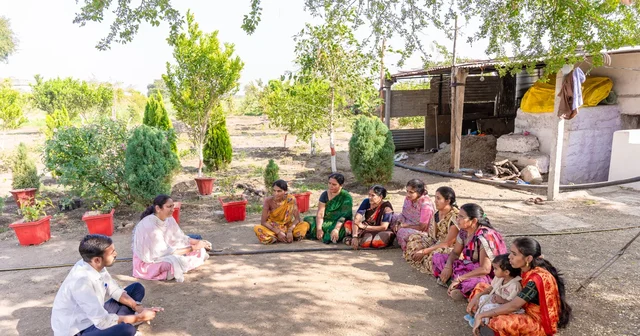
Photo by Dibakar Roy on Pexels
In this story
How many people are trafficked or held in bonded labour in India?
Nobody knows exactly, and the honest answer starts with two very different numbers. The National Crime Records Bureau (NCRB) reported 2,250 human trafficking cases registered by Anti-Human Trafficking Units in 2022, with 6,036 victims identified, of whom 2,878 were children, as summarised by Dataful’s reading of the NCRB tables. Telangana, Maharashtra and Bihar recorded the most cases that year.
The Global Slavery Index 2023, published by the Walk Free foundation, gives a number that is thousands of times larger. Its India snapshot estimated that 8.0 in every 1,000 people were in modern slavery at some point in 2021, which it translates to about 11.05 million people in forced labour or forced marriage, as set out in the Walk Free GSI India snapshot. India ranked 34th in the world on prevalence, and it has the largest absolute number among G20 countries because it is so populous.
So which one is right? Both measure something real, and neither is the whole picture. The next section explains why they sit so far apart.
Why do police figures and NGO estimates differ so much?
- They count different things. NCRB counts cases that police registered under trafficking laws. One case can hold many victims, and many victims never become a case. Walk Free estimates people living in a situation of forced labour or forced marriage on a given day, whether or not anyone has complained.
- Detection is thin. Trafficking is hidden by design. A girl sent to a city for domestic work, or a family working off an advance in a brick kiln, appears in no register until someone rescues them or complains.
- Definitions vary. Walk Free’s index includes forced marriage, which police files do not count as trafficking. The law on bonded labour, trafficking for sexual exploitation and forced labour overlap but are not identical.
- Method. The Walk Free figure is a modelled estimate built from national surveys and other data, with a margin of error. Older editions put the number for India much higher, at 14 million in 2014 and about 18 million in 2016, which shows how sensitive the estimate is to method and year.
A fair reading is that the official figure is a floor, the index figure is a rough ceiling with wide error bars, and the truth lies between them. For policy this matters less than it seems. The cases that police do not record are the ones where a better response is needed.
What is bonded labour, and who is caught in it?
Bonded labour is work done to repay a debt, usually a small advance, where the worker cannot leave, cannot bargain over wages and often cannot even find out how much is owed. The debt is passed from parents to children, and it grows through interest, fines and deductions, so it rarely gets paid off.
India abolished the system in law in 1976, and Article 23 of the Constitution already bans forced labour. In practice it continues in brick kilns, stone quarries, rice mills, agricultural fields, construction, sugar cane harvesting and some domestic and garment work.
Why are brick kilns so often a site of bondage?
Anti-Slavery International’s briefing on forced labour in India’s brick kilns lists the features that make kilns a high-risk place. Recruiters, called jamadars, travel to villages and offer an advance known as a peshgi. The workforce is largely made up of internal migrants from excluded communities, and the briefing notes that most people in debt bondage in India are Dalits or Adivasis. Wages are paid per thousand bricks and the whole family counts as a single wage unit, which keeps pay very low and puts women and children to work without being recognised as workers. Workers often borrow again to clear an older debt. The full briefing is available from Anti-Slavery International.
The Anti-Slavery study of kilns in Punjab also found that workers who migrate across state lines are more vulnerable: they take a higher advance, are hired through a contractor and find it harder to get help in a state where they do not speak the language. Our earlier piece on how India’s internal migrants move the workforce explains why so many people travel for seasonal work in the first place.
Is bonded labour only in brick kilns?
No. Brick kilns are the best documented because they are large, seasonal and visible. The same pattern appears wherever a worker takes an advance from an employer or contractor: farm labour in the landlord-tenant belt, sugar cane cutting in the harvest season, stone breaking, tobacco and cotton work, rice mills and domestic work. Many of those caught are from the same social groups that have faced exclusion for generations. Our article on reservation in India and what the data shows sets out how caste still maps onto economic position.
How does trafficking work in India?
Trafficking means recruiting, moving or holding a person by force, fraud or abuse of vulnerability, for exploitation. In India it takes several forms, and the same family may face more than one.
- Forced labour and bondage. Men, women and children recruited with a loan or a promise of a job and made to work without pay.
- Domestic servitude. Girls, often from tribal districts, placed in city homes through unregistered agencies. Our article on India’s domestic workers and the missing national law explains why this sector is so hard to monitor.
- Sexual exploitation. Women and girls recruited with false promises of work or marriage.
- Child labour. Children moved to factories, shops and workshops. Kailash Satyarthi’s decades of rescue work, told in our piece on the Nobel laureate fewer Indians know than Malala, began with children bonded in carpet looms and brick kilns.
- Forced and fraudulent marriage. Brides bought from poor districts and sold across state lines, which links to the child marriage patterns covered in our article on child marriage in India.
Where do the victims come from?
The source districts are largely in poorer states of eastern and central India. News reports and civil society studies name Jharkhand, Odisha, Bihar, West Bengal, Chhattisgarh and parts of the north-east as common places of origin, with cities, brick kiln belts and farming states as destinations. Because police counts depend on how actively each state registers cases, we do not rank states here. What the pattern shows is the push factors: landlessness, debt, crop failure, mining displacement and few local jobs. Our piece on Jharkhand, a mineral-rich state with poor people describes how displacement and lack of work feed distress migration and trafficking. Our article on Bihar’s migration economy explains the same dynamic from the supply side.
What does the law say?
Several laws apply, and a person trapped in bondage or trafficking can be protected under more than one.
What is the Bonded Labour System (Abolition) Act, 1976?
The Act declares the bonded labour system illegal and cancels all bonded debts. A person freed under the Act owes nothing, and any property pledged to the debt is to be returned. It makes it an offence to compel anyone to work as a bonded labourer or to advance a bonded debt, with imprisonment of up to three years and a fine. It also puts the duty on the District Magistrate and sub-divisional officers to identify, free and rehabilitate bonded labourers, and it provides for Vigilance Committees at district and sub-division level to oversee this work.
The Supreme Court strengthened the law in the 1984 case Bandhua Mukti Morcha v. Union of India, ruling that a person who works for less than the minimum wage or without freedom can be treated as a bonded labourer, and that the state must identify and rehabilitate them. The same ruling is one reason why release and rehabilitation are legally the state’s task, not an act of charity.
What does the 2016 rehabilitation scheme promise?
The Central Sector Scheme for the rehabilitation of bonded labourers was introduced in 2016 and revamped from 27 January 2022 as the Central Sector Scheme for Rehabilitation of Bonded Labourer, 2021. A Ministry of Labour statement from July 2025, issued as a Press Information Bureau release, says identification, release and rehabilitation are the direct responsibility of the states and union territories. The key steps are as follows.
- Identification and release. The district magistrate or sub-divisional magistrate verifies the case and issues a release certificate.
- Immediate help. A small cash payment is meant to reach the freed worker right after release. The 2025 ministry statement caps it at Rs 30,000 per person.
- Rehabilitation money. The scheme sets amounts by category. In the 2016 version these were Rs 1 lakh for an adult man, Rs 2 lakh for special categories such as children and women, and Rs 3 lakh for extreme cases such as women or children rescued from sexual exploitation or trafficking, and disabled persons, as stated in a Lok Sabha reply in 2019. Check the current scheme text before quoting an amount, since sources differ.
- Non-cash support. Land, housing, skill training, a job card, ration, and school for children.
The promise is clear. What happens in practice is less so. A 2025 IndiaSpend report, carried by Newslaundry, followed 11 survivors rescued from a brick kiln in 2022. They received their release certificates in March 2022, but the Rs 30,000 immediate assistance only arrived around July 2024. The report describes a wider pattern of late payment, and of rehabilitation money being held up while a case against the employer proceeds. A certificate with no payment attached leaves the person free in law and just as poor as before, which is how many return to the same kiln.
What does the trafficking law cover?
Section 370 of the old Indian Penal Code, since replaced by the Bharatiya Nyaya Sanhita, defines trafficking and sets punishments up to life imprisonment for the worst forms. The Immoral Traffic (Prevention) Act, 1956 deals with trafficking for sexual exploitation, and the Juvenile Justice Act, the Child and Adolescent Labour Act and the POCSO Act protect children. The Inter-State Migrant Workmen Act, 1979 requires contractors who hire workers across state lines to register and keep records, though enforcement is weak.
What are Anti-Human Trafficking Units?
Anti-Human Trafficking Units (AHTUs) are special police teams, meant to investigate trafficking and link survivors to shelter and legal help. The Ministry of Home Affairs wrote to states in 2021 asking each to notify an AHTU in every district, with a state-level bureau above them. A reply in Parliament said 768 AHTUs had been set up across states and union territories and that Rs 98.86 crore was released from the Nirbhaya Fund during 2019-20 and 2020-21, as reported in the MHA materials summarised by Deccan Herald and Governance Now. We could not confirm the date of the 768 count, so read it as a snapshot rather than a current figure.
A study titled AHTU Watch, looked at how the units had actually worked between 2010 and 2019 and concluded that many existed on paper, with staff doing several jobs and little training. Since this is the main police tool for trafficking cases, whether a district’s unit has dedicated staff and a working phone is a fair question for any citizen to ask.
What works to free people and keep them free?
The evidence points to a chain of steps, and the weakest link decides the outcome: finding the person, freeing them safely, paying what is owed, helping them rebuild, and then stopping the next family from being recruited.
Does rescue alone work?
No. A rescue without rehabilitation sends people back into the same economic trap. The most useful rescues are planned, involve a magistrate and a labour officer, and bring the release certificate and the first cash payment on the same day. Workers freed from kilns often need immediate shelter, food and a way home, and their wages, pending dues and identity papers have to be secured before they leave. Rescue is the start of the process, not the end of it.
Do district vigilance committees help?
The 1976 Act requires them, and where they meet regularly they do help, because they bring the magistrate, labour department, police and civil society to one table. The problem is that in many districts the committees have not been constituted, or exist but do not meet. A simple test for a citizen is to ask the district collector’s office whether the vigilance committee has met in the past year, and to read the minutes under the Right to Information Act. Our piece on how Aruna Roy and the RTI movement gave citizens this tool shows how to use it.
What can communities do for themselves?
The best-documented approach is community organising in the villages where bonded labour is common. The Freedom Fund, a donor that backed local groups in northern and southern India, reports that bonded labour fell from over 56 per cent to around 11 per cent in the communities where its partners worked, after about five years and roughly $15.8 million of investment through more than 40 local organisations, according to the Freedom Fund’s own summary. The evaluations, carried out with the Institute of Development Studies, credit three things: raising awareness of rights and welfare schemes, forming village groups that bargain with employers and the state, and continued support to survivors. Those figures come mainly from the donor’s own programmes, so treat them as a promising case, not a guarantee.
The model is simple and cheap. Workers who know their entitlement to wages, ration cards, job cards and savings can avoid taking the next advance. Groups can negotiate better terms, report a contractor and help a member get the release certificate. A study quoted on the Freedom Fund site by researchers at Harvard found that forming community groups and spreading knowledge of welfare schemes helped reduce debt in Uttar Pradesh.
Do survivor collectives matter?
Survivors who organise are often the strongest force for accountability. An opinion piece in The News Minute describes survivor groups that follow up on release certificates, compensation and cases, and press officials to deliver. This is advocacy writing and not an outcome study, so we cite it for the idea more than for any number. The logic is sound: a survivor knows which office delays payment, can tell the next family what to expect and is harder for an official to ignore than a petition from a distant organisation.
How do source districts reduce the flow?
Prevention is cheaper than rescue, and it happens in the village. Experts working on bondage and trafficking list the same set of measures.
- Safe migration. Registering migrant workers at the village or block level so that someone knows who has left, with which contractor and for which destination.
- Village help desks. A phone number and a trained person who can verify a job offer.
- Work at home. MGNREGA days, local skilling, and credit that does not require selling labour in advance. Our piece on whether MGNREGA works reviews the evidence on rural employment.
- School and scholarship for the next generation. Children who stay in school are less likely to be recruited.
- Alerts across states. A rescue in a destination state is more effective if the source district can be told and can act on the recruiter’s village, not only the kiln.
The effort in Jharkhand, Odisha and Bihar is uneven and we could not find a state-by-state evaluation we could verify, so we describe the measures that organisations commonly recommend rather than claim results for any one state.
What about employers and supply chains?
Brick kilns, mills and farms usually sell to bigger builders and companies. When developers, public works departments and large buyers ask for proof of fair labour practice (registered workers, wages paid by bank transfer, no advances above a set limit), kilns have a reason to change. This is slower than rescue, but it is where the demand for cheap, bonded labour starts, and it is an area where consumers and public contractors can act.
What would a stronger response look like?
- Pay on the day of release. The immediate assistance and the first rehabilitation instalment should be paid when the certificate is issued, not after a conviction.
- Constitute and publish vigilance committees. Every district should post its committee’s members and meeting dates online.
- Staff AHTUs properly. A full-time officer, a vehicle and a budget in each district.
- Count better. Publish the number of bonded labourers identified, released, certified and paid, by state and year, so that the gap between rescue and rehabilitation is visible.
- Register migrant workers. Enforce the Inter-State Migrant Workmen Act and link registration to a portable ration card and bank account.
- Back survivor groups. Fund and protect collectives that help others claim their entitlements.
- Protect the privacy of survivors. Media and organisations should not show or name identifiable victims, particularly children and women rescued from sexual exploitation.
What can you do?
- Know the numbers to call. Dial 112 for police, 1098 (Childline) for a child, and the National Human Rights Commission’s helpline if you meet a case of bondage. State labour departments also run helplines. Ask your district office for yours.
- Do not rescue by yourself. Confronting a kiln owner or a recruiter can put the worker at greater risk. Pass details (place, names, the number of workers, whether children are present) to the police, the district magistrate or an anti-trafficking organisation.
- Ask where bricks, rice and clothes come from. If you are building a house, ask the supplier whether the kiln registers its workers and pays by bank transfer.
- Check domestic help agencies. If you hire help, use a registered agency or a direct arrangement with fair wages and written terms, and never employ anyone under 18.
- Use the Right to Information Act. Ask your district about its vigilance committee, the number of release certificates it has issued and the compensation paid.
- Support local groups. Give money, time or professional help (law, accounts, counselling) to organisations that run village groups and survivor networks.
- Share stories with care. If you write about a case, do not show a victim’s face or name them without informed consent.
Frequently asked questions
Is bonded labour still legal anywhere in India?
No. The Bonded Labour System (Abolition) Act, 1976 made it illegal, cancelled bonded debts and made employers liable to up to three years in prison and a fine.
How many people are in modern slavery in India?
Walk Free’s Global Slavery Index 2023 estimated about 11.05 million in forced labour or forced marriage in 2021. Police recorded 2,250 trafficking cases in 2022. The estimates differ because of what they count and how.
Who issues a bonded labour release certificate?
The District Magistrate or sub-divisional magistrate, after verifying the case. The certificate is the key to rehabilitation benefits.
How much compensation does a freed bonded labourer get?
Under the 2016 scheme, Rs 1 lakh for an adult man, Rs 2 lakh for special categories and Rs 3 lakh in extreme cases, with an immediate payment for urgent needs. Amounts and conditions have been revised since 2022, so ask the district labour office for the current figure.
What is an Anti-Human Trafficking Unit?
A dedicated police unit in a district that investigates trafficking and links survivors to shelter, legal help and rehabilitation. The Home Ministry asked states in 2021 to set up one in every district.
Why do families take advances from kiln recruiters?
Because they need cash for food, medical costs, a wedding or to settle an old loan, and the advance is the only credit available. The advance then ties the whole family to the kiln.
Who can I call if I know of a case?
Call 112, or Childline 1098 if a child is involved, and inform the district magistrate and the labour department.
The bottom line
The police count a few thousand trafficking cases a year, and a global index suggests millions of people live in some form of forced labour or forced marriage. Both can be true, because trafficking and bondage are built to stay out of sight. The law is stronger on paper than the record of rehabilitation suggests. What has worked is practical: villages where people know their rights and bargain together, survivors who follow up their own cases, a release certificate that comes with money on the same day, and prevention in the districts people leave. The factors that keep families in debt are poverty, landlessness and weak local jobs, so the fix has to include them.
Sources: National Crime Records Bureau, Crime in India 2022 (as summarised by Dataful); Walk Free, Global Slavery Index 2023, India snapshot; Anti-Slavery International, Forced labour in brick kilns in India (2015); Ministry of Labour and Employment, PIB release on the Central Sector Scheme for Rehabilitation of Bonded Labourer (July 2025); Lok Sabha reply on the bonded labour scheme (2019); Ministry of Home Affairs, communications on Anti-Human Trafficking Units; AHTU Watch study of Anti-Human Trafficking Units, 2010-2019 (published on India Development Review); Freedom Fund and Institute of Development Studies evaluations; Bonded Labour System (Abolition) Act, 1976; Bandhua Mukti Morcha v. Union of India (1984).
What you can do
- Share the evidenceSend this to one person who should know about poverty.Share on WhatsApp
- Give an afternoonTeach, mentor, clean up, or lend your professional skills.Ways to volunteer
- Tell us what's missingKnow a story, a fact we got wrong, or a solution worth spotlighting?Suggest a story
Politically neutral. Every claim sourced. Report a correction.


No comments yet