Child Marriage in India: Why 1 in 4 Girls Marries Early
About 23 per cent of Indian women aged 20 to 24 were married before 18. Why it persists, what has worked, and where the law and policy stand.
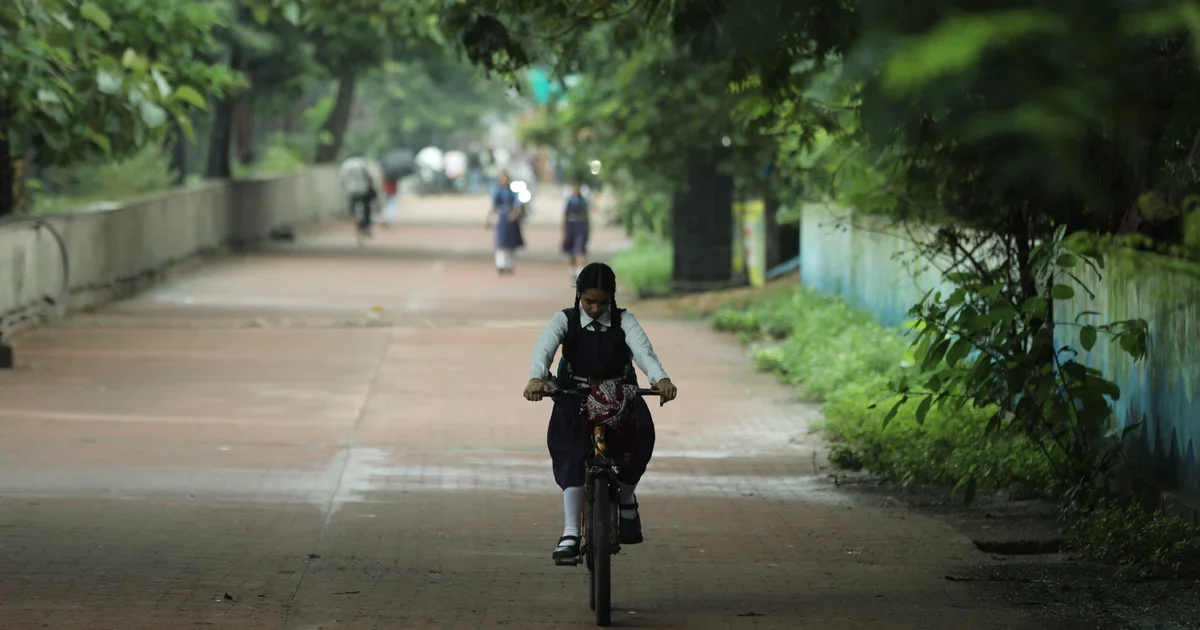
Photo by Shubham Thakur (Beyond India) on Pexels
In this story
How common is child marriage in India today?
About 23 per cent of Indian women aged 20 to 24 were married before they turned 18. That is the national figure from the fifth National Family Health Survey (NFHS-5, 2019-21), reported in Factly’s reading of the MoSPI data as 23.3 per cent. In plain terms, nearly one in four young women in their early twenties had been married as a girl.
The direction is good. The same survey series put the figure near 47 per cent in 2005-06 (NFHS-3) and about 27 per cent in 2015-16 (NFHS-4). Child marriage has roughly halved in fifteen years. That is a large change for a custom that has lasted for centuries, and it happened in a country where the legal marriage age for girls has stood at 18 since 1978.
The pace has slowed, though. Between the last two surveys the fall was about three and a half percentage points. At that speed, millions more girls will marry before 18 before the practice ends. And the national average hides very large differences between states and districts.
State | Women aged 20-24 married before 18 (NFHS-5) |
|---|---|
West Bengal | 41.6% |
Bihar | 40.8% |
Tripura | 40.1% |
Himachal Pradesh (lowest) | 5.4% |
Nagaland | 5.6% |
Goa | 5.8% |
These state figures come from the CEDA GenderStats analysis at Ashoka University of NFHS-5. West Bengal’s figure did not move between the last two surveys. Bihar’s fell sharply, from about 69 per cent in NFHS-3 to 42.5 in NFHS-4 and then to 40.8 in NFHS-5.
A caution on comparing sources: some reports use women aged 18 to 29 rather than 20 to 24, which gives slightly different numbers. A girl who marries at 17 shows up in both groups, but the younger group is a cleaner measure of recent change because it reflects marriages that happened more recently.
Is it only girls?
Boys marry before 21, the legal age for men, too, but at far lower rates, and the consequences differ. A girl who marries early usually leaves school, moves to her husband’s home, becomes pregnant young and loses control over her own life. That is why this article, like most of the policy debate, concentrates on girls.
Why do families marry off daughters before 18?
Few parents do it out of cruelty. Most are making what looks to them like the safest choice from a bad set of options. Understanding that is the first step to changing it.
Is poverty the main reason?
Poverty is a driver, and it works in several ways. A daughter is seen as an expense to be settled, and marrying her young reduces the household’s food bills. In a drought year or after a crop failure, a wedding can be a way to settle a debt or secure a loan. Girls from the poorest households in the poorest states marry youngest. The national picture shows steadily lower rates as household wealth rises.
What role does dowry play?
Dowry is illegal and widespread. In many communities, the demand for dowry rises with the age and education of the bride, since a more educated girl is expected to marry a more educated and therefore more expensive groom. Parents conclude that marrying a daughter young is cheaper. The cost of the wedding, not the age of the bride, drives the timing. This is one reason that campaigns about age alone often fail where dowry remains the norm.
How do safety fears push families to marry girls early?
In villages where the school is far away and the road is unsafe, parents fear harassment, assault or a girl eloping and bringing shame on the family. Marrying her off early feels like handing the risk to someone else. When girls must travel long distances to reach a secondary school, the odds of them dropping out and marrying rise. Safe transport, a toilet at school and a female teacher are not luxuries in this picture. They are child marriage prevention.
Does leaving school lead to marriage?
The link runs both ways. A girl who is out of school has little to occupy her until marriage, and the family sees no reason to wait. A girl who is married stops going to school. Many girls leave after Class 8 because the nearest secondary school is far away, because exams are failed or because the household needs another pair of hands. Our piece on why 50 million Indian students drop out before Class 10 describes the same pressures that sit behind many early marriages.
What about custom, caste and community norms?
In some communities, early marriage is tied to custom. Mass weddings on festival days, such as Akha Teej in parts of Rajasthan, have been used to marry children. Social pressure matters: a family that waits may be gossiped about, and a girl who is not married by a certain age may be considered hard to place. Norms are slower to shift than laws.
Did the pandemic make things worse?
School closures during the COVID-19 years raised fears that child marriage would rise. NFHS-5 fieldwork overlapped with the pandemic, so its numbers do not fully capture the effect. Child protection officers and NGOs in several states reported more attempts to arrange marriages during the closures. We do not yet have a clean national figure for this, so we do not quote one.
What does child marriage do to a girl’s life?
A girl who marries before 18 is more likely to leave school, to have a first pregnancy while her own body is still growing, to face domestic violence and to depend financially on her husband’s family. Early pregnancy raises risks for the mother and the baby. Children of young mothers are more likely to be underweight and stunted. The harm does not stop with one generation. A girl who marries at 15 is far less likely to be in a position to keep her own daughter in school.
The United Nations Children’s Fund (UNICEF) has estimated that India is home to the largest number of child brides of any country in the world. That is partly a matter of size, since India has the world’s largest population of girls, and it is also a reminder that India’s progress matters for the global total.
What does the law say?
The Prohibition of Child Marriage Act, 2006 (PCMA) sets the legal age of marriage at 18 for women and 21 for men. Under the Act, a child marriage is not void from the start. It is voidable, which means the person who was a child at the time of the marriage can ask a court to annul it. The Act punishes an adult man who marries a girl under 18, and those who arrange, perform or promote the marriage, with imprisonment and fines. The state appoints Child Marriage Prohibition Officers, who are meant to prevent marriages, collect evidence and spread awareness.
In practice, the Act has been enforced unevenly. Prosecutions are rare compared to the number of marriages. Child Marriage Prohibition Officers often hold the post as an extra duty on top of another job. Families who are caught are often poor, and the girl herself may be pushed to say she is an adult.
What happened to the bill to raise the marriage age to 21?
In December 2021 the government introduced the Prohibition of Child Marriage (Amendment) Bill in the Lok Sabha. It proposed raising the minimum marriage age for women from 18 to 21, to match men, and giving the Act overriding effect over personal laws and customs. The bill was sent to a parliamentary standing committee, which received repeated extensions. It lapsed when the 17th Lok Sabha ended in 2024, as noted by Kashmir Life. It has to be introduced again for the idea to move forward.
This is a debate where reasonable people disagree. Supporters say equal ages remove a gender stereotype and give girls more time in education. Critics, including many women’s health and child rights groups, argue that raising the age to 21 would make more existing marriages technically illegal without changing the causes, and could push marriages underground. They point out that the real fix lies in schools, jobs and safety, not just a higher number in the statute. We set out the arguments without taking a side, because the evidence from the states below suggests the law alone has never been the deciding factor.
What did the Supreme Court say in 2024?
In October 2024, the Supreme Court issued guidelines for preventing child marriage in a petition brought by the Society for Enlightenment and Voluntary Action. It stressed prevention, protection and prosecution as a last resort, and called for dedicated officers and community engagement. The Court declined to decide whether the 2006 Act overrides personal laws, leaving the question open while the bill was before Parliament, as explained by Deccan Herald. The judges also noted that punishing families is not enough on its own.
What has actually worked?
The most reliable thing to reduce child marriage across countries is keeping girls in school and making it worth the family’s while. India has several examples, with mixed but useful results.
What is Kanyashree, and did it reduce child marriage?
Kanyashree Prakalpa is West Bengal’s conditional cash transfer for girls, launched in 2013. The state pays girls to stay in school and, at 18, to stay unmarried and enrolled in education or training. It was designed to cut dropout and early marriage together, and it has won international recognition.
The evidence on its two aims differs. On schooling it looks good. A government-supported assessment found that enrolment among girls aged 13 to 18 rose from 79.8 per cent in 2014 to 89.8 per cent in 2016, with a stronger rise in rural areas, as summarised on the International Growth Centre’s page on the scheme. On child marriage the picture is less clear. The state’s own early study could not show a direct effect, a study using national survey data found no decline in early marriage after the scheme began, and West Bengal still had the highest rate in the country in NFHS-5. A 2023 paper found falls in some districts but continuing practice in most.
The honest reading is that cash for staying in school keeps more girls in the classroom, and it may delay marriage where families were already close to the line. It does not on its own change dowry, safety or the local marriage market. A scheme can succeed at one goal and not the other.
What did Bihar’s bicycle scheme do?
Bihar began giving bicycles to girls entering secondary school in the mid-2000s, later extending the idea to cash for uniforms. The reasoning was simple. The distance to secondary school was a barrier, so a bicycle made the journey short and safe, and it carried a message that the state expected girls to study. Economists Karthik Muralidharan and Nishith Prakash studied the programme and found it raised girls’ enrolment in secondary school, narrowing the gap with boys. Bihar’s child marriage rate fell by a large margin over the same years, from about 69 per cent to about 41 per cent between NFHS-3 and NFHS-5. Many things changed in Bihar over that period, so the bicycles cannot take all of the credit, but they are among the best-regarded ideas in the field.
Do other approaches work?
Community-level work shows results when it is sustained. Adolescent girls’ clubs that give girls life skills and a safe meeting place, village committees that watch for planned weddings, and religious and community leaders who agree not to perform underage marriages all play a part. Civil society groups work with the helpline Childline (1098) to stop weddings at short notice, and in many cases a visit from a local official and the school teacher is enough to get a family to wait.
Livelihood and savings programmes help too. Women in self-help groups, which we have covered in our article on how India’s self-help groups became the world’s largest microfinance network, often become the most vocal voices against early marriage in their villages. An independent income for women and a strong peer group change what a family thinks a daughter can do.
What happened in Assam in 2023?
In early 2023 the Assam government launched a large police drive against child marriage. The chief minister said that 3,907 people had been arrested in the first round, with most booked under the Prohibition of Child Marriage Act and men who married girls under 14 booked under the POCSO Act, a stricter law with non-bailable provisions, according to reporting by The Wire.
The drive drew strong views both ways. Supporters said Assam had some of the highest rates in the country and that the state finally showed it would act. Critics, including the Gauhati High Court, raised concerns. While granting bail in February 2023, the court said the arrests were causing havoc in private lives and questioned whether POCSO charges were justified in several cases. Families protested the arrest of the men who earned for them, and reports linked at least four suicides to the drive. Some cases have since weakened for lack of evidence, according to follow-up reports.
We do not take a position on the politics. The lesson for policy is narrower. Mass arrests deal with marriages that have already happened, and they may leave a young wife and her children without support. Child protection experts generally argue that prevention at the village level, with legal action reserved for those who knowingly arrange marriages, protects girls better than arresting husbands afterwards.
What would a stronger approach look like?
- Make secondary school reachable and safe. Transport, hostels, toilets and women teachers for every high school. Girls who finish Class 12 marry later.
- Pay for staying in school, and pay on time. Cash transfers work best when they are predictable and linked to the girl’s own account.
- Tackle dowry as a cause. Campaigns that name dowry as the reason for early marriage, with action against dowry demands.
- Give girls something to do after school. Vocational training, skills and job links tell families that an unmarried daughter has a future.
- Fund the officers. Child Marriage Prohibition Officers who do only that job, with a vehicle, a phone and a budget.
- Register every birth and every marriage. A birth certificate is the proof of age that stops a marriage at the registrar’s desk.
- Back the survivors. Girls who leave a marriage need shelter, legal help and a way back to school.
What do the states that cut child marriage have in common?
Look across the survey rounds and a pattern appears. States that cut child marriage quickly did several things at once. They built secondary schools within reach of villages. They raised the share of girls who finish school. They improved health services, so that families saw fewer reasons to hurry. And they gave women a visible place in public life, through self-help groups, local government seats and jobs in teaching, nursing and the anganwadi network.
Kerala, Himachal Pradesh and Goa sit at the low end of the table because girls there have stayed in school for generations, and a woman with a job or a degree is a normal sight. The same drivers are at work elsewhere, only later. Girls in the poorest districts face the same barriers that girls in Kerala once did, and the gap is closing where the roads, schools and clinics have arrived. Menstrual health matters here too, since girls who have no access to pads or private toilets often leave school at puberty, which our article on period poverty in India explains in detail. Every barrier removed from the school day is one fewer reason for a family to say the girl should be married.
What can you do?
Child marriage is often seen as someone else’s problem. It is also a matter on which one neighbour can make a difference.
- Call Childline 1098 or the police helpline 112 if you hear of a planned child marriage in your area. You can give information without giving your name.
- Tell the school. A teacher who notices a girl missing for several days is often the first person to raise an alarm.
- Talk to the family. A calm conversation, particularly from an elder or a respected person in the community, can delay a wedding without involving the police.
- Do not attend or cater a wedding if you know the bride is under 18. Priests, caterers, tent houses, photographers and band owners can face legal consequences too.
- Refuse to give or take dowry. If your family gives or takes dowry, you keep alive the cost that pushes others to marry early.
- Support a girl’s education. Sponsor a scholarship, mentor a student or fund a bicycle through a local NGO.
- Ask your gram panchayat or ward office whether the Child Marriage Prohibition Officer for your area is known, and how to contact them.
Frequently asked questions
What is the legal age of marriage in India?
Eighteen for women and twenty-one for men, under the Prohibition of Child Marriage Act, 2006.
What share of Indian girls marry before 18?
NFHS-5 (2019-21) found 23.3 per cent of women aged 20 to 24 were married before 18, down from about 27 per cent in NFHS-4 and about 47 per cent in NFHS-3.
Which states have the highest rates?
West Bengal (41.6 per cent), Bihar (40.8 per cent) and Tripura (40.1 per cent) in NFHS-5.
Is a child marriage automatically invalid?
No. Under the 2006 Act it is voidable at the option of the person who was a child at the time, who can ask a court to annul it.
Is the bill to raise the marriage age to 21 law?
No. The 2021 amendment bill lapsed when the 17th Lok Sabha ended in 2024 and would need to be reintroduced.
Does Kanyashree stop child marriage?
It has raised girls’ school enrolment. Evidence that it reduces child marriage is mixed, and West Bengal still has one of the highest rates in the country.
How do I report a child marriage?
Call Childline 1098 or 112, or inform the local police, the district Child Marriage Prohibition Officer or the school.
The bottom line
India has cut child marriage roughly in half in a generation, which should give confidence that it can be done. The remaining quarter is concentrated in the poorest districts and in places where school is far, dowry is high and parents are afraid. A girl in school, with a safe road, a prospect of a job and a family that does not fear the cost of her wedding, is the best protection. Laws and arrests have their place, but the states that have moved furthest did it by making the alternative to early marriage believable.
Sources: International Institute for Population Sciences, National Family Health Survey (NFHS-5, 2019-21); Ministry of Statistics and Programme Implementation, Women and Men in India 2024; CEDA, Ashoka University, GenderStats series; Prohibition of Child Marriage Act, 2006; PRS Legislative Research brief on the Prohibition of Child Marriage (Amendment) Bill, 2021; Supreme Court of India, Society for Enlightenment and Voluntary Action v. Union of India (October 2024).
What you can do
- Share the evidenceSend this to one person who should know about gender equality.Share on WhatsApp
- Give an afternoonTeach, mentor, clean up, or lend your professional skills.Ways to volunteer
- Tell us what's missingKnow a story, a fact we got wrong, or a solution worth spotlighting?Suggest a story
Politically neutral. Every claim sourced. Report a correction.



No comments yet