Women's Safety in India: What the Numbers Show and What Works
NCRB logged 4.48 lakh crimes against women in 2023, and about 3 in 10 married women report spousal violence. Why most never report it, and what helps.
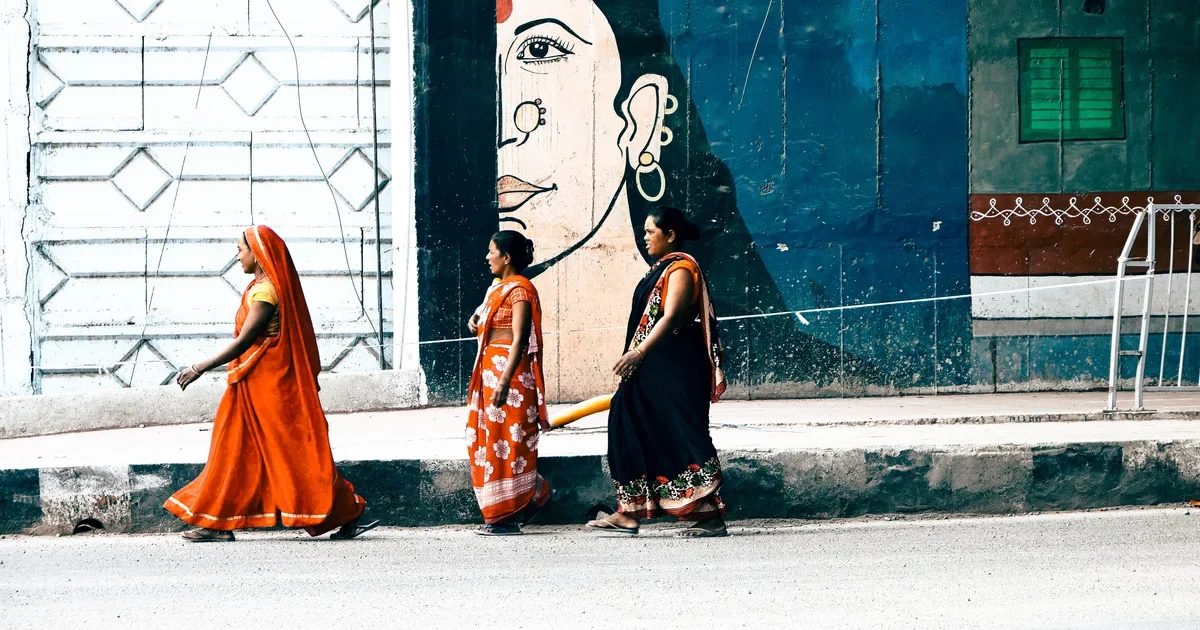
Photo by Shiva Kumar Reddy on Pexels
In this story
How many crimes against women does India record each year?
The National Crime Records Bureau (NCRB) recorded 4,48,211 crimes against women in 2023, up from 4,45,256 in 2022 and 4,28,278 in 2021. That works out to a national rate of 66.2 crimes per lakh women, according to PTI’s report on the NCRB’s Crime in India 2023 volume. Put plainly, police registered a case roughly once every 70 seconds.
The largest single category is not what many people expect. It is not a crime by a stranger. It is cruelty by a husband or his relatives, booked under Section 498A of the old Indian Penal Code (since July 2024 the same offence sits in the Bharatiya Nyaya Sanhita). NCRB counted 1,33,676 such cases in 2023, a rate of 19.7 per lakh women. That is close to 30 per cent of all recorded crimes against women. The 2022 share was about 31 per cent.
Category (NCRB, 2023) | Cases | Rate per lakh women |
|---|---|---|
Cruelty by husband or relatives | 1,33,676 | 19.7 |
Kidnapping and abduction | 88,605 | 13.1 |
Assault with intent to outrage modesty | 83,891 | 12.4 |
Rape | 29,670 | 4.4 |
Source for the table: the same PTI summary of NCRB 2023. These are police-registered cases. They are the part of the problem that reached a police station, which is a smaller part than the whole.
Is a rising number a sign that things are getting worse?
Not necessarily, and the honest answer is that the data cannot tell us. A higher count can mean more crime. It can also mean more women feel able to file a complaint, more police stations register the case instead of turning the woman away, and more categories being counted. States that make registration easy often look worse on paper than states where complaints are discouraged. When you compare two states, read the rate per lakh women with that in mind. A low figure may point to a safer place or to a harder door at the police station.
Which kinds of violence do the numbers leave out?
Three kinds are badly captured. Violence at home is the first, because families pressure women to stay silent. Sexual violence by someone the woman knows is the second, and in most rape cases the accused is known to the survivor. Online abuse, threats and stalking are the third, since many women never report them and many police stations are unsure how to record them. For that reason, household surveys give a better picture of what women live with than police files do.
How common is violence by a husband, according to the household survey?
The National Family Health Survey (NFHS-5, 2019-21) asked married women directly. Around 29 per cent of ever-married women aged 18 to 49 said they had faced physical, sexual or emotional violence from their spouse, a figure reported in Feminism in India’s reading of the survey. The earlier round (NFHS-4, 2015-16) found a similar level, close to 31 per cent.
Now place the two numbers side by side. About 1.3 lakh women a year had a 498A case registered. A survey that covers every married woman in the 18 to 49 age group says roughly three in ten have faced violence. Even allowing for differences in definitions, the gap between lived experience and police records is very large. The survey is the nearer truth.
Do women seek help?
Mostly they do not. A peer-reviewed study in the Journal of Epidemiology and Community Health, using NFHS-4 data, found that only about 13.5 per cent of women who faced spousal violence sought any help at all. Its authors summarised that about one in ten women reaches out after violence. The study is available at the JECH website. Note that this figure is from the 2015-16 round. We did not find a comparable NFHS-5 figure that we could verify, so we do not quote one.
Of those who do seek help, most go to their own family, not to the police. A very small share reaches a doctor, a lawyer, a counsellor or a helpline. That is the real picture of how India handles domestic violence today: privately, inside the family, with the woman carrying the burden.
Why do so many women stay silent?
The reasons are not mysterious, and they are rarely about the woman’s courage. They are about her options.
- Nowhere to go. A woman who leaves home often loses her house, her children’s school and her income in a single day. Many have no savings in their own name and no property that is theirs.
- Fear of what follows. She worries about retaliation, about being sent back to the same house by relatives, and about her children being taken from her.
- Family honour. Parents may tell a daughter to adjust. A complaint is treated as bringing shame on two families.
- Distrust of the system. Women hear that police may ask them to compromise, that cases take years and that the accused is often released on bail within days.
- Acceptance. Surveys over many years have found that large numbers of both men and women say a husband is justified in beating his wife for reasons such as going out without telling him. When violence is called normal, it is not counted as a crime by the person who suffers it.
None of this means the law is useless. It means the law starts working only after a woman has crossed several barriers, and each barrier loses some of the people who needed it.
What happens after a woman files a complaint?
The police stage and the court stage tell very different stories.
How far do police get?
The chargesheeting rate for crimes against women was 77.6 per cent in 2023, up from 75.8 per cent in 2022, based on the NCRB data summarised by PTI. That means in about three of four cases where the police finished an investigation, they filed charges. The police stage is not where most of the trouble lies.
What happens in court?
The court stage is where cases stall. NCRB’s 2023 data, as reported by PTI, shows 23,03,657 cases of crimes against women pending in courts, which is 90.8 per cent of the cases that were up for trial that year. Court pendency in the 2021 data stood at about 95 per cent. In that year the national conviction rate for crimes against women was 26.5 per cent, down from 29.8 per cent in 2020, as reported by Deccan Herald. We could not find a 2023 national conviction rate, so we do not give one. What the figures together suggest is that nine of ten cases are still waiting for a verdict at the end of any given year, and for those that conclude, fewer than three in ten end in a conviction.
Conviction rates need careful reading. A low rate does not always mean the accused were innocent. Cases end in acquittal when witnesses turn hostile after family pressure, when a settlement is reached out of court, when evidence is lost in a long delay, or when a case was filed in anger during a family dispute and later withdrawn. Courts have also warned that Section 498A has at times been misused, which is one reason arrest rules for it were tightened by the Supreme Court. A fair reading is that the system fails some women who deserve justice and sometimes fails men who were wrongly accused. Both problems come from the same source: slow, overloaded courts and weak evidence gathering. Our piece on India’s 5.39 crore pending cases explains why delay is built into the system, and our explainer on why your FIR does not get registered shows what the law says should happen at the first step.
What laws protect women from violence?
India has a long list of laws. The ones a woman is most likely to use are these.
- The Protection of Women from Domestic Violence Act, 2005. This is a civil law, so a woman can seek protection without sending anyone to jail. It gives her the right to live in the shared household, to get a protection order, to claim monetary relief and to ask for custody of her children. It created Protection Officers, who are meant to help her reach court, a shelter and medical care.
- Cruelty by husband or relatives (old IPC Section 498A, now in the Bharatiya Nyaya Sanhita). This is the criminal provision behind the largest share of NCRB cases.
- The Dowry Prohibition Act, 1961. It bans giving and taking dowry.
- The Sexual Harassment of Women at Workplace Act, 2013 (POSH). Every employer with ten or more staff must set up an Internal Committee.
- The criminal law on sexual offences, strengthened after the 2012 Delhi gang rape through the Criminal Law (Amendment) Act, 2013.
A law is only as good as the person who can reach it. The Domestic Violence Act is a good example. It was designed to be quick and humane, yet in many districts the Protection Officer has several other duties, no vehicle and no office. A woman who walks into the court with a complaint may find that nobody is able to help her file it.
What works to keep women safe?
The best evidence in India points to a mix: services that a woman can reach on the worst day of her life, safer public spaces, faster courts and a change in how families and neighbours behave. Here is what each looks like in practice.
What are One Stop Centres (Sakhi)?
The One Stop Centre scheme, known as Sakhi, was set up after the 2012 Delhi case and is funded wholly by the Centre through the Nirbhaya Fund. The idea is simple: one place where a woman in trouble can get medical aid, police help, legal advice, counselling and a bed for a few days, without being sent from office to office. Centres offer temporary shelter for up to five days. As of 31 October 2024, a government-style summary counted 802 operational centres that had assisted over 10.12 lakh women, as listed in this scheme document. Other sources quote a higher centre count; we use the figure we could trace to a dated summary.
Numbers from individual states show the scale of work at the local level. Nagaland’s centres have handled 1,529 cases of gender-based violence, as reported by NE Now. The weak spot is awareness. Many women have never heard of the centre in their district, so asking your own district’s Women and Child Development office where it is and displaying that address on a school or ward notice board is a small action with a real effect.
What is the 181 helpline, and how is it different from 112?
The 181 Women Helpline gives women in distress a free, round-the-clock number for counselling and referral. It links callers to the One Stop Centre, the police or a legal service. The 112 emergency number covers police, fire and ambulance across the country and is the quicker option when someone is in immediate danger. Think of it this way. Call 112 if you are in danger right now. Call 181 when you need advice and a referral, for example about a safe place to stay or how to file a complaint. Women can also call 1091, the older women-in-distress police line that some states still run. Not every state has integrated its lines in the same way, so keep two numbers saved on your phone.
How does Kerala’s Snehitha work?
Snehitha, run by the Kudumbashree women’s network in Kerala, is a gender help desk that works at the level where women actually live. It offers 24-hour tele-counselling, short-stay shelter, and help with legal and medical care, and it links women to police, legal services and child welfare bodies, according to Kudumbashree’s own description. Kudumbashree reported that the desk had handled 60,889 cases since it started on 23 August 2013, including 6,605 cases in 2024-25, as stated on its featured topics page.
Why does it work? Because the first listener is another local woman who is trained, known to the neighbourhood and in the same network as the woman seeking help. That removes the first fear, the fear of walking into an official building alone. Kudumbashree also runs a programme called Snehitha Calling Bell, which checks in on isolated or elderly people through regular visits. For more on how Kerala’s women’s networks became a base for health and social programmes, read our Kerala model story.
Do fast-track courts speed up justice?
The Fast Track Special Courts (FTSCs) scheme began in October 2019 to clear rape and POCSO Act cases. A parliamentary reply reported by Kashmir Life said 775 FTSCs were functional in 29 states and Union Territories as of 30 April 2026, including 398 courts that deal only with POCSO cases. The same report said the scheme had been temporarily extended until 30 September 2026. What the numbers do not show is a drop in the backlog. According to figures quoted in the same coverage, the number of cases pending in FTSCs rose between 2023 and the end of 2025, because new filings were arriving faster than courts could close them. More courts help, but the court needs judges, prosecutors, forensic labs and witness protection to deliver on the word fast.
Does safe public transport make a difference?
Fear of harassment in transit shapes where women study, work and live. It is one reason female labour force participation stays low, a theme we looked at in our article on why India’s women’s labour force participation lags. Delhi has run free bus travel for women since 2019, through the pink ticket, and has moved to a Pink Saheli Smart Card that carries the holder’s name and photograph. A study of one Delhi bus route found that women commuters rated the free pink ticket as safety infrastructure and ranked it above CCTV cameras, as described in the York University paper Pink Tickets to Saheli Smart Cards. Reports show over 8 lakh women had been issued the card by May 2026. The same paper notes a debate: critics worry that moving to card-only access could leave out lower-income and migrant women who lack documents. The lesson is that safe transport means more than a free fare. It also means well-lit stops, buses that run late in the evening, conductors or marshals who act when asked, and a way to enrol that does not exclude the women who need it most.
Other states have tried women-only services and special buses at peak hours. The evidence on how well these work is thinner than the evidence on lighting, frequency and staff conduct, so ask your own city transport body for data before judging any scheme.
Can a campaign change how neighbours behave?
Bell Bajao, meaning Ring the Bell, is one of the better-known attempts. The campaign was launched in 2008 by the NGO Breakthrough with the Ministry of Women and Child Development and UN partners. The message was aimed at men and bystanders: when you hear violence next door, ring the doorbell and interrupt it. UN Women’s material cites a reach of more than 130 million people, as described in the UN Women Asia-Pacific story on the campaign, though figures differ between sources. Reach is not the same as impact, and we are not aware of a national evaluation that links the campaign to fewer assaults. What it did show is that a small, concrete action that an ordinary neighbour can take is easier to adopt than a general plea to respect women. Breakthrough has since worked in schools and communities on attitudes among boys and men.
What would a stronger system look like?
- Make help reachable within an hour of home. Every district should have a working One Stop Centre, and every block should have a trained local counsellor, as Kerala has shown through Snehitha.
- Fund Protection Officers properly. Under the 2005 Act they are meant to be the first point of contact. They need a full-time post, a phone and a vehicle.
- Give women a place to live. Shelter stays of five days do not solve the problem of a woman with no home to return to. Longer-stay homes, rent support and a quick path to a job matter as much as a protection order.
- Put money in women’s own hands. Women who earn, own property or hold a bank account in their own name can leave a violent home. Self-help groups, covered in our article on India’s microfinance network, are a base for this.
- Fix the courts, not only the law. Judges, prosecutors, forensic labs and witness protection are the bottleneck.
- Train frontline police to register the case. Women’s help desks, women police and a rule that every complaint gets an acknowledgement are cheap and effective.
- Teach boys early. School programmes on consent, respect and anger do shift attitudes over time.
- Report the data better. Publish district-level figures on cases, chargesheets, trials and convictions each year so that citizens can hold local officials to account.
What do violence and women’s economic life have to do with each other?
The link runs both ways. A woman who has no income of her own finds it hard to leave. A woman who faces violence at home or on the road may drop out of school or turn down a job. Our report on the gender pay gap in India and our explainer on domestic workers who have no national law show how women’s weak economic position makes it harder to say no, and how workers in private homes, who are mostly women, have nowhere to take a complaint of abuse or harassment. Early marriage, covered in our piece on child marriage in India, puts a girl into a household where she has little voice, and the survey link between young marriage and later spousal violence is well documented. These issues belong together.
What can you do?
- Save the numbers. Put 112 and 181 into your phone, and 1091 if your state runs it. Share them with the women in your household, including domestic staff.
- Ring the bell. If you hear violence next door, you do not have to confront anyone. Knock, ask for a glass of water, make noise. If it is serious, call 112. A neighbour’s presence often stops an assault.
- Believe and listen. If a friend or relative tells you about abuse, do not tell her to adjust. Ask what she needs. Offer a place to stay, a phone call or company at the police station.
- Find your nearest One Stop Centre. Ask your district Women and Child Development office for the address and phone number, and share it in your resident welfare association or village group.
- Check your workplace. If your employer has ten or more staff, ask whether an Internal Committee under the POSH Act exists and whether employees know who sits on it.
- Refuse dowry and the idea of adjusting. Do not give or take dowry, and do not tell a daughter that violence is part of marriage.
- Back local services. Donate, volunteer or give professional time (law, counselling, medicine) to a women’s shelter or legal aid group in your area.
- Speak to boys and men. Violence falls where men refuse to laugh at the joke, stay silent about a friend’s behaviour or accept it as a family matter.
Frequently asked questions
How many crimes against women were recorded in India in 2023?
NCRB recorded 4,48,211, a rate of 66.2 per lakh women. Cruelty by husband or relatives was the largest category with 1,33,676 cases.
What share of married women face violence from their husbands?
About 29 per cent of ever-married women aged 18 to 49 in NFHS-5 (2019-21) reported spousal violence.
Do most women who face domestic violence report it?
No. A study of NFHS-4 data found only about 13.5 per cent sought any help, and few of them went to the police.
What is a One Stop Centre?
It is a government-funded centre, also called Sakhi, where women can get medical help, police assistance, legal advice, counselling and temporary shelter of up to five days under one roof.
Which number should I call in an emergency?
Call 112 for immediate danger. Call 181 for counselling and referral. Some states also run 1091.
Is Section 498A still a law?
The offence of cruelty by a husband or his relatives is now part of the Bharatiya Nyaya Sanhita, which replaced the Indian Penal Code in July 2024. NCRB’s 2023 data still uses the old section number.
Can a woman seek protection without filing a criminal case?
Yes. The Domestic Violence Act, 2005 is a civil law. A woman can apply to a magistrate for a protection order, a residence order and monetary relief, with the help of a Protection Officer or a lawyer.
The bottom line
India’s police files show about 4.5 lakh crimes against women in a year. The household survey suggests the real experience of violence is many times larger, and most women who live through it tell nobody official. What helps is not one big fix. It is a woman being able to find a counsellor on her street, a bed for the night, a police station that registers her complaint, a court that decides within a reasonable time, a bus she can take at 9 pm and a neighbour willing to ring the bell. The places that have gone furthest, such as Kerala with its women’s network, did it by building services close to home and by treating violence as a public matter. That is a task for governments, and it is also a task for each of us.
Sources: National Crime Records Bureau, Crime in India 2023 (as summarised by PTI); International Institute for Population Sciences, National Family Health Survey (NFHS-5, 2019-21); Journal of Epidemiology and Community Health, 2020, help-seeking after spousal violence (NFHS-4); Ministry of Women and Child Development, One Stop Centre scheme; Kudumbashree Mission, Snehitha Gender Help Desk; Lok Sabha reply on Fast Track Special Courts (April 2026); UN Women Asia-Pacific, Bell Bajao; Protection of Women from Domestic Violence Act, 2005. If you or someone you know is in danger, call 112 now.
What you can do
- Share the evidenceSend this to one person who should know about social justice.Share on WhatsApp
- Give an afternoonTeach, mentor, clean up, or lend your professional skills.Ways to volunteer
- Tell us what's missingKnow a story, a fact we got wrong, or a solution worth spotlighting?Suggest a story
Politically neutral. Every claim sourced. Report a correction.


No comments yet