Why Loneliness Is a Public Health Problem and What the UK and Japan Did About It
WHO links loneliness to 871,000 deaths a year, and India ranks 123rd on social support in the World Happiness Report 2026. How India compares, what the UK and Japan did, and what Indian communities already do.
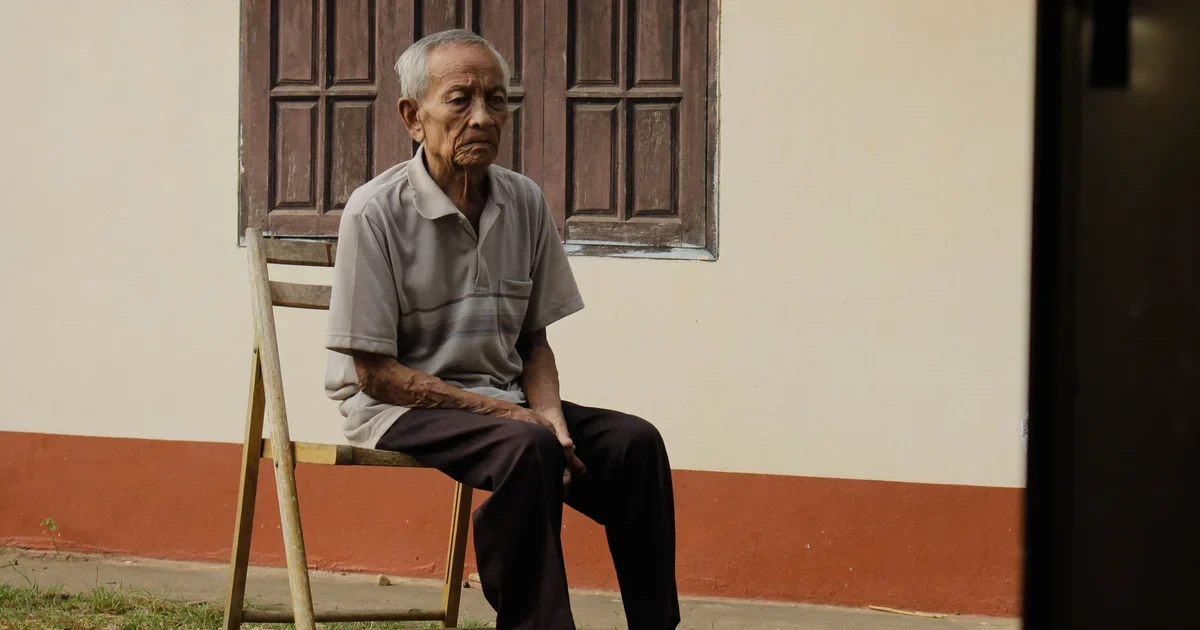
Photo by weedlyr on Pexels
In this story
How big is the loneliness problem worldwide?
Bigger than most governments assumed a decade ago. In June 2025 the World Health Organization’s Commission on Social Connection published its first flagship report. It estimates that about one in six people worldwide is affected by loneliness, and that loneliness is linked to an estimated 100 deaths every hour, more than 871,000 deaths a year.
The numbers are not spread evenly. According to the commission, young people and people in lower-income countries carry the heaviest burden. Between 17 and 21 percent of people aged 13 to 29 report loneliness, and about 24 percent of people in low-income countries feel lonely, roughly double the rate in high-income countries. Social isolation, which is the objective lack of contact, affects up to one in three older adults and one in four adolescents.
The health risks add up. The commission puts the effect of poor social connection on health on par with other well-known risks such as obesity and physical inactivity, with higher chances of stroke, heart disease and dementia. Its main argument is that social connection should be treated as a third pillar of health alongside physical and mental health, and that stigma around admitting loneliness is a reason governments do not act.
This matters for India because the country sits in the group where the rates are highest: a lower-middle-income country with a very young population, fast-moving cities and a large, growing elderly population.
Where does India stand on the World Happiness Report?
The World Happiness Report 2026 ranks India 116th out of 147 countries, up from 118th the year before. On the sub-measure of social support, which asks whether people have someone to count on in times of trouble, summaries of the report place India around 123rd. A Drishti IAS summary of the report lists the same pattern.
Measure (World Happiness Report 2026) | India’s rank |
|---|---|
Overall happiness | 116th of 147 |
Social support | about 123rd |
Freedom to make life choices | 61st |
Perceptions of corruption | 64th |
Generosity | 78th |
That table tells an uncomfortable story. India does better on freedom and generosity than on the plain question of whether people feel they have someone to turn to. The country that is famous for joint families, neighbourhoods and festivals reports weaker support than its self-image suggests.
Two cautions apply. First, the Happiness Report relies on a survey, with a small sample for a country of 1.4 billion people, and the social support question is a single yes-or-no item. Rankings of this kind move by a few places between years for reasons that are partly noise. Second, the ranking compares perceptions across cultures, and people in different countries answer such questions differently. It is a signal worth taking seriously. It is not a precise measurement.
Why is loneliness growing in India?
Several forces push in the same direction. None of them is unique to India, but together they hit hard because the older system of support was built around family and neighbourhood, and both are changing quickly.
City migration
Millions of people leave villages and small towns each year for work in cities. A young engineer in Bengaluru or a construction worker in Surat may be a thousand kilometres from anyone who knows them. The same movement leaves older parents behind in the village. Both ends feel the break: the migrant loses a network, and the parent loses a daily presence. The shift is a driver of loneliness at each end of life.
Elders living alone
India’s older population is growing, and fewer of them live in a house with three generations. A study of the Longitudinal Ageing Study in India (LASI) data covering 31,092 people aged 60 and above, published in a public health journal, found that about 15 percent of older respondents reported feeling lonely, and that the figure rose to 37 percent among those who lived alone. Another analysis of the same survey wave, covering adults aged 45 and above, reported higher loneliness among widowed people and found living alone to be among the strongest predictors of feeling lonely.
The pattern is clear even though the exact percentage changes with the age cut-off and the question used. Living alone, widowhood and loneliness travel together. Women outlive men in India, so many of the people affected are widows.
Young people and screens
The WHO commission found that young people report some of the highest loneliness rates in the world. In India, which has one of the youngest populations in the world, exam pressure, tight job markets, long commutes and phone-heavy social lives all play a part. Time online often replaces time with people, even when the screen is full of friends. We covered the wider question of how young people use the internet in our piece on whether India should ban social media for teens.
Is loneliness a city problem or a village problem?
It is both, in different forms. In cities, people can be surrounded by thousands and still know nobody. In villages, many older people are left behind as younger relatives migrate, and homes that once held several generations now hold one or two. The WHO commission notes higher rates in lower-income settings, and the migration pattern in India fits that finding. Policy needs to look at both ends of the migration chain, the city that receives and the village that is left.
Stigma and silence
In India, loneliness is rarely named. People say they are tired, stressed, busy, or unwell. A man in his fifties who says he is lonely may be mocked. A woman who says so may be told to count her blessings. The WHO commission says stigma is itself a barrier, and the same is true here. Mental health services are thin, and the idea of seeing a counsellor for loneliness is still rare. Our reporting on the rural digital divide also shows how people outside cities can be cut off from the tools that others use to stay in touch.
Smaller homes and busier days
Nuclear families are more common. Apartment blocks in cities can hold hundreds of households whose members barely know each other. Open courtyards, shared verandahs and the neighbour who dropped in for tea have given way to locked doors. Working hours stretch. Even people who live with family can be lonely when everyone is on a separate screen.
What does the WHO say governments should do?
The commission’s report is not only a count of the problem. It sets out a plan built around a handful of areas: national policy, research, practical interventions, better measurement, and public engagement to reduce stigma. The message is that loneliness needs the same treatment as other public health risks, with a named responsible body, regular data and tested programmes.
Three points from that plan matter for India. First, measure first. Few countries collect comparable loneliness data, and India has only scattered studies, which is why published figures vary from 15 percent to more than a third of older adults depending on the question and the age group. Second, pick what is proven. Programmes that bring people together around an activity, such as a group, a class or volunteering, tend to be more promising than one-off awareness campaigns. Third, reach people where they already are: clinics, schools, workplaces and neighbourhood centres.
What did the UK and Japan do?
Two countries went further than anyone else in making loneliness a matter for government. Their approaches are not perfect, but they offer useful lessons.
The United Kingdom: a minister and a strategy
The UK appointed the world’s first minister for loneliness in January 2018, when Tracey Crouch was given the brief on top of her sport and civil society role. The move followed a cross-party commission set up in memory of the MP Jo Cox. The government published a strategy, A Connected Society, in October 2018. Later ministers, including Diana Barran, continued the work. The UK also began measuring loneliness in national surveys, so that progress could be tracked.
The UK also built loneliness into the health system through social prescribing. A doctor who sees a patient whose real problem is isolation can refer them to a link worker, who helps the person find a choir, a walking group, a gardening project or a volunteering role. The idea is that a prescription for a community can sometimes do more than a pill.
Japan: a minister, a law and a focus on isolation
In February 2021, Prime Minister Yoshihide Suga added loneliness to the portfolio of Tetsushi Sakamoto, a minister who already handled regional revitalisation and the falling birth rate. The decision followed a rise in suicides in 2020, the first consecutive annual rise in eleven years, as reported at the time. In June 2021 the Japanese and British ministers met online and agreed to share what they learn, as noted in a Japanese Cabinet Office record of the meeting.
Japan has also dealt with a form of extreme withdrawal known as hikikomori, and with lonely deaths of elderly people living alone. Placing the issue in the Cabinet Office, rather than a single health department, was a deliberate choice: loneliness cuts across housing, work, schooling and health.
What the two countries share
- A named owner. Someone in government is accountable, with a budget and a mandate that crosses departments.
- Measurement. Both added loneliness questions to national surveys, so policy can be tested against data.
- Local delivery. The work happens in neighbourhoods, libraries, clubs and clinics, not in ministries.
- A shift in language. Loneliness is spoken of as a health and social issue, not a personal failing.
What is still unproven
It would be wrong to say a minister cures loneliness. There is no clear evidence yet that the appointments alone cut the number of lonely people, and critics in both countries have pointed to small budgets. The value so far is in attention, data and the ability to coordinate. The WHO commission itself calls for national strategies and for more research on what works.
Is it only older people?
No, and the data warns against assuming so. The WHO commission found the highest self-reported loneliness among adolescents and young adults, which runs against the common picture of the lonely pensioner. Both pictures are true. Older people are more often isolated in the sense of having few contacts, while younger people more often feel lonely despite having contacts. A plan that only targets one age group will miss the other, which is why a national approach needs school, workplace and elder-care strands side by side.
What is India doing already?
India has no minister for loneliness, and no national loneliness strategy. But parts of the answer already exist, mostly through elder care and community schemes.
Elderline 14567
The Union social justice ministry runs Elderline 14567, a toll-free national helpline for senior citizens that opened on 1 October 2021. It gives information on health care, pensions, legal matters and old-age homes, and field teams respond to cases of neglect or abuse. The helpline also offers emotional support to older people who feel lonely or anxious. The model was first piloted by Tata Trusts in Telangana in 2016 before being scaled up nationally. It works as a referral service rather than a source of direct financial aid.
Kerala: Vayomithram and Sallapam
Kerala, which has the oldest population among large Indian states, runs Vayomithram through its Social Security Mission. The programme serves people aged 65 and above in urban areas with mobile clinics, palliative care, help desks and counselling at no cost, and the state has been considering extending it to panchayats and lowering the age to 60. Kerala also runs Sallapam, a telephone friendship programme in which callers are linked with people who will talk. A free chat with a trained, kind voice is a modest idea, but for someone who has not spoken to anyone all day it is not small.
Community-level fixes that work
Most of what helps lonely people in India does not come from a ministry at all.
- Senior citizens’ clubs and parks. Morning walking groups and laughter clubs are among India’s most successful, least-noticed loneliness programmes. They cost nothing, run on volunteers and give people a reason to leave the house at the same time each day.
- Community kitchens and langars. Shared meals tie people together. A shared meal gives people a reason to turn up and someone to sit next to.
- Temples, gurdwaras, mosques and churches. Places of worship are often the only regular social network available to an older person, with festivals and volunteering built in.
- Resident welfare associations. Some apartment communities run buddy systems that check on elderly residents who live alone.
- Self-help groups. Women’s self-help groups give members a weekly meeting and a circle of trust, which is a form of social connection as well as a savings club. See our explanation of how self-help groups built the world’s largest microfinance network.
- Intergenerational projects. Schools that invite elders to read to children or teach crafts bring two lonely groups together.
How to tell when an older person is struggling
Families often miss the early signs, because an older relative may say they are fine. A few signals deserve attention: they stop going out for the walk or the temple visit they used to enjoy; they sleep badly or eat little; they call repeatedly at odd hours for no clear reason; they talk about being a burden; or they refuse invitations they once welcomed. None of these proves loneliness, but together they suggest a conversation is overdue. The best response is simple. Visit, listen, and arrange regular contact rather than one grand gesture.
What schools and workplaces can do
Loneliness among the young is easier to prevent than to repair. Schools and colleges can run mentoring and peer groups, keep a counsellor on site, and give students a reason to meet that is not an exam. Employers can help the migrant worker who has just arrived in a new city: a buddy system for new joiners, shared meals, and offices that do not expect everyone to stay glued to a screen after hours. Housing societies and hostels can hold a monthly gathering. These steps cost very little and make a real difference to someone who knows nobody in town.
What would a better Indian response look like?
The comparison with the UK and Japan suggests five steps that India could take without a large new budget.
- Measure it. Add a short loneliness question to NFHS, LASI and the national mental health survey, and report it by age, gender and place. What is not counted does not get funded.
- Give it an owner. A nodal office, perhaps in the social justice or health ministry, to coordinate across elder care, mental health, urban planning and education.
- Bring in social prescribing. Primary health centres and Ayushman Arogya Mandirs could refer lonely patients to local clubs, volunteering and yoga groups, using community health workers as link workers.
- Design for contact. Plan parks, benches, community halls and shaded meeting spots into housing and urban projects. Loneliness is partly a design problem.
- Train people to notice. Anganwadi workers, ASHA workers, postmen, shopkeepers and building guards see who is alone. A small amount of training can turn that into a check-in system.
None of these steps requires a miracle. Several of them draw on workers India already has.
What you can do
- Call someone today. A relative, a school friend, a neighbour. Make it a weekly habit, not a one-time effort.
- Knock on one door. Find out who in your building or lane lives alone. Say hello. Offer to bring groceries or take them to the doctor.
- Join something local. A walking group, a library, a hobby class, a temple committee or a volunteer drive gives you regular faces.
- Use Elderline 14567 for an older person who needs information, a listening ear, or help in a bad situation.
- Say it out loud. If you feel lonely, tell someone you trust. If someone tells you, listen without correcting them.
- Ask your RWA or panchayat to set up a simple check-in list for elders living alone.
- Put the phone down at one meal a day. Presence is cheap and rare.
- Seek professional help if loneliness comes with persistent sadness, loss of interest or thoughts of self-harm. In India, the Tele-MANAS helpline (14416 or 1-800-891-4416) offers free mental health support.
Frequently asked questions
Is loneliness the same as being alone?
No. Loneliness is the feeling of lacking the connection you want. Social isolation is having few contacts. A person can be isolated and content, or surrounded by family and lonely.
What does the WHO say about loneliness and health?
The WHO Commission on Social Connection links loneliness to about 871,000 deaths a year and compares its health risk to obesity and physical inactivity. It estimates that one in six people is affected.
What is social prescribing?
It is a way for health workers to refer patients to non-medical community activities such as walking groups, art classes or volunteering, to address loneliness and related problems. The UK built it into its health system.
Did the loneliness ministers work?
It is too early to say they reduced loneliness. They made the issue visible, added national measurement and created a reason for departments to work together. Evidence on lasting outcomes is still being gathered.
Does India have a loneliness helpline?
India has Elderline 14567 for senior citizens and the Tele-MANAS mental health line. Neither is a loneliness service as such, but both provide a first point of contact.
Are young Indians lonely too?
The WHO commission reports high rates among adolescents and young adults globally. Indian-specific figures vary by survey and are less well measured than those for older adults.
The bottom line
The WHO treats loneliness as a global health problem with measurable deaths. India ranks around 123rd on social support in the 2026 World Happiness Report, and it has more migrants, more elders living alone and more young people under pressure than at any time in its history. The UK and Japan show that a government can name the problem, measure it and give it an owner. India already has pieces of the answer in Elderline, Kerala’s schemes and its clubs, kitchens, temples and self-help groups. What it lacks is the decision to treat them as one project. Until then, the work falls to what it has always fallen to: people who knock on a neighbour’s door.
What you can do
- Share the evidenceSend this to one person who should know about health.Share on WhatsApp
- Give an afternoonTeach, mentor, clean up, or lend your professional skills.Ways to volunteer
- Tell us what's missingKnow a story, a fact we got wrong, or a solution worth spotlighting?Suggest a story
Politically neutral. Every claim sourced. Report a correction.



No comments yet