Madhya PradeshHow Indore Became India's Cleanest City, and What the Heart of India Still Needs
Indore has topped India's cleanliness survey eight years in a row, yet Madhya Pradesh has some of the country's highest child stunting. What one city did right, what it missed, and what the rest of the state can borrow.
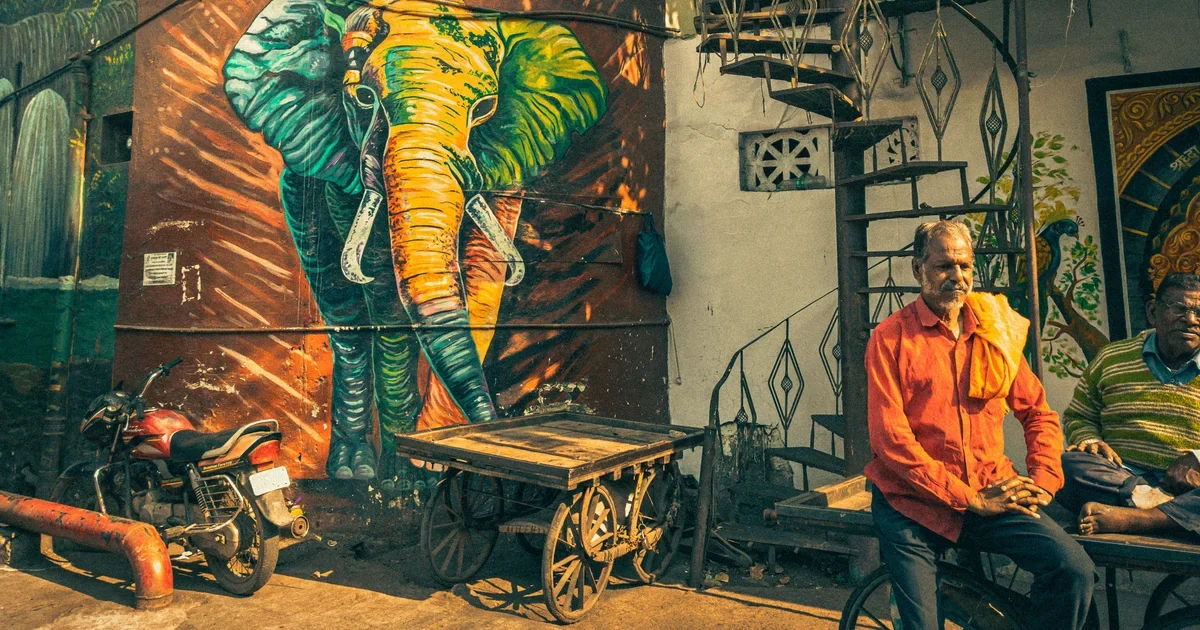
Photo by Niraj Yadav on Pexels
In this story
What is the Madhya Pradesh story?
Madhya Pradesh is India’s second-largest state by area and sits at the centre of the map, which is why people call it the heart of India. It has the largest tribal population of any Indian state, dense forests, the Narmada river, and some of the country’s most stubborn child malnutrition. It also has Indore, a city of roughly 35 lakh people that was ranked 25th in India’s national cleanliness survey in 2016 and has been ranked first in every edition since 2017.
That contrast is the story. One city in a state with deep gaps built a waste system that other countries send delegations to study. In the same state, in districts such as Sheopur, half of the children under five are stunted. This article looks at what Indore did, what it left undone, and what the rest of Madhya Pradesh can borrow from a city that proved a hard thing can be done with ordinary tools.
How did Indore go from 25th to first?
The turnaround began after the 2016 survey. Pressure came from several directions at once: Swachh Bharat Mission targets, notices from the Central Pollution Control Board, and a High Court order that required the city to fix its waste handling within a set time, as DailyO reported. The municipal corporation chose to treat it as an operations problem, not a campaign.
Its choices were practical:
- Door-to-door collection everywhere. Open bins outside colonies were removed. Households were asked to hand over waste to a collection vehicle that came at a fixed time.
- Purpose-built vehicles. Early in the drive the city ran more than 400 customised vehicles with separate compartments for wet and dry waste, GPS tracking and better hydraulics. By 2021 the Tribune reported about 700 such vehicles.
- Six-way segregation. The city asks households and shops to separate waste into six categories, including bio-waste such as diapers and sanitary napkins.
- Workers on a schedule. About 8,500 sanitation workers worked in three shifts, with biometric attendance. Commercial zones had collection twice a day.
- Night-time cleaning. Roads were swept and washed at night so that markets opened clean.
- Community groups. Volunteer groups and NGOs worked with the corporation on awareness and on segregation at processing sites.
None of this required a new invention. The difference was consistency. A vehicle that arrives at the same time every day teaches a household faster than any poster.
Why did citizens go along?
Three things worked together. The service was dependable, so households could see what they got in return. Behaviour was visible: a street without bins and a neighbour who segregated made the norm obvious. And the survey gave the city a public scoreboard. Citizens were asked for feedback, and a high rank became a point of local pride. Pride is a weak policy tool on its own, but it keeps a good system going once it is built.
What does Indore do with the waste?
Segregation matters only if the separated waste goes somewhere useful. The 2021 Tribune report says Indore handled about 600 tonnes of wet and 600 tonnes of dry waste a day, and that the corporation earned around Rs 8 crore a year from private firms processing waste into bio-CNG, compost and other products.
In February 2022 the city opened a Gobar-Dhan bio-CNG plant designed to process 550 tonnes a day of segregated wet waste. The Prime Minister’s Office projected about 17,000 kg of CNG and 100 tonnes of compost a day, as summarised by Drishti IAS. The corporation was to buy at least half of the gas for a fleet of city buses. The plant works because the waste arrives clean. A plant that takes mixed garbage jams. This is the link people miss: door-to-door segregation feeds the plant, and the plant gives the segregation a purpose.
In July 2025, when Indore won for the eighth year running, a report in The Logical Indian said the plant treats about 700 tonnes of wet waste a day and runs public buses on the fuel. Capacity figures differ between sources and years, so it is safest to say it handles several hundred tonnes a day. The 2024-25 survey covered more than 4,500 cities on 54 indicators, with field audits by over 3,000 assessors. Surat was second and Navi Mumbai third in the overall category.
Did Indore also fix its water?
It tried. In 2021 Indore became India’s first city certified Water Plus under the survey, after it stopped sewage from flowing into the Kanh and Saraswati rivers and nearby drains. The same Tribune report gives the city’s sewage output as 300 million litres a day, of which about 110 million litres were being reused. That is a real achievement for a city that sits at the head of a river basin. It also sets up the hard part of this story.
What did the cleanest city get wrong?
In late December 2025, residents of the Bhagirathpura area of Indore began falling ill with diarrhoea. Officials said drinking water in the area had been contaminated after a leak in a pipeline, and the mayor said a preliminary assessment suggested drainage water had entered the supply line. Early coverage, such as this report in The Hitavada (published on 1 January 2026), described seven deaths and hundreds of people hospitalised. Counts varied as the weeks passed: the mayor cited 10 deaths in early January, local residents said 14, and by late January the official figure was reported as 16 while an unofficial count was higher. A state inquiry commission was set up.
It would be unfair to say this cancels what the city achieved, and equally unfair to skip it. The lesson is about what a survey can see. The cleanliness ranking rewards what inspectors and citizens can observe: streets, bins, toilets, segregation and treatment plants. A rotted pipe under a street is invisible until people fall sick. The same city that perfected the visible side of sanitation had a gap in the hidden side, which is old pipe networks, cross-connections and water testing at the tap.
This is a pattern across Indian cities, not one city’s shame. Pipes laid decades ago leak, and new sewers and water mains often run close together. The answer is the same discipline Indore applied to garbage: map every line, test at fixed points, publish the results, and treat a failed sample as an emergency. A city that can track 700 vehicles by GPS can track chlorine levels at taps.
Is the rest of Madhya Pradesh as clean as Indore?
No, and the survey shows the state is not uniformly behind either. The 2024-25 report noted that Ujjain, Dewas and Jabalpur made marked year-on-year gains. A village panchayat cannot simply copy a city fleet. Rural sanitation depends on household toilets, drainage, and small composting and biogas units, which move slower and cost more per household.
The most useful Indore export is not the plant or the vehicle. It is the sequence: fix collection first, then segregation, then processing, then publish the results. A town of 50,000 can follow that order with a handful of vehicles and a contract with a compost or biogas operator, without waiting for a large central project.
What does malnutrition look like in Madhya Pradesh?
Cleanliness and nutrition are linked. Children who fall sick repeatedly from unsafe water and poor sanitation absorb less of the food they eat. Madhya Pradesh has some of the highest child undernutrition in India.
The Free Press Journal reported Poshan Tracker data for August 2026, the Ministry of Women and Child Development’s monitoring system for children under five. It showed these figures for Madhya Pradesh against the national average:
Measure (children aged 0 to 5) | Madhya Pradesh | India |
|---|---|---|
Stunted (low height for age) | 39% | 28% |
Underweight | 23% | 11% |
Wasted (low weight for height) | 7% | 3% |
District figures in the same report show wide variation: Sheopur 51% stunted, Shivpuri 48%, Ashoknagar 47%, and the tribal districts of Balaghat 36% and Dindori 38%. Indore, the cleanest city, shows 31% stunted, up from 26% a year earlier, and Bhopal 30%.
Two cautions apply. Poshan Tracker is an administrative system, and numbers can rise when more children are measured or when measuring improves, so a jump is not always a sign that conditions worsened. And it is different from the national family health survey, which uses a sample and a standard method. Even so, the direction of the gap is clear: a clean city does not guarantee well-nourished children. Nutrition depends on food, health care, mothers’ education and income, not only on clean streets.
What is working against malnutrition in Sheopur?
Sheopur is in the north of the state, on the Rajasthan border, and home to the Sahariya tribal community, one of the groups the government classifies as particularly vulnerable. It has the highest stunting figure on the list above. It is also a case where careful, unglamorous work has paid off.
On 23 December 2024, The Hitavada reported that Sheopur was ranked second in the country in a national contest for work against malnutrition. The district reported that:
- Children classed as severely malnourished fell from 906 in 2020 to 122.
- Underweight under-five children fell by 37.7%.
- Use of Anganwadi services by children rose by about 80%.
- Households growing a nutrition garden (Poshan Bari) rose by 35%.
The measures were plain: monthly monitoring of each child’s growth so that problems are caught early, regular training for Anganwadi workers on diet, hygiene and cooking with millets, and local awareness work with mothers and fathers. These are district-reported figures from a news report, so treat them as the district’s own account and not as an independent evaluation. Yet the method matches what the research literature supports: frequent weighing, quick referral and local food.
Why does the Sheopur result sit next to a 51% stunting rate?
Because severe acute malnutrition, which is a child’s weight being dangerously low for height, can fall quickly with treatment and feeding, while stunting is the result of long-term deprivation and moves slowly. A district can win praise for cutting severe cases and still have half its children short for their age. Both facts are true. They describe a short-term gain and a long-term job.
What does Madhya Pradesh do for girls and families?
The state is also known for its schemes aimed at families, including Ladli Laxmi Yojana for girls and cooked meals through the Anganwadi network. This article does not rank those schemes, because their evaluation data is thinner than the sanitation record. The point for readers is that the state treats child welfare as a mix of services: nutrition, health, water, sanitation and schooling. The Indore story shows that one of them done well is visible. The Sheopur story shows another. Putting them together is what the state still has to do.
What does the cleanliness survey actually measure?
The rank that made Indore famous comes from Swachh Survekshan, the annual survey run under the urban affairs ministry. The 2024-25 edition covered more than 4,500 cities on 54 indicators. More than 3,000 assessors carried out a 45-day field audit, and the survey collected feedback from over 14 crore citizens. It added a “Super Swachh League” for cities that keep topping the table.
The scoring mixes three kinds of evidence: what the city reports about its own services, what assessors see on the street, and what residents say when asked. That mix has strengths and limits. It rewards cities that organise their systems and keep records, which is useful. It cannot see what is out of sight, such as the state of an underground pipe, and it cannot judge whether a poor neighbourhood gets the same service as a rich one unless the assessors visit both. Readers should treat the rank as a good measure of solid waste and street cleaning, and a partial measure of public health.
Who does the work behind the rank?
Behind the vehicles and the plant are sanitation workers. The Tribune reported about 8,500 of them in Indore in 2021, working in shifts across most of the day and night. A city is clean because people do the cleaning, and in India that work falls overwhelmingly on communities who have faced caste discrimination for generations.
Any city that wants to copy Indore should copy the worker side as well as the machine side: proper pay on time, protective equipment, health cover, and a stop to the practice of sending people into sewers and septic tanks by hand. Biometric attendance and shift planning, which Indore used, can be a tool for fairness if they guarantee wages are paid for the hours worked. They become a burden if they are only used to punish. The better test of a clean city is whether the people who clean it are treated with dignity.
Is the Indore model easy to repeat elsewhere?
Partly. Three conditions helped Indore, and a town considering the model should check whether it has them.
- Sustained attention from the top. The city kept the same priority across several years and changes of staff. Programmes that depend on one officer fade when the officer is transferred.
- A processing market. Bio-CNG and compost need buyers. Indore’s corporation committed to buy part of the gas for its own buses, which gave the plant a customer from the first day.
- A population willing to sort. Habit change took years and depended on the service being reliable first.
Smaller towns can still apply the logic at a smaller scale. A town of 50,000 can run a few vehicles on a fixed schedule, ask households to separate wet and dry waste, and sign a contract with a nearby compost or biogas operator. Rural blocks can start with a shared composting pit and a weekly dry-waste pickup. The principle that a service must come before a demand is the part that travels.
What can other states and cities copy from Madhya Pradesh?
- Start with the service, not the slogan. A dependable collection round does more than awareness drives. Indore’s gains began when vehicles started arriving on time.
- Close the loop. Segregation is wasted unless the wet waste goes to a plant and the dry waste to recyclers. The Gobar-Dhan plant gave Indore’s households a reason to keep sorting.
- Count what matters, publicly. A national survey with a public rank made cleanliness a matter of civic pride. Water quality, child growth and school attendance deserve the same published scoreboard.
- Test the hidden systems. The Bhagirathpura outbreak shows that pipes need the same tracking as trucks.
- Weigh every child, every month. Sheopur’s gains came from routine measurement and fast follow-up through the Anganwadi network.
- Pay attention to tribal districts. Averages hide places such as Sheopur, Dindori and Balaghat, where food, roads and clinics are farthest away.
Other states have followed their own routes. Kerala’s long investment in schools and health is described in our One State One Story piece on Kerala, Tamil Nadu’s policy choices in our Tamil Nadu story, and the tension between mineral wealth and poverty in our Jharkhand piece. Indore itself also appears in our look at tier-2 cities and their growing job markets.
What you can do
- Segregate at home. Keep separate containers for wet and dry waste, even if your city does not yet collect them separately. Compost kitchen waste if you have a balcony or garden.
- Ask your ward office for the collection schedule. If vehicles do not come on time, report it with dates, not complaints in general.
- Check your drinking water. If your supply smells or looks off, tell your municipal helpline and boil or filter the water until it is tested. Ask your resident welfare association to arrange periodic tests.
- Weigh and measure your child. Use the Anganwadi centre’s monthly growth check. If a child is far below the chart, ask for a referral to the nearest nutrition rehabilitation centre.
- Support a Poshan Bari. If you live in a village or town with a school garden, offer seeds, time or tools for a nutrition garden.
- Volunteer with a local group. Join a neighbourhood cleanliness or water-quality committee. Indore’s gains were driven by steady people, not a single campaign.
- Read the survey for your own city. The Swachh Survekshan results and Poshan Tracker data are public. Compare your city and district with the best in the state and ask the municipal commissioner for a plan.
Frequently asked questions
How many times has Indore been India’s cleanest city?
Indore was ranked first in every Swachh Survekshan edition from 2017 to 2024-25, which is eight consecutive years, as reported when the 2024-25 awards were given in July 2025. In 2016 it ranked 25th.
How does Indore manage its waste?
It collects waste door to door in six segregated categories, uses purpose-built vehicles tracked by GPS, and sends wet waste to composting and bio-CNG plants. A 550-tonne-a-day Gobar-Dhan plant opened in February 2022.
Did contaminated water affect Indore?
Yes. In December 2025 and January 2026, a diarrhoea outbreak in the Bhagirathpura area was linked by officials to drain water entering a drinking water pipe. Death tolls reported by officials, residents and media differed, and a state inquiry was set up.
How serious is child malnutrition in Madhya Pradesh?
Poshan Tracker data for August 2026 showed 39% of children under five stunted and 23% underweight, against national averages of 28% and 11%. Sheopur showed 51% stunted. Tracker figures are administrative and can change with coverage.
What did Sheopur do about malnutrition?
The district reported monthly growth monitoring, Anganwadi worker training, nutrition gardens and awareness work. It was ranked second nationally in a malnutrition contest in December 2024, and reported that severe cases fell from 906 in 2020 to 122.
Can a small town copy Indore?
Yes, in sequence: reliable collection first, then segregation, then a processing partner. The vehicle fleet can be small. What matters is a fixed schedule and a place for the sorted waste to go.
The bottom line
Madhya Pradesh holds two true stories at once. Indore went from 25th to first in India’s cleanliness survey and stayed there for eight years by getting the basics right: door-to-door collection, segregation, processing and public scoring. The same state has children stunted at rates well above the national average, and a city that was proud of its streets had to answer for the water in its pipes. The answer is not to doubt Indore’s achievement. It is to hold the rest of the state, and the hidden systems in Indore itself, to the same standard of daily, measured, boring work that made the streets clean.
What you can do
- Share the evidenceSend this to one person who should know about health.Share on WhatsApp
- Give an afternoonTeach, mentor, clean up, or lend your professional skills.Ways to volunteer
- Tell us what's missingKnow a story, a fact we got wrong, or a solution worth spotlighting?Suggest a story
Politically neutral. Every claim sourced. Report a correction.


No comments yet