The Exam That Was Cancelled: NEET 2026 and 22 Lakh Interrupted Lives
India cancelled its national medical entrance exam on 12 May 2026 after a circulated guess paper matched the real one. Here is what that decision cost the families who sat it, and why the leak keeps happening.

In this story
On 3 May 2026, about 22.7 lakh young Indians sat down for the national medical entrance exam. Nine days later they were told it did not count.
The cancellation came after investigators found that a guess paper circulating before the exam overlapped with the actual question paper. The decision was correct. An exam whose questions were in circulation beforehand cannot be used to rank anyone. What followed is the part worth examining, because the cost of that correct decision did not fall on the people who caused the problem.
What 22.7 lakh actually means
The number is easy to read past, so it helps to break it into what it represents. Every one of those candidates spent between one and three years preparing for a single three hour paper. A large share paid for coaching, and coaching for this exam is not cheap. Families in small towns routinely spend one to three lakh rupees a year on it, often borrowed, and a sizeable group moves a child to another city entirely to sit closer to a coaching centre.
Against that spending, the number of government medical seats is a fraction of the candidate pool. The exam is not a test in the ordinary sense. It is a rationing mechanism, and everyone sitting it knows that.
A cancelled exam does not reset a candidate to zero. It costs them a year of their life, and a year is not something the system can refund.
For a student who was going to clear it, cancellation means repeating a year of preparation with no guarantee the next paper is clean. For a student in a family that stretched to fund one attempt, it can mean there is no second attempt at all. That is the quiet sorting the cancellation performed: it removed the candidates whose families could not afford to do it twice.
Why the paper leaks in the first place
Leaks get discussed as a moral failure, which is comfortable and unhelpful. The more useful reading is structural. India runs one national paper, on one day, in physical form, across thousands of centres in every district.
That design creates a long chain of custody, and every link in it is a place where a paper can be opened.
- Printing. A single set of questions is printed in bulk weeks before the date.
- Transport. Sealed bundles travel by road to district storage, often through several handoffs.
- Storage. Papers sit in local strongrooms, sometimes for days, guarded by whoever is available.
- Centre level. Seals are broken at thousands of centres by thousands of individuals within the same hour.
A system with that many handoffs does not need a conspiracy to fail. It needs one person in one district who is willing. The incentive is enormous, because a paper is worth whatever a desperate family will pay, and the chance of being identified in a chain that long is small.
The scale of the pattern is documented. Investigations have counted more than 70 major exam leaks over roughly seven years, affecting upward of 1.7 crore candidates. One tally of recruitment exams alone found 41 leak cases across 15 states, touching about 1.4 crore applicants competing for a little over one lakh posts. This is not a run of bad luck.
There is already a law. It did not stop this.
After the previous round of leaks, the country passed the Public Examinations Act in 2024, which criminalised organised cheating and paper leaking, with fast track courts promised for the cases. Two years later, a national exam was cancelled for exactly the reason the law was written to prevent.
That is worth sitting with rather than explaining away. Criminal penalty works on the person at the end of the chain, after the damage. It does nothing about the chain itself. A law that punishes the man who sold the paper does not change the fact that the paper existed in printed form, in a district strongroom, for four days before the exam.
Deterrence also requires conviction, and conviction requires investigation capacity that most states do not have for this category of case. A promised fast track court is only fast if a judge is sitting in it, which brings the problem back to the same vacancy arithmetic that slows every other kind of case in India.
The coaching economy that grew around the gap
An exam this consequential creates an industry around itself, and that industry now has its own interests. Entire towns run on entrance coaching. Hostels, mess kitchens, photocopy shops, and test series publishers all depend on the annual cycle of aspirants arriving and paying.
That industry is not neutral about reform. A shorter syllabus, multiple sittings, or an aptitude based paper would reduce the value of two years of drilling, which is the product being sold. When exam reform is discussed publicly, the loudest technical objections often come from people whose revenue depends on the current format continuing.
The other effect is on what a sixteen year old actually learns. A student optimising for a single multiple choice paper spends two years practising speed and elimination rather than understanding. Medical educators have said for years that students arrive at college trained to answer questions quickly and unprepared to reason through an unfamiliar case. The exam selects for the wrong skill, and then the profession spends the first two years of the degree correcting for it.
None of that excuses the leak. It explains why the pressure around the paper is high enough to make one worth buying, and why reform proposals that only address custody will not reduce the temperature much.
What the students asked for
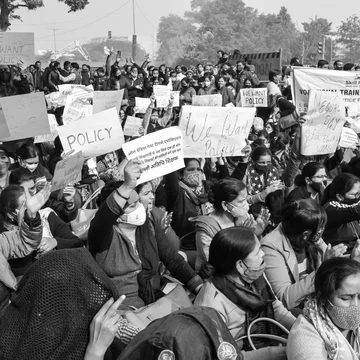
The cancellation triggered weeks of youth led protest through June and July 2026, ending on 25 July when the union education minister resigned and the protesters agreed to stand down. The demands that came out of it were more specific than the coverage suggested.
- A stronger examinations law with real transparency obligations, not only penalties.
- Reform of the bodies that conduct these exams, including how they are staffed and audited.
- A students’ rights charter covering what a candidate is owed when an exam fails.
- A welfare fund for candidates and families hit by cancellations.
- Standing external oversight of examination authorities rather than review after each scandal.
The fourth demand is the one that gets least attention and deserves most. Nobody currently owes a cancelled candidate anything. Fees are sometimes refunded. The year is not.
What would actually reduce leaks
Stop moving paper
Computer delivered testing removes the strongroom entirely. Questions are delivered encrypted and open at the moment the candidate starts. India already runs several large exams this way. The objection is centre availability in small districts, which is a real constraint and a solvable one, since it is the same infrastructure question the country answered for banking and identity enrolment.
Use many papers, not one
A single national paper makes one leak catastrophic. Multiple sittings from a calibrated question bank, with scores normalised across sessions, means a compromised set damages one session rather than the whole year. Several international testing systems work this way as standard practice.
Make the chain auditable
Every seal opened should be logged against a named person and a timestamp, published after the exam. Most leaks are never traced to a specific custody point because nobody recorded who held what and when.
Decide the remedy before the failure
A published rule stating what happens when an exam is compromised, including compensation and an age or attempt relaxation for affected candidates, would remove the improvisation that follows every cancellation. Candidates would at least know the terms of the system they are entering.
The part nobody wants to say
Leaks are a symptom of the ratio. When a few thousand seats are chased by lakhs of candidates, the value of an unfair advantage becomes worth more than the risk of taking it. Fixing custody and moving to computer testing will cut leaks substantially, and both should happen. Neither addresses why a paper is worth buying.
That question runs back into how few institutions India built for how many young people, which is the same shortage that shows up as students leaving school before Class 10 at one end and as families abandoning government schools in the middle. We wrote about that exit in why India’s middle class walked away from government schools, and the underlying numbers sit in India’s education crisis in 10 numbers.
What you can do about it
- If you know a candidate: the year after a cancellation is when students drop out quietly. Ask directly whether they are continuing, and whether money is the reason if they are not.
- In your community: local coaching costs are the largest hidden education expense for lower middle income families. Free peer study groups and shared material cut that cost more than any scheme.
- Locally: exam centres are staffed by local schools and colleges. Centre level custody discipline is a district administration matter, and it responds to written questions.
- Nationally: ask for the custody log and the remedy rule to be published. Both are administrative decisions that need no new law.
A resignation closed the protest. It did not change the printing schedule, the transport chain, or the number of seats. The next paper will be printed the same way unless something else changes first.
Featured photo by Andy Barbour on Pexels.
Sources: reporting on the 2026 NEET cancellation and the youth movement via TIME, Al Jazeera and NPR; leak counts via India.com.
What you can do
- Share the evidenceSend this to one person who should know about education.Share on WhatsApp
- Give an afternoonTeach, mentor, clean up, or lend your professional skills.Ways to volunteer
- Tell us what's missingKnow a story, a fact we got wrong, or a solution worth spotlighting?Suggest a story
Politically neutral. Every claim sourced. Report a correction.
No comments yet