64% Covered by Social Protection - What the ILO Number Counts and Who Is Still Left Out
In June 2025 India said the ILO counts 64.3% of its people as covered by at least one social protection benefit, up from 19% in 2015. What is counted, why earlier ILO figures were lower, and who is still outside.
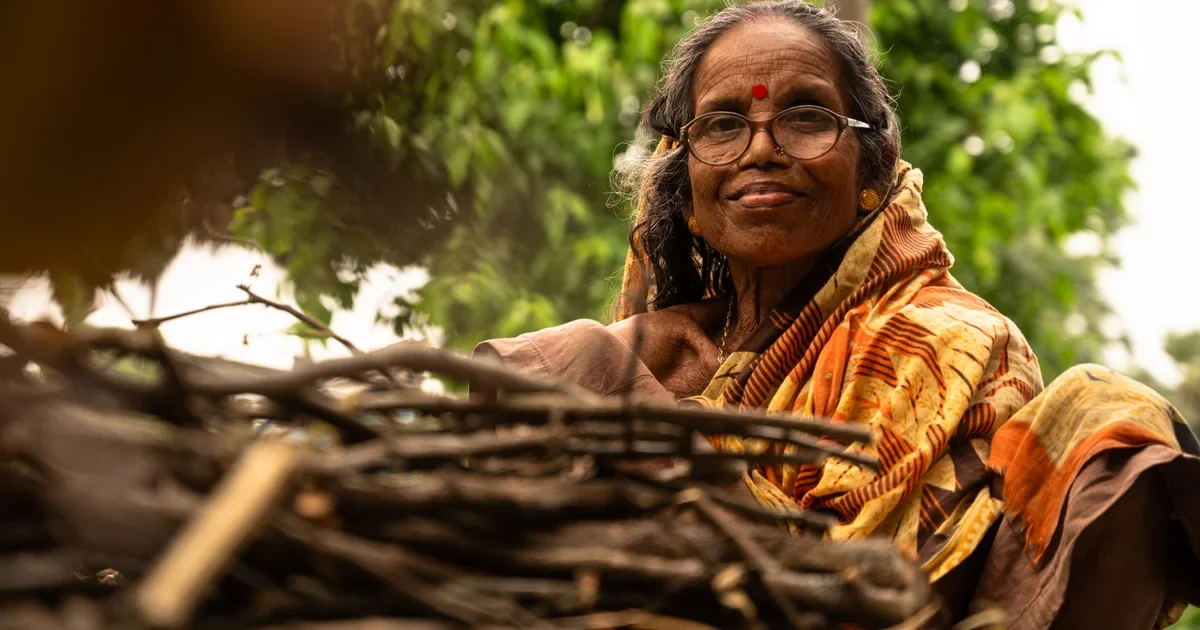
Photo by capture.zen on Pexels
In this story
What does the 64% social protection number say?
On 11 June 2025 India’s labour ministry announced that, according to data published by the International Labour Organization (ILO), 64.3% of the population, over 94 crore people, are covered by at least one social protection benefit. The ministry said coverage had risen from 19% in 2015, a jump of about 45 percentage points in ten years. Reports such as this one in Deccan Herald and The Week carried the announcement, and the Business Standard report gives the ministry and ILO wording.
It is a large number, and it needs careful reading. A reader who sees “64% covered” can easily assume that two in three Indians have a pension, health insurance and unemployment support. That is not what the figure measures. It counts people who receive at least one benefit from a qualifying scheme. A farmer who gets one cash transfer and has no pension, no health cover and no maternity support is counted the same as a worker with a full package.
This article explains what the figure counts, why different official numbers circulate, what is left out, and what would make the cover real for the people at the edge of it.
Is it 24% to 64%, or 19% to 64%?
Both numbers appear in coverage of this story, and they come from different ILO releases. It helps to separate them.
Figure | Where it comes from | What it says |
|---|---|---|
19% in 2015 to 64.3% in 2025 | ILO dashboard data, announced by the labour ministry on 11 June 2025 | Share of the population covered by at least one social protection benefit |
24.4% in 2021 to 48.8% in 2024 | ILO World Social Protection Report 2024-26, as summarised by the Indian government in early 2025 | An earlier ILO estimate for the same type of indicator |
About 65%, nearly 92 crore people | The government’s own summary of the 2024-26 report | Coverage through central schemes in cash or in kind |
The 24.4% to 48.8% pair came first. Summaries of the ILO’s World Social Protection Report 2024-26, including the Indian government’s own, said coverage had doubled between 2021 and 2024. Then the 64.3% figure arrived in June 2025, based on the ILO’s updated data. Press reports of the June 2025 announcement said the new estimate was 15.5 points above the 48.8% in the earlier ILO data.
So the jump from the low 20s to the mid 60s is partly real growth in schemes and enrolment, and partly a change in what was counted. The labour ministry said as much. It argued that the 48.8% figure did not count in-kind benefits such as food and housing, or the social protection schemes run by state governments, and that it had worked with the ILO to widen the data. The ministry also said the 2025 figure reflects only the first phase of that data-sharing exercise.
A fair summary: coverage on paper has grown a great deal since 2015, and the speed of the jump in a single year owes a lot to better data. Both things are true.
What counts as social protection in the ILO figure?
The ILO defines social protection as a set of policies that protect people through life: child and family benefits, maternity protection, unemployment support, support after injury at work, sickness and health, disability and old-age pensions. The headline indicator asks a simple question: is a person covered by at least one of those benefits?
For the 2025 India figure, news reports of the ministry announcement said the assessment drew on data from 32 central and state schemes. To qualify, a scheme had to be backed by law, provide cash benefits, be active, and have a verified data series for the last three years. Reports describe 24 of the 32 as pension-related. One breakdown, in this explainer, attributed 57.9% of coverage to central schemes alone and 6.4% to state schemes alone, with state data collected from eight states. Treat those splits as reported by secondary sources, since the ILO’s own tables were not available to us at the time of writing.
Which Indian schemes are likely to be in the count?
The published criteria point to cash-benefit schemes that rest on a law or a formal scheme. Based on those criteria, the following types of programmes are the natural candidates:
- Old-age and social pensions. The national social assistance pensions for the elderly, widows and disabled people, plus state pension schemes.
- Contributory pensions. The Employees’ Provident Fund and Employees’ Pension Scheme for formal workers, and voluntary schemes such as the Atal Pension Yojana, which PIB said had passed 7 crore gross enrolments in October 2024.
- Cash transfers to farmers and families. Schemes that put money directly into bank accounts.
- Maternity benefit. Cash support to mothers, such as the maternity benefit under the Maternity Benefit Act for formal workers and the Pradhan Mantri Matru Vandana Yojana for others.
- Workers’ schemes. Employee insurance and accident cover for registered workers.
We cannot say from public documents exactly which 32 schemes the ILO used, and the ministry has not published the list in the sources we found. What we can say is that the stated rule, cash benefits backed by a law or scheme with verified data, shapes what the number can and cannot show.
Does the food ration count?
This is the question readers ask most. India’s public distribution system gives subsidised or free grain to a very large share of households under the National Food Security Act. It is among the most important protections for poor families. But the criteria reported for the 2025 figure say cash benefits, and a ration is an in-kind benefit. The labour ministry’s complaint about the earlier 48.8% figure was precisely that in-kind benefits were missing. The government’s separate summary of about 65% did include in-kind benefits through central schemes.
The result is that two figures of about 65% describe different things. One is a cash-benefit count from the ILO dashboard. The other is a government summary that mixes cash and in-kind. Readers should check which is meant before comparing.
Does health insurance count?
The ILO’s wider framework includes health protection, and India’s Ayushman Bharat PM-JAY gives eligible families hospital cover of up to Rs 5 lakh a year. In October 2024 the scheme was extended to all citizens aged 70 and above, as PIB reported at the launch of the Vay Vandana card. Some summaries of the earlier 48.8% figure described it as excluding health benefits. The reports on the 64.3% figure do not say whether health insurance was in the count, so it is safest not to assume it was.
How should we read the number?
Four points keep the figure in proportion.
It counts coverage, not adequacy
A person receiving a small monthly pension and a person receiving a pension that covers their needs are both “covered.” India’s social pension for the elderly, for example, has been a small sum for years in many states, though some states top it up. The indicator does not measure whether the benefit is enough to live on.
It counts people once, but people hold many roles
The indicator asks whether a person receives at least one benefit. A household may have several beneficiaries, and a single individual may receive several benefits. The method corrects for overlap in principle, but it relies on administrative records, and duplicate or inactive records are a known problem with any large database in any country.
It rests on administrative data
The numbers come from scheme records, not from a household survey asking people what they receive. Administrative data can be more complete than a survey for large schemes, but it can also include people who are enrolled and no longer receiving anything. This is why the ILO and the ministry describe the 2025 figure as a first phase and why both said they would keep refining the method. We found no detailed independent critique of the 64.3% figure at the time of writing. That is a reason to wait for more analysis, not a reason to dismiss the number.
The year-on-year jump needs context
A rise from 19% in 2015 is real progress on any reading. The sharp rise between two ILO releases in 2024 and 2025 reflects, in part, the inclusion of more schemes and more state data. Compare the 2025 figure with the 2015 figure, not with the 48.8% estimate, and use 2025 as the new baseline for later years.
What has India built to reach people?
Several reforms made large-scale coverage possible, and they deserve credit even when the headline needs care.
- Bank accounts and direct transfers. Mass account opening and Direct Benefit Transfer let pensions and subsidies reach a bank account instead of passing through intermediaries.
- Aadhaar and the digital trail. A common identity makes it easier to find who is enrolled and to avoid paying twice.
- e-Shram. The national database of unorganised workers, launched in 2021, had more than 30.95 crore registered workers by July 2025, according to PIB. It gives each registered worker a number that can link to schemes.
- Portable ration entitlements. One Nation One Ration Card lets a household draw its grain at a shop away from home, which matters for migrants.
- Voluntary pensions and insurance. Atal Pension Yojana and simple accident and life cover for people outside formal jobs.
- State schemes. Several states run social pensions and maternity support of their own, and the 2025 data included a first batch of state schemes.
The state record is varied. Tamil Nadu is the best-known case of a state that built a broad welfare system early, as we describe in our One State One Story on Tamil Nadu. Self-help groups give women a savings and credit base, as our look at how self-help groups built a microfinance network explains.
Who is still left out?
Even on the most generous reading of the figure, about one in three people were outside the count in 2025. In reality, more people have gaps than that, because cover for one risk does not protect against another.
Informal workers
Most Indians work outside formal jobs. A World Bank poverty brief, summarised by Drishti IAS, found only 23% of non-farm paid jobs in India are formal. Formal jobs come with provident fund, insurance and paid leave. Informal ones usually do not. Voluntary schemes help, but they need a worker with irregular income to pay in regularly, and many drop out. Enrolment is not the same as being covered in old age.
Domestic workers
Our look at India’s domestic workers shows a group that has no national law, and estimates of their number range from 4 million to more than 50 million. Such workers can be missing from scheme records altogether.
Migrant workers
Workers who move between states can lose access to benefits tied to their home address, and may not know how to claim in a new city. Portable ration cards and e-Shram registration help, but registration alone does not deliver a benefit.
Gig and platform workers
Delivery riders and drivers work through apps but are not classed as employees. The Code on Social Security, 2020, brought into force in stages from November 2025 according to a Taxmann analysis, lets platforms contribute 1 to 2% of annual turnover, capped at 5% of payouts to workers, to a social security fund. The same analysis says the date from which that contribution applies is to be notified by the central government. PIB data show over 3.37 lakh platform and gig workers on e-Shram as of August 2025, a small share of those who work this way. How this works in practice is still unfolding.
Outdoor workers and the self-employed
Our article on heatwaves and outdoor workers shows how workers on construction sites, farms and streets carry risks that no scheme in the count fully covers, such as lost income on heat days.
Women
Women are more likely to be in unpaid or informal work, and so less likely to be in contributory schemes. Maternity support exists, but eligibility rules and paperwork often keep it out of reach for those who need it most.
How do other countries report social protection coverage?
The ILO publishes the same indicator for every country, which is what makes comparison possible. In its reports, large gaps remain between high-income countries and low-income ones. The point for readers is not to rank India against others on one number. It is to ask the same three questions of any country: how many people are covered, for which risks, and by how much.
Countries with a long record in this area, such as the Nordic states and Germany, built coverage on contributions from employers and workers matched by taxes, and they extended it to the self-employed over decades. Several middle-income countries, including Brazil with its Bolsa Familia cash transfer, took a faster route by paying cash to poor families from general taxes. India uses both routes: contributory schemes for formal workers, and tax-funded transfers for the poor. The test of a mixed system is whether people in between, who earn too much for a transfer and too little to contribute, find a way in. That group is large in India.
Why does the difference between enrolment and cover matter?
Consider a vegetable seller who opens a voluntary pension account at 30 and pays in for three years, then stops when a child falls ill and money runs short. She is enrolled, and she may be counted for a time, yet she will not have a pension at 60. Or consider a domestic worker who registers on e-Shram but never hears of a benefit that fits her, or a migrant carpenter whose card lists a village address he left years ago.
Each of these people appears in a database. Whether they appear in the count, and whether they are protected when a bad day arrives, are different questions. Good coverage numbers should be paired with continuation rates, meaning how many people who enrolled five years ago are still paying in, and with claim rates, meaning how many eligible people actually receive a benefit. Without those, a rising enrolment line can mean either deeper protection or a bigger pile of dormant accounts.
What would make the cover real?
- Publish the list. Release the 32 schemes used in the ILO count, with the rules for each and the number of beneficiaries, so researchers can check the figure.
- Report adequacy as well as coverage. Track how much a benefit pays compared with the cost of living, and how many people receive more than one.
- Measure with surveys too. Add questions on pensions, insurance and benefits to household surveys, so records can be compared with what people say they receive.
- Make benefits portable. A worker should keep her entitlement when she changes city, job or platform.
- Simplify claiming. A benefit with a hard application process reaches fewer people than the same benefit paid automatically.
- Fund the gaps. Contributory schemes will not reach people who cannot afford to contribute. Tax-funded basic pensions for the poorest have the widest reach.
What you can do
- Register on e-Shram if you or someone you employ works in the unorganised sector. Registration is free through a common service centre or the portal. Keep the card and bank details linked.
- Help a domestic worker, driver or helper enrol. Many do not know the schemes exist. Ask if they have an Ayushman card, a bank account linked to Aadhaar and a pension plan.
- Pay into a pension if you can. If your employer does not provide one, a voluntary scheme such as Atal Pension Yojana gives a defined monthly pension from the age of 60 for regular contributions. Check the current rules before you enrol.
- Check your ration card and update it. Make sure all family members are listed, and ask the ration office about portability if you move.
- Ask for the maternity benefit. Pregnant women and employers should ask at the anganwadi or health centre what they are eligible for.
- Look at your state’s schemes. State pensions, widow and disability support differ widely. Your state social welfare department lists them.
- Read the fine print on headlines. When someone cites a coverage figure, ask what counts, which year it refers to and whether it measures benefits received or people enrolled.
Frequently asked questions
Does 64% mean 64% of Indians have a pension?
No. It means 64.3% were covered by at least one qualifying social protection benefit, which could be a cash transfer, a pension, a maternity benefit or another scheme. It is not a measure of pension coverage.
Why did the number jump from 48.8% to 64.3%?
The two come from different ILO data releases. The labour ministry said the earlier figure left out in-kind benefits and state schemes, and the newer data included more scheme and state information. The ministry said the 2025 figure reflects only the first phase of that work.
Is the 64% figure from the ILO or the government?
The ministry announced it, saying it was based on data published on the ILO dashboard. The underlying indicator is the ILO’s. The scheme-level data that feeds it comes from Indian government records.
Is there a newer figure?
A July 2026 news report said the labour minister put coverage at over 100 crore people, or 68.4%, in 2026. We did not find the ILO’s own table for that figure, so check it against the ILO dashboard before citing it.
Does the ration card count as social protection?
The ration is a social protection benefit in the ILO’s wider framework, but the criteria reported for the 2025 count refer to cash benefits. The government’s separate roughly 65% summary of the 2024-26 report included in-kind support.
Who is most likely to be missed?
Informal workers, domestic workers, migrants, gig workers and women outside formal jobs are the groups most often missing from scheme records or enrolled in schemes that pay little.
The bottom line
India reports that 64.3% of its people, over 94 crore, were covered by at least one social protection benefit in 2025, up from 19% in 2015. The rise reflects real expansion in pensions, transfers and registration, and it also reflects a wider data count that the labour ministry says is still in its first phase. The number is best read as a measure of reach, not depth. It does not tell us how much a benefit pays, or whether a gig worker, a migrant or a domestic worker can claim it when she needs it. The next step is to publish the scheme list and track adequacy, so that the figure can move from a headline to a guarantee.
What you can do
- Share the evidenceSend this to one person who should know about poverty.Share on WhatsApp
- Give an afternoonTeach, mentor, clean up, or lend your professional skills.Ways to volunteer
- Tell us what's missingKnow a story, a fact we got wrong, or a solution worth spotlighting?Suggest a story
Politically neutral. Every claim sourced. Report a correction.
No comments yet