The Single-Ticket Metro: How Helsinki Built It and Why 50 Indian Cities Could Replicate
Helsinki's HSL system lets a single ticket cover metro, tram, bus, and ferry - giving the city a 70% public transit modal share. Here is how Finland built that integrated network and why India's 50+ metro cities, backed by the National Common Mobility Card, can follow the same path.
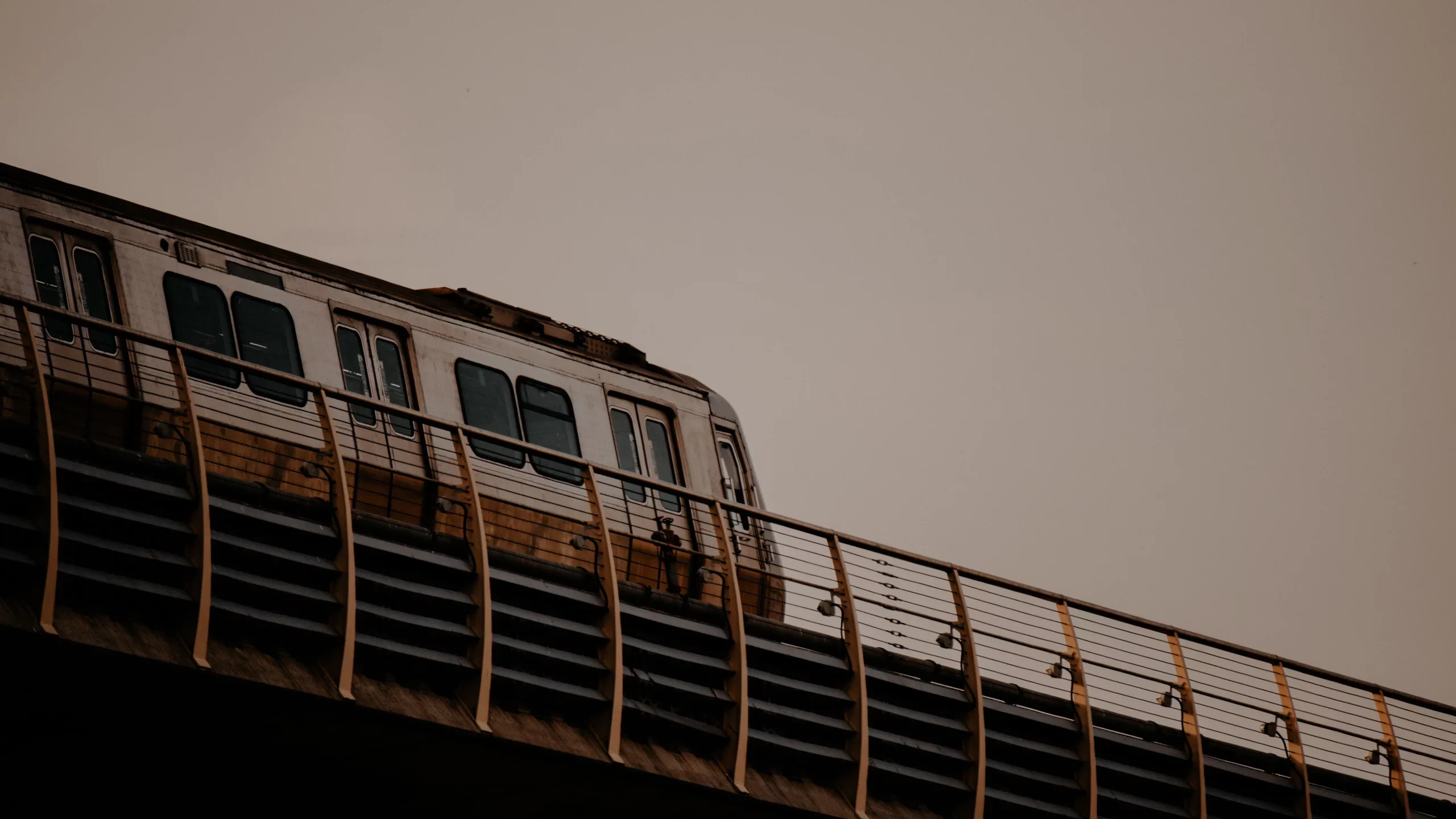
Imagine boarding a metro in Chennai, switching to a bus in the suburbs, and stepping onto a ferry to cross a backwater - all on the same ticket, tapped once. In Helsinki, this is not imagination. It is a Tuesday morning commute. Finland’s capital built the world’s most tightly integrated urban transit network - one authority, one fare structure, one card - and achieved something Indian cities are still chasing: a 70% public transit modal share. More than seven in ten journeys in Helsinki are taken by public transport, cycling, or walking. The personal car is the exception, not the rule.
India has 50+ cities with metro rail projects at various stages of planning, construction, or operation. Many of these cities also have bus rapid transit corridors, suburban rail, city buses, and increasingly, water transport. Yet in almost every Indian city, these modes operate in silos - separate tickets, separate authorities, separate apps, and no connection between them. The commuter pays the integration penalty every single day. This challenge is not unlike the infrastructure investment gaps that show up in India vs World comparisons across sectors - the gap between investment and utilisation often comes down to governance architecture.
This article unpacks how Helsinki built its integrated transit system through HSL (Helsingin Seudun Liikenne, the Helsinki Regional Transport Authority), what mechanisms made it work, how India’s National Common Mobility Card is attempting the same logic at scale, and - most importantly - what 50 Indian cities can concretely do to replicate the Helsinki model within this decade.
Helsinki’s Transit System: How HSL Works
HSL - the Helsinki Regional Transport Authority - was established in 2010 as a joint authority of the Helsinki Metropolitan Area municipalities: Helsinki, Espoo, Vantaa, Kauniainen, and later several surrounding towns. Before HSL, each municipality ran its own transport authority with its own fares. A commuter crossing a municipal boundary paid multiple fares or was simply unable to transfer without re-purchasing. The creation of HSL consolidated all public transport planning, procurement, and fare collection under one roof.
HSL operates or contracts out the following modes under a single fare and ticketing system:
- Helsinki Metro: Two lines (west and east), fully automated, serving Helsinki and Espoo.
- Trams: 12 lines operating in the inner city, some of the most frequent public transit in Northern Europe.
- City Buses: Several hundred routes covering the metropolitan area.
- Commuter Rail: Suburban rail lines operated under contract with VR (Finnish State Railways).
- Ferry: The Suomenlinna sea fortress ferry, the world’s busiest ferry by passenger count, is part of the HSL network - a single HSL day ticket covers the round trip.
The fare structure is zone-based - the HSL area is divided into zones (A, B, C, D) and a single journey ticket is priced by the number of zones crossed, not by mode. This means a passenger can board the metro in Zone A, transfer to a tram in Zone A, and take a bus still in Zone A - all on the same ticket bought once. The transfer window is 60-80 minutes depending on zones.
Feature | Helsinki (HSL) | Typical Indian City |
|---|---|---|
Transit authority | Single (HSL covers all modes) | Multiple (metro corp + city bus + suburban rail) |
Fare structure | Zone-based, mode-agnostic | Per-mode, no free transfer |
Ticketing system | Single contactless card/app | Multiple cards/apps, no interoperability |
Public transit modal share | ~70% | 15-25% (varies by city) |
Annual journeys | 380 million (metro area 1.1M) | Varies |
Real-time information | Single app (HSL App) for all modes | Fragmented (metro app, bus app) |
The HSL app (available in Finnish, Swedish, and English) provides real-time departure information, journey planning across all modes, and integrated ticket purchase. A commuter can plan a journey from a suburb to the ferry terminal, buy the right zone ticket in the app, and board without cash or a separate card. This end-to-end experience - frictionless boarding across modes - is what drives ridership.
Three Mechanisms That Made Helsinki Work
Helsinki’s integration was not accidental. Three structural mechanisms made it possible.
1. A Single Integrated Authority
The creation of HSL as a joint municipal authority - with actual power to plan, contract, and set fares across all modes - was the foundational step. Without this, municipalities would continue to protect their own operators and fares. The political will to surrender individual municipal transport control in favour of a regional authority was the hardest part. It took years of negotiation and ultimately required state-level endorsement from the Finnish government. The payoff was immediate: once one authority held all the levers, integration became technically straightforward.
2. Unified Fare Collection Technology
HSL deployed contactless RFID smart card technology (the HSL card) across all modes simultaneously. The technology backend was designed to allow any validator on any vehicle or station to communicate with the same fare management system. This meant the card reader on a tram door and the gate at the metro station were reading from and writing to the same account. The back-end settlement between different contract operators (HSL pays them per kilometre or per trip, not per fare collected) meant operators had no incentive to block cross-mode transfers.
3. Guaranteed Operator Revenue Through Net Contracts
This is the mechanism most often overlooked in discussions of transit integration. In Helsinki, private bus operators and the metro operator are paid by HSL under net cost contracts - they receive a fee for operating specified routes and frequency, regardless of how many passengers board. Fare revenue goes to HSL, not to individual operators. This removes the perverse incentive where an operator avoids routes that feed competing modes. An integrated fare system only works if all operators are indifferent to which mode the passenger uses - and net contracts create that indifference.
India’s Gap: 50 Metro Cities, Zero Integration
India currently has 20 operational metro systems and another 30+ under construction or in advanced planning. Metro rail serves cities from Delhi and Mumbai to Agra, Surat, and Patna. But the last-mile story is nearly always the same: the passenger steps off the metro, and the connection to a bus, auto-rickshaw, or suburban train is a separate, cash-dependent transaction with no fare continuity.
The structural reasons for this gap are well-documented in the MoHUA (Ministry of Housing and Urban Affairs) India Metro Rail Atlas and multiple CAG reports:
- Fragmented authority: Metro corporations report to the central government (under MoHUA) via special purpose vehicles, while city buses are run by state transport corporations, suburban rail is under Indian Railways (Ministry of Railways), and auto-rickshaws are regulated by state RTO offices. No single city has one authority with control over all modes.
- Revenue-dependent operator models: City bus services are typically operated as gross cost or net revenue contracts where operators benefit from high ridership on their own routes. Feeding passengers to the metro reduces their earnings.
- Technology fragmentation: Every metro corporation has deployed its own ticketing system (some RFID, some QR, some token-based) with no interoperability standard between cities or between modes within cities.
- Political ownership: Metro corporations are often prestige projects of state governments that are reluctant to share branding, revenue, or governance with competing agencies.
The result is that India’s metro systems, despite massive capital investment, are operating at well below their potential ridership. The Delhi Metro - India’s busiest - carries around 6 million journeys per day on its busiest days but serves a city of 33 million people with extensive bus and suburban rail networks that are not ticketing-integrated with it. The same pattern of under-connected infrastructure applies to India’s digital investment story - as explored in India’s AI infrastructure build-out, where governance architecture often determines whether investment translates into impact.
The National Common Mobility Card: India’s HSL Card Moment
India’s answer to Helsinki’s single-ticket system is the National Common Mobility Card (NCMC) - a RuPay-based open-loop contactless card that can be used for transit fare payment across different metro systems and, eventually, other transport modes. The NCMC was launched in March 2019 on the Ahmedabad Metro and has since been adopted by metro systems in Delhi, Bengaluru, Chennai, Kochi, Nagpur, and several other cities.
The NCMC’s technical architecture is significant: unlike proprietary metro cards (like Delhi Metro’s blue token or Mumbai Metro’s QR ticket), the NCMC is built on an open standard. Any bank issuing a NCMC-compliant RuPay card enables the cardholder to use it at any NCMC-enabled validator. The card can also be linked to a bank account for prepaid transit wallet top-ups - meaning the balance travels with the person, not with a city-specific card.
As of 2025, the NCMC is operational for transit at metro stations in 10+ cities. MoHUA’s target is to expand NCMC acceptance to all metro systems and to city bus rapid transit (BRT) corridors by 2026. The ministry has also mandated that all new metro projects seeking central funding must deploy NCMC-compatible validators from day one - a hardware standardisation move that parallels what Finland did when HSL rolled out its smart card across all modes simultaneously.
What Helsinki’s 70% Modal Share Required Beyond Technology
Technology alone - even perfect ticketing integration - does not explain Helsinki’s 70% transit modal share. Three factors beyond the ticket made Helsinki’s modal share achievable, and India needs to understand them if it wants genuine replication rather than a superficial card swap.
Frequency and Reliability
Helsinki’s transit runs at 5-10 minute headways on core routes, seven days a week, from 5am to 1am. The metro runs every 3-5 minutes during peak hours. This level of service frequency means a commuter does not need to plan - they simply walk to the nearest stop and a vehicle arrives within minutes. Indian metro systems approach this frequency on trunk lines during peak hours, but feeder bus services in most Indian cities run at 20-40 minute intervals, destroying the end-to-end trip time advantage that integration should create.
Land Use and Density
Helsinki’s urban form was shaped by transit corridors. The city planned residential density along metro and tram lines, with commercial and mixed-use development clustered at stations. This is the Transit-Oriented Development (TOD) model - and it means that a large share of Helsinki’s population lives within 500 metres of a high-frequency transit stop. India’s metro projects have adopted TOD as a policy goal (MRTS TOD Policy, 2018) but implementation has been slow. Bengaluru’s Purple Line and Delhi’s Phase 4 stations have TOD zones, but the densification of surrounding areas has not followed at the pace required to drive ridership.
Pricing That Favours Transit Over Private Cars
Helsinki has high parking costs in the city centre, congestion-inducing road design in the core city, and transit fares that are genuinely cheaper than driving for any urban trip. The political choice to make driving expensive relative to transit is explicit and deliberate. India’s cities, by contrast, have heavily subsidised urban parking (often free on-street parking in commercial areas), low fuel tax relative to European norms, and metro fares that are occasionally higher per kilometre than operating a two-wheeler. Rebalancing this price signal is the most politically difficult but most impactful lever available.
Three Indian Cities That Are Closest
Three Indian cities are furthest along the path toward Helsinki-style integration and can serve as demonstration cases for the rest.
Kochi: Kochi Metro (KMRL) has achieved the most genuinely integrated fare system in India. The Kochi1 card works on metro, city buses, water metro (the Kochi Water Metro is one of the world’s largest water-based urban transit systems), and selected ferry services. The water metro alone - 38 electric boats on 16 routes connecting 10 island and coastal communities - is a direct operational parallel to Helsinki’s Suomenlinna ferry integration. Kochi has also deployed real-time information across modes through a single app interface.
Pune: Pune Metropolitan Region Development Authority (PMRDA) has mandated that the Pune Metro, Pune Mahanagar Parivahan Mahamandal Ltd (PMPML) buses, and suburban rail use NCMC-compatible ticketing. The integration is partial but the governance framework - a single metropolitan authority with transport planning powers across modes - is the closest to the HSL model that any Indian metro area has attempted.
Bengaluru: Namma Metro’s integration with BMTC (Bengaluru Metropolitan Transport Corporation) buses has improved significantly since 2023 with shared stops and co-located interchange points. The Bengaluru Smart City initiative has mapped transit demand patterns across modes. The missing link remains fare interoperability - BMTC still operates on a separate ticketing system from Namma Metro, though NCMC acceptance is expanding on both networks.
What Citizens Can Do: Five Layers of Action
Transit integration is a policy and governance challenge that requires citizen pressure to move. Here is how every Indian can push for the Helsinki model from where they stand.
Personal
Get an NCMC-compatible RuPay card from your bank (most public sector banks and several private banks issue them). Use it on every metro trip. The adoption data that NCMC validators report to MoHUA is used to justify expansion to more modes - your card tap is a data point that builds the case for bus integration. If your city’s buses are not yet NCMC-enabled, ask the bus operator or city transport app why not.
RWA / Neighbourhood
Resident Welfare Associations near metro stations can formally write to the metro corporation requesting last-mile bus feeder services that are timetabled to connect with metro arrivals. In Helsinki, feeder buses are contracted to arrive within 2 minutes of metro departures. Requesting timed transfers through your RWA gives the transit authority specific, actionable feedback with a residential mandate behind it.
Ward / City
Push your ward councillor to table a resolution in the municipal corporation asking for a Unified Metropolitan Transport Authority study - a formal review of whether your city’s transit modes can be brought under one planning body. Several Indian cities have done feasibility studies (Bengaluru, Hyderabad) but not acted on them. A ward resolution forces the study onto the municipal agenda.
State / National
The MoHUA Smart Cities Mission and AMRUT 2.0 both have transit integration components with central funding. Citizens can engage with their city’s AMRUT node to ask: is your city applying for integrated mobility grants? Has the NCMC expansion to buses been funded? These programs have allocated funds specifically for transit integration hardware - cities that do not apply leave money on the table.
Professional / Institutional
Urban planners, architects, and civil engineers working with city governments can advocate for Transit-Oriented Development zoning around metro stations. Density within 500 metres of a transit station is the single strongest predictor of transit ridership. Every TOD project proposed near a metro station - mixed-use, residential, commercial - increases the number of zero-car commuters in that neighbourhood. This is the land-use lever that Helsinki used deliberately and India is using inconsistently.
Conclusion: The Architecture Already Exists
India does not need to invent the Helsinki model. It needs to scale what it has already started. The NCMC is the technology layer. MoHUA’s Unified Metropolitan Transport Authority (UMTA) guidelines - published in 2020 and mandated as a condition of metro funding - provide the governance template. Kochi and Pune demonstrate that Indian cities can operationalise multi-modal integration with existing institutions and budgets.
What is missing is the same thing that was missing in Helsinki before 2010: political will at the metropolitan level to create a single authority with real power over all modes. That political act - harder than any technology deployment - is the lever that unlocks the rest. When a commuter in Chennai can tap once and travel by metro to a bus to a ferry on a single fare, the city’s transit modal share will rise, traffic will fall, air quality will improve, and the billions spent on metro infrastructure will deliver their full return.
Helsinki’s 70% transit modal share took 15 years to build after HSL was created. India’s metro cities have the infrastructure base to achieve 40-50% modal share within a decade if the governance step is taken now. The single ticket is not just a convenience. It is the architecture of a city that works.
What you can do
- Share the evidenceSend this to one person who should know about governance.Share on WhatsApp
- Give an afternoonTeach, mentor, clean up, or lend your professional skills.Ways to volunteer
- Tell us what's missingKnow a story, a fact we got wrong, or a solution worth spotlighting?Suggest a story
Politically neutral. Every claim sourced. Report a correction.


No comments yet