Plastic Waste in India: Why It Is the World's Largest Polluter and What Works
India reports about 4 million tonnes of plastic waste a year, and a 2024 Nature study ranks it the top plastic polluter. The rules, the gaps, and the cities that cut waste.
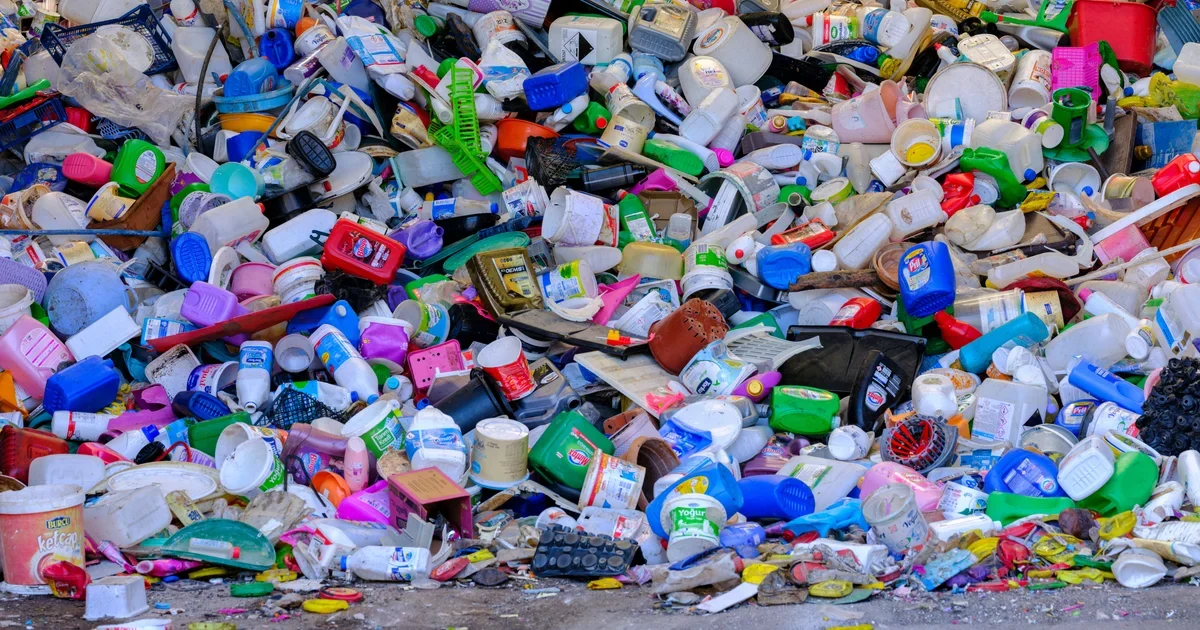
Photo by Engin Akyurt on Pexels (illustrative image of a recycling centre)
In this story
How much plastic waste does India produce?
The official figure is about 4 million tonnes a year. India’s Central Pollution Control Board (CPCB), working from reports by state pollution control boards, put plastic waste generation at about 3.90 million tonnes in 2021-22 and about 4.14 million tonnes in 2022-23, according to a reply in the Rajya Sabha in December 2024. Parliamentary replies for earlier years show slightly different numbers, so the exact total shifts with each report. The safe reading is a little over 4 million tonnes, rising slowly.
That figure is reported waste. It counts what states measure and send to the CPCB. It does not capture the plastic that is burned in the open, thrown in a drain, buried in a field or left on a roadside before anyone records it. That gap is where the most important number in this article sits.
Is India really the world’s largest plastic polluter?
A study led by researchers at the University of Leeds and published in the journal Nature in September 2024 said yes. It estimated that India releases about 9.3 million tonnes of plastic into the environment each year, around a fifth of the global total, as reported by the South China Morning Post. Coverage gave the global total as roughly 50 to 52 million tonnes a year.
The way the study defined pollution matters. It counted plastic that is not collected at all, plastic dumped in open sites and plastic that is burned in the open, which the authors found to be a major route. According to a Moneylife report on the findings, uncollected waste is at the heart of India’s problem. The team also said that its estimate might still be low.
Two cautions keep this in perspective. First, the figure is a model, built from waste data, population and assumptions about how waste is handled. It carries a margin of error, and India’s own data differ from it. The official 4 million tonnes and the study’s 9.3 million tonnes measure different things: one is waste generated and reported, the other is plastic that escapes into the environment. They are not meant to match. Second, India has the world’s largest population, so a large absolute figure is expected. Per head, India’s plastic use is well below that of many richer countries. The finding does not say that Indians waste more than anyone else. It says that India has the most plastic leaking out of a system that does not reach everyone.
Where does the plastic go?
Think of plastic in India as moving along three paths.
- Collected and recycled. India has a large recycling trade, much of it informal. Rigid plastics such as PET bottles and HDPE containers have buyers and are collected. Waste pickers, scrap dealers and small units carry out most of this work.
- Collected and dumped. Mixed, dirty or thin plastic goes to landfills and dump sites along with the rest of the city’s waste. Multi-layer sachets and wrappers are the hardest to recycle and often end up here.
- Never collected. Plastic left in lanes, drains, rivers and fields, or burned to clear space or keep warm. This is the path that feeds the pollution estimate.
Our article on the chemical waste left after Holi and our long read on the Ganga’s pollution crisis show how what is thrown away on land reaches water.
What does a landfill like Ghazipur show?
Ghazipur in east Delhi is the best-known example of what happens when waste is dumped for decades. A court commissioner’s report in March 2025 said the landfill had a permitted height of 40 metres and has since grown to about 60 metres, as listed on the India Environment Portal. A drone survey in 2022 estimated about 85 lakh tonnes of old, or legacy, waste on the site. Fresh waste still arrives at about 2,400 to 2,600 tonnes a day, and the waste-to-energy plant on site handles only part of it.
The remedy is biomining, which means digging out old waste, screening it and separating soil, plastic and other fractions. It is slow. According to reporting on Municipal Corporation of Delhi filings, the first biomining contract, signed in November 2022, was terminated in December 2024 after about 13.9 lakh of its 30 lakh tonne target had been processed, and a new contract was awarded in March 2025. The latest affidavit we found proposed finishing the remaining waste, about 69 lakh tonnes, by December 2027. That is a proposal reported in the press and not a court-approved deadline, and earlier deadlines have already slipped.
Landfills hold plastic for centuries. They also catch fire, release methane and leach into groundwater. The longer the pile, the harder and costlier the clean-up, which is why most experts say the fix lies upstream, at the point of segregation. For the wider picture on solid waste, read our earlier piece on how India can win the war on waste.
What rules govern plastic in India?
India’s plastic rules sit under the Environment (Protection) Act, 1986. The main instrument is the Plastic Waste Management Rules, first issued in 2016 and amended several times.
What do the Plastic Waste Management Rules say?
The Rules set out who is responsible for plastic at each stage. Local bodies are to collect and manage waste, and states are to enforce. Producers, importers and brand owners are responsible for the packaging they put on the market. The Rules also set minimum thicknesses for carry bags, bar the use of plastic in a number of items, and require labelling and registration for makers and recyclers.
What was banned in July 2022?
From 1 July 2022 the government banned the manufacture, import, stocking, distribution, sale and use of a list of identified single-use plastic items that have low utility and high potential to become litter. The list includes earbuds with plastic sticks, balloon sticks, plastic flags, candy and ice-cream sticks, thermocol for decoration, plates, cups, cutlery, straws, trays and PVC banners under 100 microns, as described in coverage by The Quint. The minimum thickness for plastic carry bags was raised to 75 microns and then to 120 microns from 31 December 2022.
The Central and State Pollution Control Boards monitor compliance, and violators can face action under the Environment Protection Act, including a fine of up to Rs 1 lakh, imprisonment of up to five years, or both. A parliamentary reply in July 2024, available as a Rajya Sabha document, reported 8,53,832 inspections, violations found in 3,44,689 cases, fines of about Rs 19.05 crore and about 19.5 lakh kg of plastic seized. Those figures show effort. They do not show that plastic use fell, and we did not find an independent assessment of impact. Walk through any market and you will see that thin carry bags, sachets and disposable cups remain in use. A ban on a list of items is also hard to enforce against millions of small vendors when a cheap substitute is not at hand. Rwanda’s ban, which we covered in our article on the country’s rebuilding, worked in part because of tight border control and a culture of community clean-up days, conditions India’s scale does not offer.
What is Extended Producer Responsibility?
Extended Producer Responsibility, or EPR, makes the companies that sell packaged goods responsible for collecting and recycling the plastic packaging they produce. Under the 2022 amendment, producers, importers and brand owners (known as PIBOs) must register on a central portal and meet annual targets for collection, recycling and, for some categories, reuse and use of recycled content. They can meet targets by buying certificates from registered recyclers and processors.
A parliamentary reply reported about 44,785 producers, importers and brand owners and about 2,615 plastic waste processors registered on the portal, as listed in the Rajya Sabha reply of 5 December 2024. The idea is sound, since it puts the cost of dealing with packaging on those who design it. The concerns, raised by the Centre for Science and Environment and others, are about how the system is checked. When recycling is counted through certificates, the question is whether the plastic actually reaches a recycler or whether the same tonne is counted twice. Who audits the audit is the central issue. The recycling figures that industry bodies quote are not independently verified, so we do not repeat them.
Does the law cover the people who do the work?
Only in part. Waste pickers recover a large share of what gets recycled, yet they are not given a clear role in EPR or paid by producers. Our piece on India’s waste pickers and the fight for a recycling revolution explains their numbers and the efforts to give them legal recognition. Whether EPR money reaches them is among the most important design questions in the system.
What works? Four Indian models
India does not lack proof that waste can be managed better. Four places show different ways to do it.
How did Indore become the cleanest city?
Indore has topped the national Swachh Survekshan cleanliness ranking for several years in a row. Its core is a six-stream system with door-to-door collection from every household: wet waste, dry plastic, other dry waste, domestic hazardous waste, sanitary waste and electronic waste, as described by The Quint. Reports describe near-full door-to-door coverage and a segregation rate that officials put in the high nineties. The city then processes wet waste into compost and biogas and sends dry waste to recyclers.
The lesson is that a city can do this at scale. It also took years of enforcement, fines for mixing waste, and steady use of sanitation staff. These figures are largely official, so a visit to a few wards or a read of the independent audits is a good check before copying anything.
What is Alappuzha’s approach?
Alappuzha in Kerala took a different route. Instead of relying only on door-to-door collection, the town pushed households to process wet waste themselves through compost bins and small biogas units, with the municipality collecting dry waste, as Citizen Matters describes in a comparison of Indore and Alappuzha. By keeping wet waste out of the truck, the town cut the volume it had to move and dump, and it reduced smell and fly problems that make landfills a nuisance.
The benefit is low cost and little transport. The risk is that it depends on household effort, so it works best with regular follow-up and help for flats and small plots. Kerala’s strength in local government and women’s networks, covered in our article on the Kerala model, helps explain why it holds.
What does Pune’s SWaCH cooperative do?
SWaCH is a cooperative owned by waste pickers in Pune that works with the municipal corporation. According to a UNEP account, more than 3,000 women and men provide door-to-door collection to over 6 lakh homes in the city, as described by UN Environment. A WIEGO case study reports that about 80 per cent of members come from marginalised castes, as set out in the WIEGO case study on Pune.
The idea is to turn people who work at the edge of the system into its core. Households pay a small user fee, workers get an identity card, protective gear and a steadier income, and the city gets collection with less cost in diesel. Recycling improves because plastic is separated at the door by someone who knows its value. It is a strong answer to the question of who does the work, and it fits with the ideas in our piece on how informal women workers lack legal protection.
How does Ambikapur manage waste?
Ambikapur, a town in Chhattisgarh, built what it calls solid and liquid resource management. Waste is collected from homes and brought to resource centres, which women’s self-help groups run, where it is sorted and then sold, composted or processed. A case study from Duke University’s Nicholas Institute, Swachh Ambikapur Mission, and a write-up by India Water Portal describe a former dumping yard that was turned into a sanitation park after the system began in 2015, and women-run groups that earn from the sale of recyclables. One account puts the number of women employed at 447 as of 2020, though sources differ on group numbers, so we describe the model without quoting a firm count.
What do these four have in common?
- Segregation at the source. Mixed waste is the problem. When wet, dry and hazardous waste are separated in the kitchen, recycling becomes cheaper and landfill needs shrink.
- A paid, dignified workforce. Each model relies on trained workers, many of them women from marginalised groups, with fair pay and identity.
- Local ownership. A town or ward, a cooperative or a self-help group runs the system and is accountable to residents.
- Enforcement and feedback. Fines, audits and a way for citizens to complain.
- Revenue from the material. Compost, biogas, scrap sales and user fees cover part of the cost.
Why does recycling alone not solve it?
Recycling helps but it has limits. Much of India’s plastic waste is multi-layer packaging, thin films and sachets that recyclers find unprofitable to collect or process. Some plastic is contaminated by food. Recycled plastic often loses quality and can be recycled only a few times. And recycling does nothing to reduce the number of items sold in the first place.
That is why experts rank the options in an order. Reduce first, by cutting unnecessary packaging and moving to reuse and refill. Then redesign, so that packaging is made from one material that can be recycled. Then collect and recycle what remains. Disposal in a landfill or by burning comes last. India’s rules lean toward collection and recycling. The next step is to give EPR and local policy a stronger push on reduction and reuse.
What would a stronger approach look like?
- Make segregation the norm in every city. Start with large generators such as hotels, markets and housing societies, then extend to every household with free bins and regular pickup.
- Pay waste pickers through EPR. Registered pickers and cooperatives should be paid for the plastic they collect and be part of the EPR design.
- Audit EPR independently. Publish certificate data by state and material, trace plastic to the recycler and check for double counting.
- Cut the hardest-to-recycle packaging. Phase out multi-layer sachets for products where alternatives exist, and set reuse targets for beverages and takeaway food.
- End open burning. Provide a collection service to every ward, village and informal settlement, since uncollected waste is the main route to pollution.
- Fund the clean-up of old dumps with transparent contracts and public progress reports, as Ghazipur shows.
- Publish better data. A single, independently checked national account of how much plastic is produced, collected, recycled and lost.
What can you do?
- Segregate at home. Keep wet and dry waste apart, rinse plastic and keep it dry. This is the one habit that helps every other step.
- Compost your kitchen waste if you have space, or join a society compost pit. Our Alappuzha example shows how much that cuts.
- Carry a bag, a bottle and a steel tiffin. Say no to a bag you do not need and a straw you did not ask for.
- Buy in refill and bulk where you can, and choose loose staples over small sachets.
- Give recyclables to your waste collector or kabadiwala, and pay or tip the person who collects your waste fairly. Do not burn plastic or leaves.
- Ask your municipality how many wards have door-to-door segregated collection, and where the dry waste goes. Use a Right to Information request if the answer is unclear.
- Back local groups. Support waste picker cooperatives, community composting and cleanup drives through time or funds.
- Ask brands what they do to take back and recycle their packaging, and prefer those that give a clear answer.
- Report dumping. Use your city’s municipal complaint app or the Swachhata app to flag illegal dumping and burning.
Frequently asked questions
How much plastic waste does India generate?
About 3.90 million tonnes in 2021-22 and about 4.14 million tonnes in 2022-23, according to CPCB data cited in Parliament.
Is India the world’s largest plastic polluter?
A Nature study in 2024 estimated that India releases about 9.3 million tonnes a year into the environment, around a fifth of the global total, mostly from uncollected and burned waste. It is a modelled estimate, and India’s large population is part of the reason.
What did the 2022 single-use plastic ban cover?
It covered a list of identified items such as plastic-stick earbuds, cutlery, plates, cups, straws, trays and thin PVC banners, and raised the minimum thickness of carry bags. States enforce it, and reported inspections and fines show effort rather than proven reduction.
What is EPR?
Extended Producer Responsibility makes producers, importers and brand owners responsible for collecting and recycling the plastic packaging they sell, with annual targets and registration on a central portal.
Which Indian city does waste best?
Indore tops the national cleanliness ranking and is known for its six-stream segregation. Alappuzha, Pune and Ambikapur show other models. What works depends on the size and character of the place.
Are waste pickers part of the formal system?
In some cities, such as Pune through SWaCH, yes. Nationally, their role in EPR is not yet clearly defined or paid.
Does a plastic ban work on its own?
Not on its own. Bans help where there are affordable substitutes and strong enforcement. They work best alongside collection, segregation and producer responsibility.
The bottom line
India reports about 4 million tonnes of plastic waste a year and, by one 2024 estimate, lets about 9 million tonnes escape into the environment. The gap is the story: plastic that is never collected, or is burned, or sits in a growing pile. The rules exist, from the Plastic Waste Management Rules to the single-use ban to EPR, and what they lack is reliable checking and a place for the people who do the work. Indore, Alappuzha, Pune and Ambikapur prove that segregation at source, a paid workforce and local ownership change the picture within a few years. The next step is to match the rules to those proven habits, and for each of us to start with the bin in the kitchen.
Sources: Central Pollution Control Board, plastic waste generation data (as given in the Rajya Sabha, December 2024); Leeds University researchers, Nature (September 2024) on global plastic pollution; Plastic Waste Management Rules, 2016 and amendments (2021, 2022); Rajya Sabha reply on single-use plastic enforcement (July 2024); Court Commissioner’s report on Ghazipur landfill (March 2025); UN Environment and WIEGO case studies on SWaCH, Pune; Duke University Nicholas Institute, Swachh Ambikapur Mission; Citizen Matters and The Quint on Indore and Alappuzha.
What you can do
- Share the evidenceSend this to one person who should know about environment.Share on WhatsApp
- Give an afternoonTeach, mentor, clean up, or lend your professional skills.Ways to volunteer
- Tell us what's missingKnow a story, a fact we got wrong, or a solution worth spotlighting?Suggest a story
Politically neutral. Every claim sourced. Report a correction.

No comments yet