Why India Has the World's Second-Largest Rail Network But 4th Worst Punctuality
India runs the world's second-largest rail network at 68,000 km — yet ranks among the worst globally for passenger punctuality. This deep-dive explores the freight-first policy legacy, investment gaps, and the growing divide between showpiece trains like Vande Bharat and the everyday reality for hundreds of millions of riders.
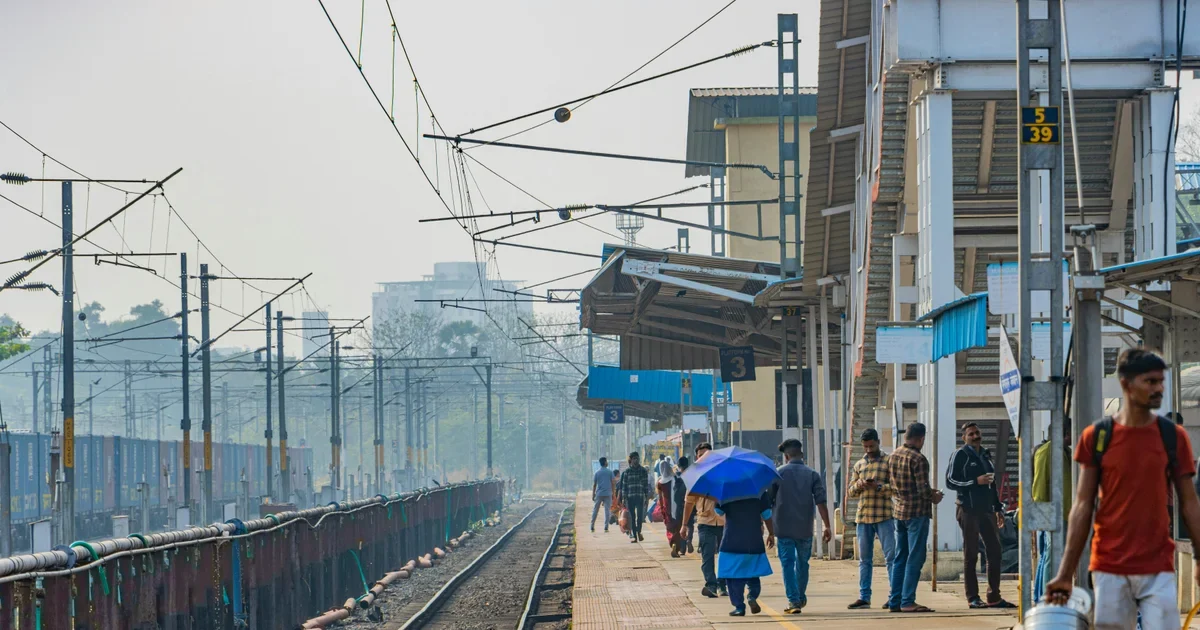
On any given day, more than 13 million people board an Indian Railways train. That is roughly the population of Belgium, every single day. The system that moves them spans 68,000 kilometres of track, employs over 1.3 million people, and operates around 13,000 trains across 7,000-plus stations. By sheer size, Indian Railways is second only to the United States in network length and second only to China in passenger volume.
And yet, if you have ever waited on a platform in Lucknow or Patna or Howrah, you know the paradox beneath those superlatives. Indian Railways punctuality is chronically poor, trains are late routinely, sometimes spectacularly. A 2023 analysis by the Centre for Railway Information Systems placed average long-distance train punctuality at around 65 percent, meaning roughly one in three express trains does not arrive on time. International benchmarks routinely place India among the bottom five nations for passenger punctuality.
How does the world’s second-largest rail network earn such a dismal punctuality record? The answer is not simply incompetence or underfunding. It is a century-old policy architecture, a freight-first inheritance, a political economy of expansion over improvement, and the widening gap between India’s premium trains and its workhorse ones.
The Scale Comparison: India vs the Big Four
To appreciate the scale paradox, it helps to place Indian Railways alongside the other rail giants.
Country | Network Length | Annual Passengers | Avg. Punctuality |
|---|---|---|---|
United States | ~225,000 km | 0.03 billion (Amtrak) | ~80% (Amtrak) |
China | ~155,000 km | 3.7 billion | ~95%+ (HSR) |
Russia | ~85,600 km | 1.2 billion | ~92% |
India | ~68,000 km | 8.0+ billion | ~65% (long-distance) |
Japan | ~27,000 km | 9.0+ billion | ~99.9% (Shinkansen) |
The United States network is vast but serves almost no intercity passengers, it is almost entirely freight. Amtrak carried 28 million passengers in 2023, a rounding error beside India’s 8 billion annual riders. Russia’s network is formidable and well-maintained, largely because passenger rail is a sovereign infrastructure priority. China built most of its current network in a single decade-long sprint and now operates the world’s largest high-speed rail network with extraordinary precision.
Japan is the outlier that makes every other system look mediocre. The Shinkansen, running since 1964, averages delays of under one minute per departure. Japan’s secret is not magic, it is separate infrastructure for freight and passengers, dedicated track, enormous maintenance investment, and a culture of operational discipline that has never been compromised for commercial convenience.
The Freight-First Policy: An Inheritance India Cannot Easily Shed
Indian Railways was built by the British primarily to move cotton, coal, and military supplies, not passengers. The fundamental logic of the network is freight: long stretches of single track connecting mines to ports, factories to cities. After independence, the network was nationalised and expanded, but the underlying priority never fully shifted.
Today, freight trains and passenger trains share the same track on most of the network. When a 90-wagon coal train and a passenger express are both scheduled on the same line, the coal train almost always goes first. The reason is commercial: freight revenue cross-subsidises passenger fares, kept artificially low for political reasons. In the 2023-24 Union Budget, Indian Railways earned approximately Rs 1.69 lakh crore from freight against Rs 63,000 crore from passengers. Without freight, passenger operations would be deeply loss-making.
The structural problem is that Indian Railways cannot afford to prioritise punctuality without sacrificing the freight revenue that keeps fares cheap. It is a trap built into the original design.
China broke out of this trap by physically separating freight and passenger networks. Dedicated high-speed passenger lines, built in the 2000s and 2010s at enormous cost, operate entirely independently of the freight system. When a passenger train is running late in China, it is not because a coal train is ahead of it. India has not made that investment at scale.
Investment Gap Per Kilometre
The numbers reveal the depth of structural underinvestment. China spent approximately USD 400 billion building 42,000 km of high-speed rail between 2008 and 2023, roughly USD 9.5 million per kilometre of new track. India’s total rail capital expenditure in 2023-24 was Rs 2.4 lakh crore (approximately USD 29 billion), covering the entire network, new lines, electrification, station upgrades, and rolling stock.
On a per-kilometre basis, India spends a fraction of what China, Japan, or even Russia invests in track maintenance. The result is visible: average train speeds on most broad-gauge lines remain between 50 and 80 km/h. A train that should cover 1,000 km in 12 hours takes 16 because it is waiting in loops, navigating degraded track, or held at signals not upgraded to modern standards.
- Track Maintenance Index (TMI): A significant proportion of Indian Railways track remains in C and D categories, fit for operation but requiring speed restrictions.
- Speed restrictions are the invisible killers of punctuality: a train slowing from 110 km/h to 30 km/h over 15 km loses time across the entire subsequent journey.
- Signal technology: Much of the network still uses Absolute Block System, a 19th-century technology limiting capacity to one train per section at a time.
Vande Bharat vs the Legacy Coach Reality
The Indian government’s most visible rail investment in recent years has been the Vande Bharat Express, a semi-high-speed, indigenously manufactured train set that represents a genuine engineering achievement. As of mid-2025, over 100 Vande Bharat trains operate across the country. They are faster, cleaner, and more punctual than the trains they replaced on premium corridors.
But Vande Bharat carries a few lakh passengers daily. Indian Railways carries 13 million. The overwhelming majority travel in Sleeper Class and unreserved coaches, the same LHB and older ICF coaches that have been the backbone of the system for decades. These trains run on the same congested, mixed-use tracks, subject to the same freight prioritisation, maintained by the same understaffed depots.
The paradox of Indian rail modernisation is that showcase trains generate enormous political capital while the structural problems affecting the vast majority of journeys go unaddressed. Rajdhani and Vande Bharat punctuality has improved. But the Patna-bound Magadh Express, the Gorakhpur-Mumbai Superfast, the sleeper-class trains carrying migrant workers, students, and small traders, these remain in the old world. The same divide between visible investment and everyday reality plays out across Maharashtra’s urban-rural infrastructure gap, where modern development coexists with districts that growth has bypassed.
The Japan Shinkansen Contrast: What Obsessive Punctuality Actually Costs
Japan’s Shinkansen is not just a train. It is a cultural institution built around a single promise: we will not be late. Japan Railways (JR) issues formal apologies when delays exceed one minute. In 2017, a Shinkansen departed 25 seconds early, and the company issued a written apology to passengers.
What does this level of punctuality require?
- Dedicated infrastructure: No Shinkansen track is shared with freight or conventional rail.
- Maintenance investment: JR East alone spends hundreds of billions of yen annually on track maintenance, using night-time work trains to inspect and repair while the system is closed.
- Demand control: A ticketing and reservation system that prevents overcrowding, which slows boarding and delays departure.
- Operational culture: Every Shinkansen driver is trained to stop exactly at the marked door positions on the platform, not within a metre, but at the mark.
None of this is replicable in India overnight. Japan’s GDP per capita is roughly ten times India’s. But the comparison reveals what is traded away when track investment is deferred and freight is prioritised: not just comfort, but the fundamental reliability that makes rail a competitive mode of transport.
The Political Economy of Expansion Over Improvement
Every railway minister since independence has found that announcing new train services generates far more political goodwill than improving existing ones. A new train to a previously unserved district means votes, headlines, and ribbon-cutting ceremonies. Upgrading track quality or improving signal systems is invisible to the voter, until the next accident.
This political economy has produced a network that is geographically impressive but operationally stressed. India has more railway stations than any country needs by rational planning, over 7,000, many of which serve tiny populations and impose maintenance costs with minimal revenue return. India added approximately 5,000 km of new track between 2014 and 2024, but also added thousands of new train services on existing routes.
When you add more trains without adding more track or improving signalling, you do not improve the network, you stress it. More trains competing for the same slots, more delays cascading through the system, more freight trains queued and more passenger trains slipping behind schedule.
Safety: The Hidden Punctuality Penalty
The June 2023 Odisha triple train collision at Bahanaga Bahar, which killed over 290 people, was the worst rail disaster in India in two decades. Investigations pointed to signal failures and the Kavach collision-avoidance system not being deployed on that stretch. The disaster accelerated the rollout of Kavach, but as of 2025 less than 10 percent of the network had been covered.
The safety dimension intersects with punctuality directly. After major accidents, caution orders, speed restrictions, are imposed across wide network sections. These restrictions take weeks or months to lift. Every caution order adds time to every train that passes through. The backlog of caution orders on the network at any given time is one of the underappreciated contributors to chronic lateness.
By contrast, Japan has not had a Shinkansen passenger fatality due to a collision or derailment in over 60 years of operation. Safety and punctuality are not competing priorities, they are products of the same underlying commitment to operational quality.
What Structural Reform Would Actually Look Like
The National Rail Plan 2030 sets a target of 95 percent punctuality for express trains, an ambitious goal that implicitly acknowledges how far the system currently falls short. The plan includes dedicated freight corridors (the Eastern and Western Dedicated Freight Corridors are now substantially complete), which will free existing tracks for faster passenger services.
The Western Dedicated Freight Corridor, connecting JNPT port in Mumbai to Dadri near Delhi, has already shifted significant freight traffic off the main line. Early data suggests punctuality on passenger trains running on freed-up sections has improved by 15 to 20 percentage points.
But dedicated freight corridors cover only the highest-traffic freight routes. Thousands of kilometres of mixed-use track remain. Replacing the outdated Absolute Block signalling system with Automatic Block Signalling or ETCS technology could double effective capacity on existing track without laying a single new kilometre of rail.
The Governance Question: Who Is Accountable?
Indian Railways is a government monopoly. There is no competitor to lose passengers to, no market pressure to improve Indian Railways punctuality, and no mechanism by which chronic under-performance results in leadership accountability. The annual Railway Budget is largely a political document, new trains, new projects, new schemes, rather than a performance accountability document.
Countries with high-performing rail networks share one characteristic: performance accountability that transcends political cycles. In Japan, JR companies are publicly listed and face shareholder scrutiny. In China, high-speed rail performance is tracked nationally with explicit KPIs. In Switzerland, which consistently tops European punctuality rankings, the Federal Office of Transport publishes quarterly data for every operator, and contracts include financial penalties for persistent lateness. The lesson from how Ireland transformed its economy through sustained, accountable policy reform is that long-term institutional discipline consistently outperforms short-term political signalling.
India has begun experimenting with performance-linked metrics for zone officers, but the accountability chain remains weak. A zone that consistently performs below national punctuality averages does not face meaningful consequences. Without consequences, incentives do not change.
The Path Forward: Scale + Performance
The second-largest rail network in the world does not have to also be one of the least punctual. The dedicated freight corridor model shows that structural change is possible. The Vande Bharat programme shows that India can manufacture and operate premium rolling stock. The ongoing electrification drive, Indian Railways is now over 95 percent electrified, has reduced the operational variability caused by diesel locomotive failures.
Closing the punctuality gap requires holding two truths simultaneously. First, India’s rail challenges are genuine and deep, products of colonial infrastructure design, 75 years of expansion-first politics, and chronic underinvestment in maintenance. Second, the tools to fix them are known, the examples from other countries are clear, and the financial returns from improved rail performance, in productivity, in reduced road congestion, in lower logistics costs, are substantial enough to justify the investment.
The 13 million people who board Indian trains every day deserve more than a system that is impressive in scale and disappointing in performance. They deserve a network where a scheduled arrival time is a promise, not an optimistic suggestion.
Conclusion: Size Is Not Service
India’s railway is a genuine national achievement. 68,000 kilometres of track, 13 million daily passengers, 7,000 stations, and a workforce larger than most armies. By the metric of scale, Indian Railways stands with the best in the world.
But scale is not service. The world’s second-largest rail network carries the world’s second-largest passenger load on infrastructure designed for a different era, under a policy framework that has not fully completed the shift from freight-first to passenger-first, and without the maintenance investment that the system’s age and intensity demand.
The Indian Railways punctuality problem is ultimately a governance problem, a failure to make operational performance a binding political priority rather than a campaign promise. Until that changes, the gap between India’s railway ambition and India’s railway reality will remain one of the most consequential under-discussed policy failures in the country.
What You Can Do: Citizen Action at Every Level
Fixing Indian Railways is not only a matter for the government. Citizens at every level have genuine leverage, and using it consistently is how systems shift.
- Personal: Log every significant delay using the NTES app or Rail Madad portal. Documented complaints create the data trail that forces zone-level accountability. Share your experience publicly on social media, tagging the official Indian Railways handle, so isolated incidents become visible patterns.
- RWA and community: Resident Welfare Associations near major stations can collectively petition the Divisional Railway Manager (DRM) for improved local services, better signalling on commuter routes, and cleaner waiting areas. Group representations carry far more weight than individual complaints.
- Ward and city level: Engage your ward councillor and city MP to raise rail infrastructure concerns in local bodies and during public meetings with your local MP. Demand that your city’s rail master plan include dedicated freight corridor linkages and modern signal upgrades, not just new station cosmetics.
- National level: Write to your elected representative ahead of Budget sessions urging that rail capital expenditure be ring-fenced for maintenance and signalling upgrades, not just new train announcements. Support civil society organisations that publish independent rail performance data and hold the Railway Board to its National Rail Plan 2030 commitments.
The countries that built the world’s most reliable rail networks, Japan, Switzerland, South Korea, did so because citizens demanded it consistently over decades. India’s rail transformation is possible. It begins with passengers who refuse to treat chronic lateness as normal.
What do you think it will take to fix Indian Railways punctuality? Is the answer dedicated freight corridors, better signalling, political will, or all three? Share your view in the comments below, and if this article made you think, pass it on.
What you can do
- Share the evidenceSend this to one person who should know about governance.Share on WhatsApp
- Give an afternoonTeach, mentor, clean up, or lend your professional skills.Ways to volunteer
- Tell us what's missingKnow a story, a fact we got wrong, or a solution worth spotlighting?Suggest a story
Politically neutral. Every claim sourced. Report a correction.


No comments yet