Himachal PradeshGirls in School, Women at Work, and a Hill State Under Pressure
Himachal Pradesh sends nearly every girl to school and 67.6 percent of its women are in the labour force. It also carries debt of 40.5 percent of GSDP and a monsoon toll that keeps rising.
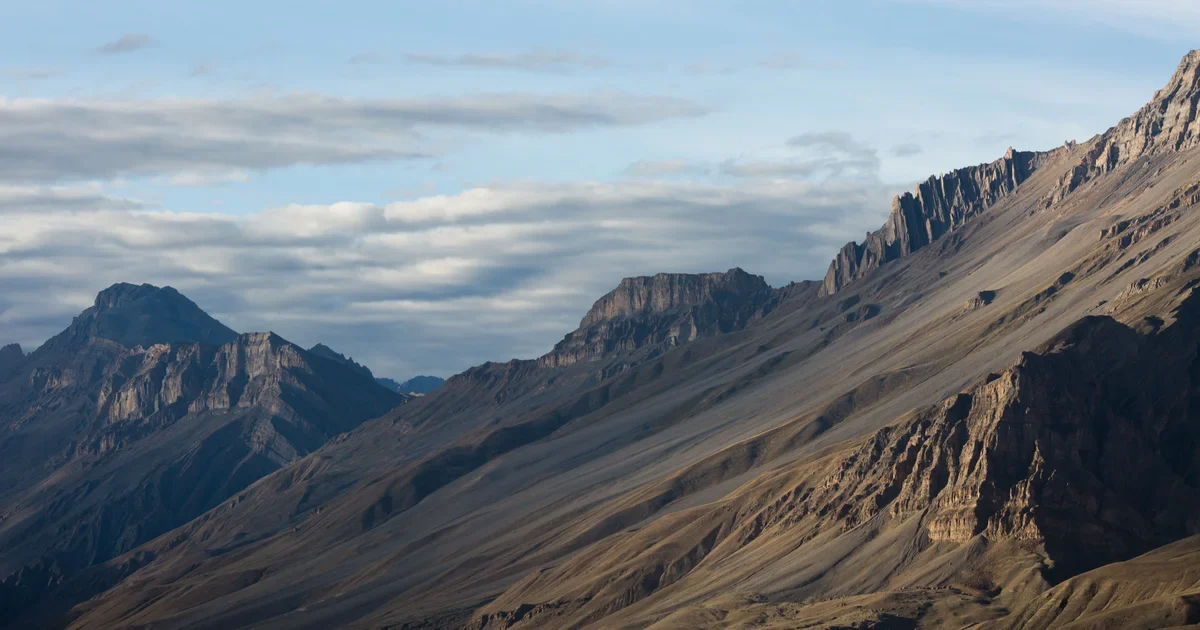
Photo by Simranpreet Singh on Pexels
In this story
Himachal Pradesh is a small Himalayan state of about 68 lakh people, and on several social measures it outperforms states many times richer. Its schools have the lowest pupil-teacher ratios in India, girls match or outnumber boys at every level of schooling, and 67.6 percent of women aged 15 and above are in the labour force, against 41.7 percent nationally. It is also a state whose spending is squeezed by salaries, pensions and interest, whose debt stands at 40.5 percent of its economy, and whose monsoons now arrive with a death toll in the hundreds.
This post is part of our One State One Story series. It looks at what Himachal Pradesh has built, the evidence behind it, and the gaps that its own data admit. The aim is to be fair: the numbers come from national surveys, the state budget and published analyses, not from any party’s claims.
What does Himachal Pradesh’s social record look like?
The headline facts are these. Himachal Pradesh was formed as a Union Territory in 1948 from the merger of 30 princely states and four chiefdoms, and became a full state in 1971. Its literacy rate was 82.8 percent in the 2011 Census, the ninth highest in the country, according to Prof. Arun C. Mehta’s analysis of the state’s UDISE+ data. Nearly 90 percent of its people live in rural areas, spread across more than 17,000 revenue villages and terrain from 450 to 6,975 metres.
It is also a richer state than its geography suggests. The PRS Legislative Research analysis of the 2025-26 state budget puts per capita GSDP at Rs 2,76,943 for 2023-24, compared with Rs 2,15,935 for India as a whole. Agriculture, manufacturing and services contribute 14, 42 and 44 percent of its economy.
The 2019-21 National Family Health Survey (NFHS-5) gives a household picture. In its Himachal Pradesh report, 99 percent of households have electricity, 98 percent own a mobile phone, 97 percent have a bank or post office account, 75 percent have piped water on their premises and 94 percent have a toilet. Fertility is 1.7 children per woman, below the replacement level of 2.1.
How did a hill state get its schools so right?
The short answer is a long, deliberate decision to put a school within reach of every habitation and to staff it. Mehta traces it to the early years of statehood, when the first chief minister, Y.S. Parmar, and his successors treated education as the main lever of development. The policy had three features: a school in every habitation however small, teacher recruitment treated as a state priority, and an early push for girls’ schooling, partly because so many men left for the army and government jobs, which raised women’s standing in the household.
The results show up in the UDISE+ numbers for 2024-25.
Level | Pupils per teacher, Himachal | Pupils per teacher, India |
|---|---|---|
Primary | 13 | 20 |
Upper primary | 8 | 17 |
Secondary | 6 | 15 |
Higher secondary | 9 | 23 |
Dropout is low too. In 2024-25 the state recorded 0.0 percent at primary level and 0.5 percent at upper primary, against national figures of 0.3 and 3.5 percent. At secondary level (Classes 9-10), dropout was 6.2 percent against 11.5 percent nationally. Mehta also reports gross enrolment above 100 percent at elementary and secondary levels, a secondary GER of 102.6 percent, and Class 12 retention of 81.8 percent, at the top of state rankings. A note of caution applies: 2022-23 figures changed because the data system moved from school-wise to student-wise counting, so single-year jumps should not be read as real shifts.
The cost of this model is visible in the school map. The state runs 17,330 schools with an average of 82 pupils each, against a national average of 168, and 17.1 percent of its schools (2,964) have a single teacher. In a mountain state this is a feature of geography, not neglect. A child in Kinnaur or Lahaul-Spiti cannot be sent to a school 30 kilometres away. It is an expensive way to guarantee access, and it matters for the budget discussion below.
For the national picture of how learning compares with enrolment, see our post on why India’s middle class left government schools, which places Himachal Pradesh alongside Kerala as a state where committed public investment produced results.
How are girls and women doing?
Better than in most of India, with a few gaps worth naming.
Education
The Gender Parity Index in UDISE+ is at or above 1.0 at every level in every year from 2021-22 to 2024-25, with a higher secondary index of 1.1. That means girls are as likely as boys, and at senior secondary level more likely, to be in school. NFHS-5 reports that 91 percent of women aged 15-49 are literate, but only 45 percent have completed 12 or more years of schooling, compared with 48 percent of men. About 7 percent of women have never attended school.
Marriage and fertility
Only 5 percent of women aged 20-24 married before 18, down from 9 percent in NFHS-4, and the median age at first marriage is 22.5 years among women aged 25-29. For national comparison, see our post on child marriage in India.
Money and decisions
NFHS-5 finds that 83 percent of women in the state have a bank or savings account they use themselves and 62 percent have money they can decide how to use. About 22 percent of women own a house alone or jointly, and 20 percent own land, against 53 percent and 48 percent of men. So women are well connected to the financial system but still own far less of the assets.
Violence
The survey records that 11 percent of ever-married women aged 18-49 have experienced physical or sexual violence, with the husband the most common perpetrator. That is a large number of women, and surveys of this kind are known to understate the problem.
Why do so many women work, and what counts as work?
Himachal Pradesh has one of the highest female labour force participation rates in India. The UNFPA India analytical paper on gendered patterns of labour force participation uses the 2023-24 Periodic Labour Force Survey and puts the figure at 67.6 percent for women aged 15 and above, among the highest in the country, alongside Meghalaya (71.8 percent) and Sikkim (68.2 percent). The national figure is 41.7 percent, up from 23.3 percent in 2017-18. The paper attributes the high rates in hilly states to greater involvement of women in agriculture and informal work.
That caveat matters. NFHS-5 asks a different question, whether a woman was employed for pay in the last 12 months, and finds that 73 percent of women aged 15-49 were not, with 22 percent in non-agricultural jobs and 3 percent in agriculture. The two surveys are not in conflict. PLFS counts the unpaid farm and family work that makes up much of mountain women’s day, and NFHS counts mainly paid work. Both are true: women in Himachal Pradesh work a great deal, and much of it is unpaid or low-paid family farm work.
Our post on why India’s female labour force participation is low explains the gap between visible and invisible work in more detail. For Himachal Pradesh the practical issue is to turn high participation into better-paid work, through orchards, homestays, crafts and public jobs open to women.
What about health and nutrition?
Progress is real but uneven. Institutional births rose from 76 percent in NFHS-4 to 88 percent in NFHS-5, in line with the national rise in facility births. Fertility fell by 0.2 children between the two surveys.
Child nutrition is the exception. NFHS-5 shows that 31 percent of children under five in Himachal Pradesh are stunted, up from 26 percent in NFHS-4. Seventeen percent are wasted and 26 percent underweight. Anaemia affects 55 percent of children aged 6-59 months, and the survey notes that it is just as high (55 percent) among children whose mothers have 12 or more years of schooling. In other words, schooling alone has not fixed diet. Iron-rich foods are rarely given: only 5 percent of children aged 6-23 months ate them. Our post on why stunting persists in India explains the pattern.
This is a gap the state can close. The 2025-26 budget announced supplementary nutrition at all anganwadi centres and free diagnostic tests under new health schemes, and the PRS analysis records them. Whether they reach children depends on delivery in remote hamlets.
What are the real gaps in education?
Access is nearly complete. Quality and equity of infrastructure are not.
- Learning quality. Mehta notes that access statistics alone cannot show what children learn. Enrolment above 100 percent and a pupil-teacher ratio of 6 at secondary level do not tell us whether a Class 5 child can read a Class 2 text.
- Single-teacher schools. With 17.1 percent of schools run by one teacher, multi-grade teaching is the norm in the hills. Teachers need training for it, and their leave or transfer shuts the school.
- Inclusive facilities. Toilets friendly to children with disabilities are available in only 29.7 percent of schools, against 35.6 percent nationally. This is the one major infrastructure indicator where the state is below the national figure, according to the same analysis.
- Secondary dropout. At 6.2 percent, it is half the national figure, but it rises from near zero in lower classes. That is where students are most likely to leave.
For the national account of girls’ school infrastructure, see our post on schools without a girls’ toilet.
Do the gains reach every community and district?
Mostly, though the data show where the edges are. The same UDISE+ analysis reports that the higher secondary gross enrolment ratio for scheduled tribe students in Himachal Pradesh is 86.4 percent, which is 34.5 percentage points above the national figure for tribal students. That is a notable result for a state with remote tribal districts such as Kinnaur and Lahaul-Spiti, where residential schools and scholarships have done much of the work.
The household data show smaller gaps that still matter. In NFHS-5, 91 percent of scheduled caste households have access to a toilet, against 95 percent of households that are not scheduled castes, scheduled tribes or other backward classes. By district, toilet access ranges from 86 percent in Kangra to 98 percent in Mandi. Education also shapes who gets care. Women with at least 12 years of schooling were far more likely to have an ultrasound than women with none (91 percent against 72 percent), and the survey notes that institutional births are also more common among them.
These are the numbers a district education officer or a panchayat can act on. A state average of 88 percent facility births means little to the family that lives three hours from the nearest road, and the district tables in the NFHS report let local officials see where they stand.
Where does the money for all this come from?
The state budget shows the priority given to schools and the pressure on other heads. In the 2025-26 budget, education, sports, arts and culture were allotted Rs 9,965 crore, the largest sectoral item, about 2 percent below the previous year’s revised estimate. Health and family welfare received Rs 3,332 crore, 14 percent lower than the revised estimate for 2024-25, and water supply and sanitation Rs 1,721 crore, 23 percent lower. The state allocated Rs 951 crore to Samagra Shiksha, the national school education scheme, and Rs 399 crore to the National Rural Health Mission.
Read together with the debt data below, these numbers show a state that has kept the school system intact while trimming almost everything else. That is a defensible choice, and a risky one: schools do not work without roads for children and teachers to reach them, water in the building or a health post when a child falls ill.
How serious is the disaster risk?
Serious, and growing. Hill states face landslides, flash floods and cloudbursts, and Himachal Pradesh’s recent monsoons have been among the most damaging in its history.
In 2025, the State Disaster Management Authority reported that 448 people had died between 20 June and 21 September, of whom 261 died in rain-related incidents such as landslides, flash floods and cloudbursts and the rest in road accidents. Estimated losses exceeded Rs 4,800 crore. For the 2023 monsoon, the state sought about Rs 9,000 crore as its post-disaster needs assessment, and the Centre approved a recovery and reconstruction plan of Rs 2,006.40 crore in June 2025, according to The Tribune. The 2025 loss figure is the authority’s own early estimate, so it may be revised.
The interaction with the budget is the part that matters most. Roads, bridges, water schemes and irrigation are the first things damaged, and they are the same heads that the 2025-26 budget cut. According to PRS, capital outlay was budgeted to fall 55 percent in 2025-26 from the revised estimate of 2024-25, with the largest reductions on transport (58 percent), water supply and sanitation (51 percent) and irrigation and flood control (41 percent). A state that must rebuild every monsoon while cutting investment in resilience is under compounding pressure.
Odisha shows another way: after the 1999 super cyclone it built an institution for evacuation, and our post on how Odisha learned to evacuate describes what it takes. The principle that carries over is early warning and rehearsed response, which cost far less than rebuilding.
How heavy is the debt, and why?
The PRS budget analysis supplies the facts. The state’s outstanding liabilities are estimated at 40.5 percent of GSDP in 2025-26. The fiscal deficit was 6.6 percent of GSDP in the revised estimate for 2024-25, against a budgeted 4.7 percent, and is targeted at 4 percent for 2025-26. The Comptroller and Auditor General observed in 2024 that about 81 percent of the state’s debt would mature within 10 years, which raises repayment obligations in the near term.
Item, 2025-26 budget | Value |
|---|---|
Committed expenditure (salaries, pension, interest) | Rs 35,222 crore, or 83 percent of revenue receipts |
Salaries | 39 percent of revenue receipts |
Pension | 28 percent of revenue receipts |
Interest payments | 16 percent of revenue receipts |
Revenue receipts raised by the state itself | 48 percent |
Revenue receipts from the Centre | 52 percent (share in taxes 28, grants 24) |
Capital outlay | Rs 3,941 crore, 7 percent of net expenditure |
Several features explain this and none is unique to one government. The small, scattered school and health network described above is expensive to run per child. Salaries and pensions are large because the state is a major employer in a mountain economy with limited private jobs. Own tax revenue is about 6.3 percent of GSDP, so the state depends on the Centre for just over half of its revenue. And a hill state has unusually high costs for roads, water and disaster repair.
The consequence is that when 83 percent of revenue goes to committed items, capital spending gives way first, which is exactly what the budget shows. That is what makes the combination of debt and disaster risk hard: the money for resilience is the money that is cut.
What can other states learn from Himachal Pradesh?
- Put the school near the child, then staff it. Himachal Pradesh gave every habitation a school and hired teachers for it. The pupil-teacher numbers are a result of that decision, held for decades.
- Invest in girls’ schooling early. Parity at every level for four straight years is the outcome of a long-run push, not a recent scheme.
- Count work properly. High participation by women is visible only when unpaid farm labour is counted. Policies that raise pay and ownership for that work, such as land titles and market access, matter more than raw participation.
- Do not assume schooling solves nutrition. Child stunting and anaemia in the state barely moved even as maternal education rose. They need their own programmes: iron-rich food, dietary diversity, early-childhood services.
- Treat disaster resilience as spending, not as optional capital. Cutting investment in roads, drainage and warning systems in a state like this is likely to cost more later.
- Put the fiscal story on the table. A state that publishes committed expenditure and debt maturity, as Himachal Pradesh’s budget documents do, gives citizens what they need to hold its choices to account.
What can you do?
- Read the state budget summary. PRS publishes a short analysis for most states each year. Compare committed expenditure with capital outlay for your own state.
- Ask your school management committee for the numbers. Pupil-teacher ratio, number of single-teacher schools and toilets for children with disabilities are all on UDISE+, and parents on the committee can ask.
- If you travel to the hills, travel with the monsoon in mind. Check the state disaster management authority advisories, avoid river-bank stays in July to September, and book with local homestays that follow rules on construction.
- Support local women’s cooperatives and producer groups. Buying directly from orchard and craft cooperatives turns unpaid work into paid work.
- Check iron intake for children and mothers. Ask your anganwadi worker about iron-folic acid supplements and iron-rich foods; the NFHS data show this is where many hill families need support.
Frequently asked questions
Is Himachal Pradesh’s literacy rate really among the highest?
The 2011 Census put it at 82.8 percent, the ninth highest in the country. Newer measures such as NFHS-5, which counts women who completed Class 9 or passed a simple test, give 91 percent for women aged 15-49.
Why do so many women work in Himachal Pradesh?
The PLFS counts agriculture and family work, and mountain households rely on women’s labour on farms and orchards. The 67.6 percent figure refers to women aged 15 and above in the labour force. Paid employment is much lower.
Is Himachal Pradesh the most indebted state?
It is among the states with a high debt-to-GSDP ratio, at 40.5 percent in the 2025-26 budget. Ratios differ across sources and years, so we cite the state’s own budget analysis, and do not claim a rank.
What did the recent monsoons cost Himachal Pradesh?
In 2025, SDMA reported 448 deaths between 20 June and 21 September, including road accidents. For the 2023 monsoon, the state asked for about Rs 9,000 crore to rebuild and the Centre approved Rs 2,006.40 crore.
Why is child stunting rising in a state with good schooling?
NFHS-5 shows stunting rose from 26 to 31 percent between surveys, and anaemia is as common among children of educated mothers as of others. Diet and early-childhood care, not school years, drive it.
The takeaway
Himachal Pradesh proves that a poor, mountainous state can give nearly every child a school, a teacher and, for girls, equal footing in the classroom. Its next test is different: turn schooling into better-paid work for women, close the gap on child nutrition, and find the money to build roads and drains that survive the monsoon while 83 percent of its revenue is already spoken for. The story is a hopeful one, and its unfinished chapters are in its own budget.
Sources: NFHS-5 Himachal Pradesh state report (2019-21); UDISE+ 2021-22 to 2024-25 as analysed by Prof. Arun C. Mehta; PRS Legislative Research, Himachal Pradesh Budget Analysis 2025-26; UNFPA India, Analytical Paper 10 (PLFS 2023-24); Himachal Pradesh State Disaster Management Authority figures as reported by India TV and The Tribune.
What you can do
- Share the evidenceSend this to one person who should know about this issue.Share on WhatsApp
- Give an afternoonTeach, mentor, clean up, or lend your professional skills.Ways to volunteer
- Tell us what's missingKnow a story, a fact we got wrong, or a solution worth spotlighting?Suggest a story
Politically neutral. Every claim sourced. Report a correction.

No comments yet